
Couples communication journals work best when they match how you and your partner actually like to connect — and that’s the tradeoff at the heart of this category. Structured workbooks like the Couples Communication Workbook promise fast results in 12 days but feel like homework, while low-pressure options like One Question a Day for You & Me take three years to pay off but fit easily into busy routines. My top overall pick, the Ultimate Questions For Couples Journal, hits the sweet between the two: a full year of weekly prompts focused squarely on listening and trust rather than generic romance. For couples in a rough patch, the BestSelf Relationship Journals set stands out for its conflict-resolution framework. Read on for the full breakdown of all 13, including who each one suits and who should skip it.

Get gifts for the two of you delivered free with Prime
- Fast, free delivery on millions of items
- Prime Video, Amazon Music and more included
- Member-only deals all year
Key Takeaways
- The biggest divide in this category is between time-boxed workbooks (12-20 days) and open-ended journals (1-3 years); the former suit motivated couples in crisis, the latter suit busy or skeptical partners who’d quit under pressure.
- Journals built around alternating back-and-forth writing (the Back and Forth titles) work better for couples with mismatched schedules, but they sacrifice the face-to-face conversation practice that drives real communication change.
- Several titles in this list are romance journals relabeled as communication journals — their prompts ask about favorite memories rather than how you argue, listen, or repair after conflict.
- The BestSelf Him & Her set is the only option with two separate books, which matters for couples who want private reflection space before shared discussion.
- Cheaper single-prompt journals under $12 rarely include guidance on HOW to respond, so they assume you already communicate well and just need conversation starters.
| The Ultimate Questions For Couples Journal: 52 Weeks To Improve Communication, Rebuild Trust, And Increase Intimacy In Your Relationship |  | Best for Long-Term Commitment | Format: Guided question journal | Duration: 52 weeks | Structure: One question per week | VIEW LATEST PRICE | See Our Full Breakdown |
| One Question a Day for You & Me: A Three-Year Journal |  | Best for Daily Ritual Builders | Format: Daily reflection journal | Duration: 3 years | Structure: One question per day, dual-answer layout | VIEW LATEST PRICE | See Our Full Breakdown |
| Wife and Husband Back and Forth Journal: A Marriage Diary with Questions for Couples to Fill Out Together |  | Best Back-and-Forth Format | Format: Back-and-forth exchange journal | Structure: Daily guided questions answered by both partners | Focus Areas: Marriage reflection, communication, mutual understanding | VIEW LATEST PRICE | See Our Full Breakdown |
| For His Eyes Only: A Couple’s Guided Journal for Love, Communication, and Emotional Intimacy |  | Best for Emotional Intimacy | Format: Guided journal with prompts and exercises | Focus Areas: Love, communication, emotional intimacy | Guidance Level: Guided exercises plus prompts | VIEW LATEST PRICE | See Our Full Breakdown |
| BestSelf Relationship Journals – 13-Week Guided Workbook, Him & Her Set | 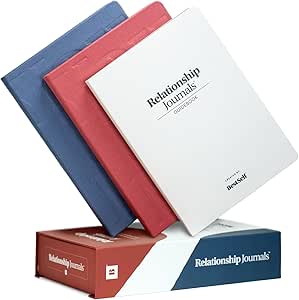 | Best Structured Program | Format: Guided workbook, two-journal set | Duration: 13 weeks | Set Includes: Him & Her journals | VIEW LATEST PRICE | See Our Full Breakdown |
| Couples Communication Workbook: 20 Minutes a Day for 12 Days |  | Best Short-Commitment Program | Format: Workbook | Program Length: 12 days | Daily Time Required: 20 minutes | VIEW LATEST PRICE | See Our Full Breakdown |
| A Guided Journal for Couples: Playful Prompts and Fun Activities |  | Best for Lighthearted Couples | Format: Guided journal | Content Type: Playful prompts and fun activities | Focus Areas: Communication, bonding, connection | VIEW LATEST PRICE | See Our Full Breakdown |
| A Couple’s Love Journal: 52 Weeks to Reignite Your Relationship |  | Best Long-Term Reconnection Journal | Format: Guided couples journal | Program Length: 52 weeks | Cadence: Weekly prompts and activities | VIEW LATEST PRICE | See Our Full Breakdown |
| Back and Forth Journal for Husband and Wife |  | Best Low-Pressure Format | Format: Back-and-forth exchange journal | Interaction Style: Alternating written responses between partners | Tone: Playful and reflective | VIEW LATEST PRICE | See Our Full Breakdown |
| The Marriage Journal – 52-Week Couples Journal |  | Best for Faith-Based Couples | Program Length: 52 weeks | Features: Weekly prompts, devotional content, shared calendar, back-and-forth journaling | Focus Areas: Intimacy, communication, spiritual growth | VIEW LATEST PRICE | See Our Full Breakdown |
| Communication Skills for Couples: Guide to Improve Communications, Resolve Conflict, Deepen Intimacy, Strengthen Marriage and Create a Healthy Relationship |  | Best Education-First Option | Format: Paperback instructional guide | Focus: Communication skills, conflict resolution, intimacy | Audience: Spouses and committed partners | VIEW LATEST PRICE | See Our Full Breakdown |
| Tell Me More: A Guided Couples Journal for Spouses and Partners to Deepen Communication, Connection, and Love | 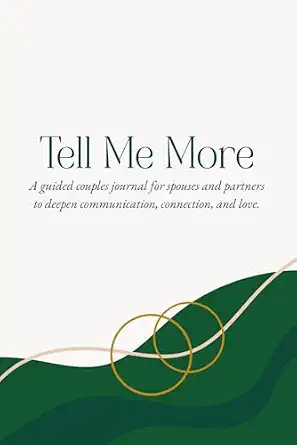 | Best for Prompt-Led Deep Conversations | Format: Guided couples journal | Focus: Communication, connection, love | Structure: Reflective prompts and shared activities | VIEW LATEST PRICE | See Our Full Breakdown |
| The Relationship Check-In Journal: Couples Journaling for Meaningful Conversations and Routine Talks |  | Best for Building a Weekly Ritual | Format: Couples check-in journal | Focus: Routine conversations and relationship maintenance | Structure: Recurring check-in prompts and conversation starters | VIEW LATEST PRICE | See Our Full Breakdown |
| couples communication journal | Format | Focus Areas |
|---|---|---|
| The Ultimate Questions For Cou | Guided question journal | Communication, trust, intimacy |
| One Question a Day for You & M | Daily reflection journal | Daily connection, reflection, shared memories |
| Wife and Husband Back and Fort | Back-and-forth exchange journal | Marriage reflection, communication, mutual understanding |
| For His Eyes Only: A Couple’s | Guided journal with prompts and exercises | Love, communication, emotional intimacy |
| BestSelf Relationship Journals | Guided workbook, two-journal set | Communication, understanding, intimacy, memory-keeping |
| Couples Communication Workbook | Workbook | Listening, conflict resolution, relationship strengthening |
| A Guided Journal for Couples: | Guided journal | Communication, bonding, connection |
| A Couple’s Love Journal: 52 We | Guided couples journal | Communication, emotional intimacy, reconnection |
| Back and Forth Journal for Hus | Back-and-forth exchange journal | Connection, shared reflection, communication |
| The Marriage Journal | Shared journal with space for both partners | Intimacy, communication, spiritual growth |
| Communication Skills for Coupl | Paperback instructional guide | — |
| Tell Me More: A Guided Couples | Guided couples journal | — |
| The Relationship Check-In Jour | Couples check-in journal | — |
More Details on Our Top Picks
The Ultimate Questions For Couples Journal: 52 Weeks To Improve Communication, Rebuild Trust, And Increase Intimacy In Your Relationship
This option stands out for its full-year weekly format, which gives couples a slow, deliberate pace that fits busy schedules. Compared with the BestSelf 13-Week Guided Workbook, this journal trades intensity for endurance — one thoughtful question per week rather than a structured daily or multi-day exercise load. That pacing makes it a strong fit for partners who have struggled to keep up with more demanding programs. The focus on trust rebuilding also distinguishes it from lighter prompt books, positioning it for couples working through a rough patch rather than simply wanting fun conversation starters. The tradeoff is sparseness: there’s little framing, coaching, or instruction around the questions, so partners who need guidance on how to discuss difficult topics will be left to their own devices. Results depend entirely on the consistency both partners bring.
Pros:- Full 52-week structure creates a lasting habit without weekly overwhelm
- Questions specifically target trust rebuilding, not just casual conversation
- Low time commitment per week suits busy or schedules-heavy couples
- Year-long arc encourages revisiting and tracking relationship growth
Cons:- No instructions, coaching, or context around the prompts
- Meaningful results require sustained commitment from both partners
- Weekly cadence may feel too slow for couples wanting faster progress
Best for: Couples recovering from conflict or trust issues who want a low-pressure, year-long weekly ritual
Not ideal for: Couples who want coaching, exercises, or explanations — this book is questions only, with no guidance on processing the answers
- Format:Guided question journal
- Duration:52 weeks
- Structure:One question per week
- Focus Areas:Communication, trust, intimacy
- Time Commitment:Low — weekly prompts
- Guidance Level:Minimal — questions only
Our verdict“A good match for committed couples who want a year of structured reflection and can drive the conversations themselves.”
One Question a Day for You & Me: A Three-Year Journal
Where most journals in this roundup run 13 weeks to a year, this one stretches across three full years of daily prompts, and that changes what it is: less a communication course, more a shared long-term ritual. Compared with the Wife and Husband Back and Forth Journal, the daily questions here are typically lighter and faster, which makes the habit easier to sustain but the conversations less probing. The real payoff is the side-by-side answers across three years — couples get a document of how their responses evolve, something no 13-week workbook like the BestSelf set can offer. The tradeoff is that shallow daily prompts won’t resolve entrenched conflict; couples in genuine distress will get more from the workbooks with structured exercises. This pick makes the most sense for healthy relationships wanting a keepsake habit.
Pros:- Daily cadence builds a consistent connection habit in minutes a day
- Three-year span creates a meaningful keepsake showing how answers change
- Low-effort prompts are easy for journaling-averse partners to keep up with
- Compact enough to keep on a nightstand
Cons:- Prompts are generally surface-level compared with therapy-inspired workbooks
- Three-year commitment may feel intimidating and unfinished if the habit stalls
- No exercises or conflict-resolution guidance
Best for: Established couples and newlyweds who want a quick daily ritual and a three-year record of their relationship
Not ideal for: Couples dealing with serious conflict — the short daily prompts lack the depth of workbook-style programs
- Format:Daily reflection journal
- Duration:3 years
- Structure:One question per day, dual-answer layout
- Focus Areas:Daily connection, reflection, shared memories
- Time Commitment:Very low — minutes per day
- Guidance Level:Prompt-based, no coaching
- Keepsake Value:High — answers compare across years
Our verdict“Choose this if you want an easy daily ritual and a growing keepsake rather than a relationship intervention.”
Wife and Husband Back and Forth Journal: A Marriage Diary with Questions for Couples to Fill Out Together
The back-and-forth letter format is what separates this journal from everything else here: instead of answering prompts side by side, partners write to each other and exchange the book. That structure suits couples whose schedules rarely align — one partner can respond in the morning, the other at night — making it more flexible than the One Question a Day journal, which assumes you’ll sit down together. Compared with the Back and Forth Journal for Husband and Wife elsewhere in this roundup, this version leans into daily relationship reflection rather than open-ended letters, so the questions provide more scaffolding. The honest drawback is the daily commitment; miss a few days and the momentum (and the conversation thread) breaks down. It also presumes both partners are comfortable expressing themselves in writing, which isn’t universal.
Pros:- Asynchronous format works for partners with conflicting schedules
- Written exchanges can feel safer than difficult face-to-face conversations
- Guided questions provide structure the conversation might otherwise lack
- Shared single book creates an ongoing dialogue between partners
Cons:- Daily rhythm is easy to break and hard to restart
- Depends heavily on both partners being comfortable expressing themselves in writing
- Less suitable for couples who need verbal communication practice
Best for: Busy married couples with mismatched schedules who prefer written exchanges over face-to-face check-ins
Not ideal for: Couples where one partner dislikes writing — the format collapses if only one person participates
- Format:Back-and-forth exchange journal
- Structure:Daily guided questions answered by both partners
- Focus Areas:Marriage reflection, communication, mutual understanding
- Time Commitment:Daily, short entries
- Shared Book:Single journal passed between partners
- Guidance Level:Structured daily prompts
Our verdict“Ideal for couples who communicate better on paper than in person and can keep a daily exchange going.”
For His Eyes Only: A Couple’s Guided Journal for Love, Communication, and Emotional Intimacy
This pick makes the most sense for couples whose communication is functional but whose emotional vulnerability has thinned out. Compared with the Ultimate Questions For Couples Journal, which spreads broad questions across 52 weeks, this journal concentrates on prompts and exercises that push partners toward deeper emotional disclosure — the difference between asking about your week and asking what you’re afraid to say out loud. That focus also makes it more targeted than the playful Guided Journal for Couples with its fun activities; this is reflection, not entertainment. The publisher provides little detail on format or length, which is a real drawback when comparing against clearly scoped options like the 13-week BestSelf set — buyers are committing somewhat blind. It also demands more emotional effort than casual prompt books, and some partners may find the vulnerability uncomfortable at first.
Pros:- Prompts specifically target emotional intimacy, not just conversation
- Guided exercises give structure to vulnerable discussions
- Well suited to couples who feel emotionally distant but not in crisis
- Works as a deeper follow-up after lighter prompt journals
Cons:- Sparse product information on format, size, and number of prompts
- Requires genuine emotional commitment and can feel uncomfortable early on
- May be too intense for couples wanting light, fun conversation starters
Best for: Couples who talk logistics fine but want guided help opening up emotionally and being more vulnerable
Not ideal for: Buyers who want clear expectations — vague format details make it hard to know the length and structure before purchasing
- Format:Guided journal with prompts and exercises
- Focus Areas:Love, communication, emotional intimacy
- Guidance Level:Guided exercises plus prompts
- Intensity:Moderate to high — vulnerability-focused
- Time Commitment:Ongoing, completion requires commitment
- Format Details:Not specified by publisher
Our verdict“A strong choice for couples ready to go deeper emotionally, provided they’re comfortable buying with limited format details.”
BestSelf Relationship Journals – 13-Week Guided Workbook, Him & Her Set
This is the most program-like option in this batch: a 13-week guided workbook delivered as a him-and-her two-journal set, with exercises rather than loose questions. Compared with the Ultimate Questions For Couples Journal, it front-loads effort into a focused quarter — a sprint rather than a year-long walk — which suits couples who want visible progress quickly, perhaps after a rough patch or before a milestone like an anniversary. The dual-journal design also gives each partner private reflection space before shared discussion, something the single-book Wife and Husband Back and Forth Journal doesn’t offer. The tradeoffs are real: the tight structure can feel like homework for couples who prefer spontaneous conversation, and once the 13 weeks end, you’re done — there’s no built-in continuation, so ongoing couples will need another resource. It’s also a bigger investment than single-volume alternatives.
Pros:- Clear 13-week program with a defined beginning and end
- Two separate journals allow private reflection before shared conversation
- Thought-provoking exercises go deeper than simple question prompts
- Attractively packaged, making it a reliable gift for weddings and anniversaries
Cons:- Fixed 13-week limit with no continuation path afterward
- More expensive than single-journal alternatives
- Structured format may feel rigid for spontaneous couples
Best for: Motivated couples wanting a defined 13-week program with individual journals and measurable progress
Not ideal for: Couples who bristle at structure and homework — the workbook format can feel like an assignment rather than connection
- Format:Guided workbook, two-journal set
- Duration:13 weeks
- Set Includes:Him & Her journals
- Structure:Weekly exercises and guided questions
- Focus Areas:Communication, understanding, intimacy, memory-keeping
- Time Commitment:Moderate — weekly workbook sessions
- Gift Suitability:High — popular wedding and anniversary gift
Our verdict“The closest thing to a couples course in journal form — worth it for disciplined pairs, skip it if structure kills your motivation.”
Couples Communication Workbook: 20 Minutes a Day for 12 Days
Most journals in this category ask for a 52-week commitment, which is exactly why this 12-day workbook stands apart. It compresses communication training into 20-minute daily sessions, making it the most realistic entry point for couples who suspect a year-long journal will end up abandoned by February. Where A Couple’s Love Journal spreads reflection across a full year, this option front-loads conflict-resolution and listening exercises into a sprint you can finish before motivation fades. The tradeoff is depth: finishing in twelve days means the habits you build depend on you maintaining them afterward, and there’s no long-horizon structure to fall back on. Compared with The Marriage Journal, it skips devotional framing entirely, which secular couples will appreciate but faith-centered buyers will find thin.
Pros:- Time-efficient 20-minute daily exercises fit into almost any schedule
- Structured 12-day program builds momentum quickly
- Direct focus on listening skills and conflict resolution rather than vague prompts
- Low commitment compared with 52-week journals
Cons:- Requires real daily consistency over 12 consecutive days
- No long-term continuation once the program ends
Best for: Busy or skeptical couples who want a fast, bounded program that teaches listening and conflict skills without a year-long obligation
Not ideal for: Couples wanting sustained long-term structure — the program ends after day 12 with no ongoing prompts
- Format:Workbook
- Program Length:12 days
- Daily Time Required:20 minutes
- Focus Areas:Listening, conflict resolution, relationship strengthening
- Content Type:Practical exercises and activities
- Guided Structure:Yes, day-by-day program
Our verdict“Buy this if you and your partner want measurable communication improvement in under two weeks, not a lifelong journaling habit.”
A Guided Journal for Couples: Playful Prompts and Fun Activities
Not every couple wants a workbook that feels like homework, and this journal’s playful prompt-based approach is the counterpoint to heavier options like the Couples Communication Workbook, which is built around skills training. The premise here is that fun lowers the barrier to conversation — partners who won’t sit down for conflict exercises will often answer a silly question that turns unexpectedly meaningful. Compared with the Back and Forth Journal for Husband and Wife, this pick leans more toward guided activities than freeform exchange, giving hesitant writers more scaffolding. The tradeoff is substance: couples dealing with active conflict or recurring arguments will find it too light, and the absence of any therapeutic framing means it works better as a relationship-maintenance tool than a repair tool. Think of it as prevention rather than treatment.
Pros:- Playful prompts make journaling feel like a date activity, not a chore
- Engaging format that reluctant or non-writer partners will actually use
- Encourages meaningful conversation through low-pressure fun
- Works well as an icebreaker for couples who struggle to start deeper talks
Cons:- Too lightweight for couples needing conflict-resolution tools
- Limited structure — no progressive program or skill-building arc
Best for: Established couples in a good place who want a low-pressure, enjoyable way to keep talking and stay connected
Not ideal for: Couples working through active conflict or communication breakdowns — the playful tone won’t address serious issues
- Format:Guided journal
- Content Type:Playful prompts and fun activities
- Focus Areas:Communication, bonding, connection
- Tone:Lighthearted and playful
- Guided Structure:Yes, prompt-driven
- Skill-Building Program:No
Our verdict“This makes sense for happy couples who want connection without effort; skip it if you’re trying to fix something specific.”
A Couple’s Love Journal: 52 Weeks to Reignite Your Relationship
This journal occupies the year-long reconnection slot, and it earns it by treating emotional intimacy as a slow rebuild rather than a quick fix. Where the Couples Communication Workbook finishes in twelve days, this one asks for one weekly commitment across 52 weeks, which suits couples whose distance crept in gradually and won’t be reversed by a two-week sprint. Compared with The Marriage Journal, it strips out devotional content and the shared calendar, making it the stronger choice for secular couples who still want weekly structure. The pacing is its defining trait — weekly prompts give breathing room between sessions, but that same pace is the tradeoff: results are slow, and a couple hoping for rapid change will likely feel underwhelmed in month one. It rewards patience more than urgency.
Pros:- 52-week structure builds a sustainable weekly habit
- Weekly pacing avoids burnout compared with daily journals
- Secular content works for couples of any or no faith background
- Guided prompts encourage emotional intimacy, not just conversation
Cons:- Requires a full year of commitment from both partners
- Slow to show results — not built for urgent relationship problems
Best for: Long-term couples feeling gradually disconnected who want a steady, year-long structure to rebuild intimacy without religious content
Not ideal for: Couples in crisis who need fast, targeted conflict-resolution help — the weekly pace is too slow
- Format:Guided couples journal
- Program Length:52 weeks
- Cadence:Weekly prompts and activities
- Focus Areas:Communication, emotional intimacy, reconnection
- Faith-Based Content:No
- Guided Structure:Yes, week-by-week
Our verdict“Pick this if you and your partner have a year of patience and want gradual, lasting reconnection rather than a quick intervention.”
Back and Forth Journal for Husband and Wife
The back-and-forth exchange format is this journal’s entire appeal: one partner writes, the other responds, and conversation happens on paper at each person’s own pace. That structure solves a real problem the prompt journals above don’t — partners with mismatched schedules or communication styles can still dialogue without coordinating a sit-down session. Compared with A Guided Journal for Couples, which is built around shared playful activities, this one is quieter and more reflective, better suited to couples who find verbal vulnerability easier on paper. It shares its format with the Wife and Husband Back and Forth Journal elsewhere in this roundup but positions itself around synchronizing thoughts rather than answering question sets. The tradeoff: there’s no curriculum, no skill-building, and no progression. It’s a conversation vessel, not a program, so couples expecting structured therapeutic work should look elsewhere.
Pros:- Asynchronous format works for busy or mismatched schedules
- Writing-based exchange suits partners who find face-to-face vulnerability hard
- Playful, low-pressure tone keeps participation easy
- Encourages ongoing dialogue rather than one-off exercises
Cons:- No structured program, progression, or conflict-resolution tools
- Effectiveness depends entirely on both partners actually writing back
Best for: Couples with mismatched schedules or one verbally reserved partner who’d rather write than talk face-to-face
Not ideal for: Couples who want a structured program with skill-building — this is freeform exchange with no curriculum
- Format:Back-and-forth exchange journal
- Interaction Style:Alternating written responses between partners
- Tone:Playful and reflective
- Focus Areas:Connection, shared reflection, communication
- Guided Program:No — freeform exchange
- Best Use:Ongoing asynchronous couple dialogue
Our verdict“Choose this if your biggest obstacle is finding time and comfort to talk at all; skip it if you need guided therapeutic content.”
The Marriage Journal – 52-Week Couples Journal
This is the most feature-rich journal in the batch: weekly prompts, devotional content, a shared calendar, and dual reflection space, all in one 52-week package. No other pick here combines spiritual growth with practical logistics — the shared calendar alone addresses a common friction source that pure prompt journals like A Couple’s Love Journal ignore entirely. Compared with that secular alternative, this one layers faith into every week, which is its greatest strength and its sharpest limit: couples who don’t share a faith will find the devotional framing intrusive rather than enriching. It’s also the standout gift pick — the anniversary-friendly packaging and devotional angle make it a natural present in a way the more utilitarian Couples Communication Workbook isn’t. The tradeoff beyond faith is demand: it expects the most of both partners, combining journaling, devotion, and calendar upkeep weekly.
Pros:- Combines devotional content, weekly prompts, and a shared calendar in one book
- Shared calendar reduces scheduling friction and miscommunication
- Dual reflection space gives both partners equal voice
- Attractive, gift-ready format suited to weddings and anniversaries
Cons:- Devotional content limits appeal to faith-sharing couples
- Highest weekly commitment of any journal here — journaling plus devotion plus calendar upkeep
Best for: Faith-centered married couples who want spiritual growth, communication prompts, and schedule coordination in one shared journal
Not ideal for: Secular or interfaith couples — the devotional content is woven throughout and can’t be skipped past
- Program Length:52 weeks
- Features:Weekly prompts, devotional content, shared calendar, back-and-forth journaling
- Focus Areas:Intimacy, communication, spiritual growth
- Faith-Based Content:Yes, devotional
- Cadence:Weekly
- Format:Shared journal with space for both partners
- Gift Suitability:High — weddings and anniversaries
Our verdict“For Christian married couples, this is the most complete package on the list; everyone else should choose a secular option like A Couple’s Love Journal.”
Communication Skills for Couples: Guide to Improve Communications, Resolve Conflict, Deepen Intimacy, Strengthen Marriage and Create a Healthy Relationship
Most entries in this roundup are journals you write in, but this one is a strategy guide first, teaching communication skills before asking you to practice them. That makes it closer in spirit to the Couples Communication Workbook than to prompt-driven picks like Tell Me More, though it skips that workbook’s day-by-day exercise structure in favor of broader advice on conflict resolution and intimacy. This format suits partners who want to understand the why behind recurring arguments rather than simply answer questions together. The tradeoff is real: there’s little here for couples who want a shared writing ritual, and the absence of author credentials or detailed content information makes it harder to judge depth before buying. Compared with the Relationship Check-In Journal, it offers more instruction but far less structure.
Pros:- Teaches practical conflict-resolution strategies, not just prompts
- Addresses both communication skills and intimacy together
- Useful as a companion read alongside a structured journal
- Affordable compared with multi-book journal sets like BestSelf’s
Cons:- No author credentials or content-depth information available
- Lacks the interactive journaling format most couples expect from this category
- No customer ratings to gauge real-world reception
Best for: Couples who prefer reading and learning communication concepts together before journaling, especially those stuck in repetitive conflict patterns
Not ideal for: Partners who want a shared writing practice with prompts — this is instructional content, not a fill-in journal
- Format:Paperback instructional guide
- Focus:Communication skills, conflict resolution, intimacy
- Audience:Spouses and committed partners
- Approach:Strategy-based reading, not prompt-based journaling
- Interactive elements:Minimal — primarily advice-driven
- Ratings data:Not available at time of review
Our verdict“Pick this if you want to learn communication skills as a couple first and treat journaling as a later step.”
Tell Me More: A Guided Couples Journal for Spouses and Partners to Deepen Communication, Connection, and Love
Where the Ultimate Questions For Couples Journal spreads prompts across a 52-week program, Tell Me More takes a looser, conversation-first approach — guided prompts and reflective activities designed to surface topics couples rarely raise on their own. The strength here is accessibility: no schedules, no workbooks, just open the page and talk. Compared with One Question a Day for You & Me, this one goes deeper per prompt rather than faster, which suits couples who want substantial discussions instead of quick daily entries. The flip side is limited long-term content — pairs who journal weekly may finish it within a few months, and couples hoping for playful or interactive exercises (as in A Guided Journal for Couples) will find the reflective tone a bit serious.
Pros:- Prompts encourage meaningful conversations beyond surface-level topics
- Flexible format with no daily or weekly commitment required
- Easy entry point for couples new to journaling together
- Builds emotional connection through reflection rather than worksheets
Cons:- Limited content for couples who journal frequently over many months
- Reflective tone may feel too serious for playful couples
- Sparse product details make size and length hard to verify before purchase
Best for: Couples who want thoughtful, open-ended conversation prompts they can pick up anytime without a rigid schedule
Not ideal for: Couples wanting interactive games or activities, or long-term daily journalers who need a multi-year format
- Format:Guided couples journal
- Focus:Communication, connection, love
- Structure:Reflective prompts and shared activities
- Time commitment:Flexible — no fixed schedule
- Audience:Spouses and partners
- Interactive elements:Guided prompts, primarily conversational
Our verdict“A strong middle ground for couples who want deeper conversations without the commitment of a year-long program.”
The Relationship Check-In Journal: Couples Journaling for Meaningful Conversations and Routine Talks
This journal’s differentiator is routine: rather than one-off deep questions, it’s built around regular check-ins that give couples a repeatable structure for staying connected. That puts it closer to The Marriage Journal – 52-Week Couples Journal than to Tell Me More, but with a stronger emphasis on the habit itself — conversation starters and prompts designed to make weekly talks feel normal rather than like an event. For busy couples whose communication has drifted into logistics, that ritual-building design is exactly the point. The tradeoffs mirror its strengths: there’s less novelty and emotional depth per entry than prompt-heavy alternatives, the format can feel repetitive for couples who already talk openly, and the lack of published specs means page count and duration are unclear before ordering.
Pros:- Creates a sustainable routine rather than one-off conversations
- Conversation starters lower the barrier for reserved partners
- Works well as a low-pressure complement to counseling or books
- Ritual format helps catch small issues before they grow
Cons:- Can feel repetitive for couples who already communicate openly
- Less emotional depth per prompt than question-focused journals
- No detailed specifications or customer reviews available
Best for: Busy couples who want a simple, repeatable weekly check-in habit rather than intensive deep-diving exercises
Not ideal for: Couples who already have strong communication routines and want fresh, varied prompts instead
- Format:Couples check-in journal
- Focus:Routine conversations and relationship maintenance
- Structure:Recurring check-in prompts and conversation starters
- Cadence:Designed for regular, repeatable use
- Audience:Couples and married partners
- Ratings data:Not available at time of review
Our verdict“Choose this if your relationship needs a consistent talking habit more than it needs profound questions.”
How We Picked
I evaluated each journal through one lens: does it actually change how partners communicate, not just how much they write? That meant judging prompt quality first — prompts that target listening habits, conflict repair, and emotional expression scored higher than generic get-to-know-you questions. Second, I weighed structure and time commitment, because the best journal is the one both partners will finish; a demanding daily format can backfire if one partner resists it. Third, I looked at guidance and framing — whether the book teaches a communication skill or simply poses questions and hopes for the best.
Finally, I factored in build quality, durability for daily handling, and value at the price point, since some premium sets cost five times more than mass-market paperbacks. The ranking favors options that balance depth with realistic commitment levels, which is why a structured 12-day workbook and a slow three-year journal both placed high but for different couples. Anything that read like a repackaged romance diary ranked lower, regardless of popularity.
Factors to Consider When Choosing Couples Communication Journals
Before picking a specific journal, it helps to understand what separates a communication-building tool from a decorated question book — and which format your relationship can realistically sustain.Match the Format to Your Partner’s Willingness
The most common mistake couples make is buying the journal they want rather than the one their partner will actually use. If one partner is enthusiastic and the other is reluctant, a heavy workbook with daily exercises will likely end up half-finished by week two — and an abandoned journal can feel worse than no journal at all. In that situation, a pass-back-and-forth format or a one-question-a-day book lowers the stakes dramatically. Save the intensive 12-day programs for moments when both partners have explicitly agreed to do the work, such as after counseling or before a major life decision. A finished easy journal beats an abandoned ambitious one every time.
Communication Prompts vs. Romance Prompts
Publishers know ‘communication’ sells, so many romance journals now carry the keyword without the substance. A genuine communication prompt asks things like ‘what do you wish I’d asked you about before reacting last week?’ — it probes process, not just memories. Romance prompts (‘what’s your favorite trip we’ve taken?’) are pleasant but won’t help you the next time you’re stuck in a repeat argument. Before buying, preview the sample pages if available and check whether prompts address conflict, repair, listening, or needs. If every question could appear in a Valentine’s card, you’re looking at the wrong category.
Consider Whether You Want Skill-Building or Conversation-Starting
Some books teach an actual method — reflective listening, timed dialogue turns, conflict scripts — while others simply create a space for conversation to happen. Neither is objectively better, but they serve different problems. Couples who fight poorly or shut down usually benefit from skill-based books, even though they feel more like therapy homework. Couples who get along fine but feel emotionally distant often just need structure that guarantees regular check-ins. Misjudging which problem you have is the second most common buying error, after overestimating partner buy-in.
Timeline and Finishability
Journals in this category run from 12 days to three years, and the commitment gap matters more than most buyers expect. Short programs create momentum and a clear endpoint, which suits goal-oriented couples and anyone who wants a defined reset. Year-long journals build habit but risk fading around month three when novelty wears off, so look for ones that vary their format by season or theme. The three-year formats work as a slow-burn investment — you’re buying consistency, not transformation. Be honest about your track record with journals, planners, and habit apps before choosing the long road.
One Book or Two?
Most options here are a single shared book passed between partners, but a few — like the BestSelf set — give each person their own volume. Separate books allow private, unfiltered reflection before anything is shared, which matters if either partner tends to self-censor when writing side by side. The drawback is cost and coordination: two books mean two people staying on pace independently. A shared book creates built-in accountability and a single record of your progress, which many couples come to treasure years later. Choose based on how honest each of you can be with an audience.
When It’s Worth Paying More
Price in this category ranges from about $8 paperbacks to $40+ premium sets, and the premium tier earns its cost in three ways: thicker paper that handles ink without bleed-through, lay-flat binding that survives daily desk use, and actual instructional content rather than blank lines under a question. If you plan to write daily for a year, cheap binding will frustrate you by month two. But if you’re testing whether journaling works for your relationship at all, start cheap — an $11 single-prompt book answers that question without financial pressure. Upgrade only after the habit sticks.
Frequently Asked Questions
What’s the difference between a couples communication journal and couples therapy?
A journal is a self-guided tool that creates structure, prompts, and regular space for conversation — but it doesn’t diagnose problems, mediate conflict, or adapt when things go wrong. Therapy involves a trained professional who can spot patterns neither partner sees and intervene in real time. Journals work best as either a maintenance tool for healthy relationships or a supplement alongside counseling, not a replacement for it. If your conflicts involve contempt, stonewalling, or a breach of trust, a book will likely stall where a therapist wouldn’t. Several workbooks in this roundup, like the 12-day program, are explicitly designed as companions to therapy rather than substitutes.
How do I get a reluctant partner to actually use the journal with me?
Format choice does most of the work here. Skip anything labeled a workbook or program, and choose a pass-back-and-forth journal or a one-question-a-day format, since these ask for under two minutes of effort. Let the reluctant partner pick the book — buy-in doubles when the choice feels shared rather than assigned. Start with playful prompt collections rather than conflict-focused ones, because early questions about arguments can feel like an ambush. Many couples also report that writing separately and exchanging the journal weekly feels less confrontational than sitting down together, so treat the book as a message channel before making it a sit-down ritual.
Are guided journals with questions actually effective, or just a gimmick?
The mechanism is real but modest: structured prompts force conversations that busy couples otherwise postpone indefinitely, and the writing slows reactions enough to reduce defensiveness. Research on relationship rituals and self-expression supports the general approach, though no journal will outperform genuine effort and honesty. Effectiveness depends heavily on prompt quality — questions targeting listening, repair, and unmet needs produce different conversations than favorite-memory prompts. Where journals fall short is consistency, since they can’t push you to be vulnerable if you answer superficially. Couples who treat prompts as starting points for longer talks benefit far more than those who treat the fill-in-the-blank as the exercise itself.
Should we choose a journal focused on conflict, or one focused on fun and connection?
This depends on what’s actually straining the relationship, and picking wrong can backfire. A conflict-focused journal handed to a couple who simply drifted apart can manufacture tension that wasn’t the core issue, while a playful journal given to a couple in a repeat-argument cycle becomes avoidance with a cute cover. A useful rule: if you still enjoy each other’s company but feel out of touch, choose connection-focused. If small disagreements escalate or go unresolved, choose something with conflict-resolution structure. Hybrid options — the year-long journals that mix weekly check-ins with occasional deeper prompts — suit couples who aren’t sure which category they fall into.
Can these journals help repair trust after a breach, like infidelity?
They can support the process, but they can’t lead it. Trust rebuilding requires conversations a prompt can’t schedule — full accountability, transparency, and often professional guidance. Some journals in this roundup explicitly address trust in specific weeks, and those structured exercises help once both partners have already committed to repair. Used too early, before real accountability has happened, a trust-themed journal can feel like a shortcut around the hard conversation. The better sequence is counseling first, then a guided journal as the ongoing maintenance tool that keeps honest conversation routine once the acute crisis passes.
Conclusion
For most couples, the Ultimate Questions For Couples Journal is the best overall choice — a full year of communication-focused prompts with a commitment level almost any couple can sustain. If budget is the deciding factor, the One Question a Day for You & Me journal is the best value, delivering three years of connection for the price of a paperback. Couples who want a premium, method-driven experience should go with the BestSelf Relationship Journals set, where the two-book format and conflict-resolution framework justify the higher price. Beginners and reluctant partners are best served by the Wife and Husband Back and Forth Journal, which asks for almost no upfront commitment. For specific needs: choose the Couples Communication Workbook if you want an intensive 12-day reset, the Relationship Check-In Journal if routine is what’s missing, and the Guided Journal for Couples if playfulness matters more than process. Whatever you pick, the journal both partners will finish is the right one.
Evergreen bestsellers Picks

Dyson Ball Animal 3 Extra Upright Vacuum

Bose QuietComfort True Wireless Earbuds with Active Noise Cancellation, Black

Vitamix Propel Series 750 Professional-Grade Blender, 4 Programs, Black
As an affiliate, we earn on qualifying purchases.