

Use this guide to choose a couples therapy workbook and work through its exercises with your partner at a manageable pace. It is for couples who want a structured way to talk about communication, conflict, trust, or connection, whether or not they are also seeing a therapist. You do not need therapy experience. Allow 30-60 minutes to choose and prepare a workbook, then 20-45 minutes for each session.

Get gifts for the two of you delivered free with Prime
- Fast, free delivery on millions of items
- Prime Video, Amazon Music and more included
- Member-only deals all year
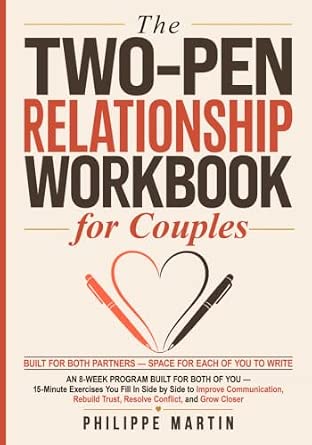
The Two-Pen Relationship Workbook for Couples: An 8-Week Program
- ✔ Program length: 8 weeks
- ✔ Exercise duration: 15 minutes
- ✔ Format: Side-by-side exercises for couples

Couples Therapy Workbook: Strategies to Connect, Restore Love and Trust, and Improve Communication and Intimacy
- ✔ Format: Relationship workbook
- ✔ Audience: Couples
- ✔ Stated topics: Connection, love and trust, communication, intimacy
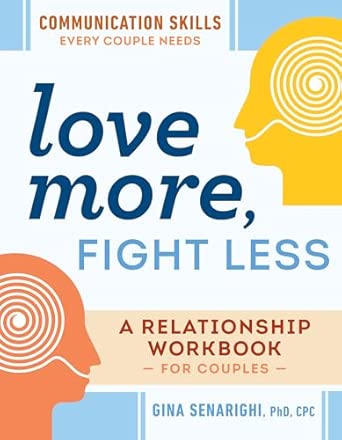
Love More, Fight Less: Communication Skills Every Couple Needs
- ✔ Format: Relationship workbook
- ✔ Audience: Couples
- ✔ Stated focus: Communication skills
Difficulty: Beginner | Time: 30-60 minutes to choose a workbook and set up; 20-45 minutes per session
What You’ll Need
Tools & Materials:
- A couples therapy workbook in print or digital form
- Two pens or devices for writing
- A quiet place where you can talk without interruption
- A timer or clock
Knowledge:
- Willingness to listen without interrupting
- Ability to pause a conversation when either partner feels overwhelmed
Agree that either person can pause an exercise without being pressured to continue. A workbook is a self-help resource, not a substitute for professional care when a relationship includes fear, threats, coercion, or violence. If you feel unsafe, prioritize individual support and a safety plan over joint exercises.
The Two-Pen Relationship Workbook for Couples: An 8-Week Program
For couples who are more likely to start when there is a plan, The Two-Pen Relationship Workbook gives the clearest structure in this group: an eight-week program with 15-minute exercises completed side by side. That makes it easier to picture how the book could fit into a regular day than either Couples Therapy Workbook, whose supplied description lists topics but no schedule, or Love More, Fight Less, whose details are sparse. Short sessions may lower the barrier to beginning a conversation, though they do not guarantee that both partners will want to participate or that every subject can be handled briefly.The limitation is that the available information says little about what the exercises actually cover. Couples looking specifically for help with trust, validation, or intimacy may find Couples Therapy Workbook’s stated focus more reassuring. Pick this one for a shared, time-bounded routine; skip it if you need to assess a detailed topic list before choosing or if your partner is not ready to work through exercises together.
Pros:
- Offers a defined eight-week program.
- Uses 15-minute exercises that may be easier to fit into a routine.
- Designed for partners to complete side by side.
- Provides a concrete participation format.
Cons:
- Both partners need to participate for the stated format to work.
- The supplied description does not identify the specific exercises or topics.
- A short session length may not suit every conversation.
Best for: Couples who want a defined eight-week plan with brief, shared sessions.
Not ideal for: Partners seeking a clearly described focus on a specific issue, or a workbook one person can complete alone.
Bottom line: Choose it when a short, shared schedule matters more than having a detailed topic list upfront.
“Choose it when a short, shared schedule matters more than having a detailed topic list upfront.”
Couples Therapy Workbook: Strategies to Connect, Restore Love and Trust, and Improve Communication and Intimacy
Couples Therapy Workbook is the broadest topical match for partners who do not want to reduce their work to communication alone. Its supplied description names connection, love and trust, communication, intimacy, and emotional validation. That makes it a stronger fit than Love More, Fight Less for couples whose conversations involve more than how they argue, and a more topic-explicit choice than The Two-Pen Relationship Workbook, whose available details emphasize schedule and format.That breadth is also the main tradeoff: the product information does not say how the workbook is organized, how long activities take, or whether it follows a progression. Readers who need a routine may prefer The Two-Pen’s stated eight-week structure. We also cannot tell from the description how deeply any individual subject is treated. This pick makes the most sense when topic coverage is your priority, while buyers who need a defined commitment or want to preview exercise details have less information to go on.
Pros:
- Addresses several relationship themes rather than communication alone.
- Specifically includes trust and emotional validation.
- Focuses on intimacy and connection as well as communication.
- Designed for couples.
Cons:
- No program length or session duration is provided.
- The supplied description does not detail the exercises.
- The broad scope makes it difficult to judge how deeply each topic is covered.
Best for: Couples who want a workbook described as covering trust, validation, communication, intimacy, and connection.
Not ideal for: Partners who need a known weekly schedule, short-session format, or detailed exercise descriptions before choosing.
Bottom line: Choose it when you want the widest stated range of relationship topics and can accept an unspecified format.
“Choose it when you want the widest stated range of relationship topics and can accept an unspecified format.”
Love More, Fight Less: Communication Skills Every Couple Needs
Love More, Fight Less signals a focused aim: communication skills for couples. That makes it a possible fit for partners whose main reason for seeking a workbook is improving how they talk through disagreements. Compared with Couples Therapy Workbook, the stated emphasis is narrower and less explicit about trust, intimacy, or emotional validation. Compared with The Two-Pen Relationship Workbook, there is no supplied information here about a program length, exercise duration, or side-by-side activity format.Those gaps matter when choosing a workbook together. The title alone does not tell us whether it uses guided prompts, lessons, or a structured sequence, so we cannot confidently recommend it for couples who want a particular method or schedule. Its clearest distinction is communication as the central theme; its drawback is that the available description gives less to evaluate than the other two entries. Choose it if that focus matches your goal and you are comfortable checking the book’s contents before deciding.
Pros:
- Has a clear communication-skills focus in its title.
- Appears aimed at couples rather than individual relationship work.
- May suit buyers who want to prioritize communication over broader topic coverage.
Cons:
- The supplied product description provides no further details.
- No exercise format or program length is specified here.
- Coverage of trust, intimacy, or emotional validation is not established by the supplied information.
Best for: Couples looking for a communication-centered workbook and willing to confirm its format and contents.
Not ideal for: Readers who want a known schedule, stated exercise length, or confirmed coverage of trust and intimacy.
Bottom line: Consider it for a communication-first goal, but seek more detail on its format before choosing it over the better-specified options.
“Consider it for a communication-first goal, but seek more detail on its format before choosing it over the better-specified options.”
As an Amazon Associate we earn from qualifying purchases.
Before You Start
Choose a time when neither of you is rushed, exhausted, intoxicated, or already in the middle of an argument. Decide on a session length and a signal for taking a break. Start with a topic that feels manageable; you do not have to begin with the most painful issue. If either partner is unsure whether a joint exercise feels safe, skip it and seek individual guidance from a qualified professional.
Step-by-Step Instructions
Name one relationship topic you both want help with, such as listening, recurring arguments, rebuilding closeness, or making decisions. Find a workbook that addresses that topic and includes clear couple exercises, reflection questions, and instructions. Read its introduction or sample pages together, check the author’s qualifications, and discuss whether the approach feels respectful to both of you. Choose the workbook only if you both agree to try it.
Tip:Pick one workbook to start. Using several at once can make it harder to follow through.
Check: Both partners can describe why this workbook seems relevant and agree to try its first exercise.
Step 2: Agree on ground rules
State the rules you will follow before opening the first exercise: speak from your own perspective, avoid insults and threats, and let each person finish a turn. Choose a pause signal, such as saying “time out,” and agree that either person can use it. If you set a return time after a pause, resume only if both people feel ready; never use the pause to force someone back into a conversation.
Tip:Keep the first session short. Ending while you can still speak respectfully is better than pushing through until one or both of you shut down.
Check: Each person can state the pause signal and the agreed rules in their own words.
Step 3: Set up a private session
Choose a quiet spot, silence notifications, and place the workbook and writing materials within reach. Agree on a session length of 20-45 minutes and set a timer. Put water nearby, and schedule the session when you will not need to rush to work, sleep, or another obligation.
Tip:If you have children or housemates, arrange a time when you can talk privately and without interruption.
Check: You have enough uninterrupted time to complete one exercise and briefly discuss how it went.
Step 4: Read the exercise before answering
Read the exercise instructions and any example aloud or silently together. Point out what the exercise asks you to do, how long it may take, and whether it feels manageable today. Reread the workbook’s directions if a question is unclear. Choose a different exercise or postpone this one if it feels too intense; do not turn it into a more confrontational activity.
Tip:Do one exercise at a time. Skimming ahead to sensitive prompts can raise tension before you have agreed how to handle them.
Check: Both partners know what they will be asked to share and agree that they can proceed or select another prompt.
Step 5: Take turns completing the exercise
Follow the workbook’s directions and give each partner a turn. Write separately first if the exercise asks you to write, then share only what it requests. While your partner speaks, listen without interrupting, summarize what you heard, and ask whether you understood correctly. Avoid correcting your partner’s memory or debating their feelings while they are answering.
Tip:Use specific examples and “I” statements, such as “I felt left out when we made that plan without discussing it.” Skip labels such as “always” and “never,” which can turn a reflection into an accusation.
Check: Both people have had a chance to respond, and each can summarize at least one point the other shared.
Step 6: Choose one practical change
Name one small action you can try before the next session. Choose a specific action you can do together where possible, such as setting aside ten minutes to check in after dinner or taking turns planning a weekly activity. Write down who will do what and when. Do not turn a workbook answer into a demand for an immediate promise on a major decision.
Tip:Choose an action you can realistically try once or twice. A small practice is easier to review than a broad goal such as “communicate better.”
Check: You have one written action with a clear time or situation in which to try it.
Step 7: Close the session and schedule the next one
Take a minute each to say what felt useful and what you would change next time. If the conversation remains calm, choose a date for another short session and write down the exercise you plan to do. If either person feels activated, stop the workbook discussion and use a calming activity, such as a quiet walk or time apart, before returning to ordinary conversation.
Tip:Do not keep processing a difficult topic after the agreed session ends just because the workbook is open.
Check: You have ended without pressure to resolve everything, and you know whether and when you plan to continue.
Common Mistakes to Avoid
- Trying to complete too many exercises in one sitting. — Set a timer and choose one prompt. Leave time to close the conversation calmly.
- Using a partner’s answers as evidence in an argument. — Treat written responses as material for understanding, not as ammunition. Discuss one answer at a time and ask before returning to it later.
- Choosing a workbook or exercise one partner does not accept. — Review the description and first exercise together. Agree on the topic and keep the option to skip a prompt.
- Expecting the workbook to resolve a serious or unsafe relationship problem on its own. — Seek qualified professional support for persistent distress, fear, coercion, violence, or concerns that joint conversations could increase risk.
Troubleshooting
Problem: The conversation turns into an argument.
Solution: Stop the exercise and use the agreed pause signal. Take space until both people can speak calmly. Resume later only if both want to; choose an easier prompt or seek a therapist’s help if the same pattern keeps repeating.
Problem: One partner does not want to answer a question.
Solution: Respect the refusal and do not press for an explanation or disclosure. Skip the prompt, choose a neutral exercise, or ask a couples therapist how to approach the topic safely.
Problem: The workbook’s instructions are confusing or feel one-sided.
Solution: Read the instructions again and compare them with the workbook’s stated approach. If the exercise still feels unclear or unfair, set it aside and choose another resource that both partners find respectful.
Problem: You miss the planned practice or session.
Solution: Reschedule without treating the missed session as failure. Choose a shorter time slot or a smaller action that fits your current routine.
What Success Looks Like
You have a workbook that both partners accept, a routine for working through one exercise at a time, and at least one specific practice to try between sessions. Success does not mean agreeing on every answer or resolving a longstanding conflict in one sitting. Look for signs of progress such as taking turns, understanding each other’s perspective more clearly, pausing before conflict escalates, or following through on a small shared action.
Next Steps
Try the agreed action during the week and note what helped or got in the way. At the next session, briefly review that result before starting another exercise. Keep sessions short and regular enough to fit your routine. If exercises repeatedly lead to distress, stalemates, or escalating conflict, pause the workbook and contact a qualified couples therapist. Seek individual support and prioritize safety if you feel controlled, threatened, or unsafe.
Frequently Asked Questions
Can we use a couples therapy workbook without a therapist?
Yes. Many couples use workbooks independently for structured reflection and communication practice. Follow the directions, move at a pace both people accept, and seek a therapist if the exercises raise issues you cannot manage safely or constructively together.
How often should we work on the workbook?
Start with one 20-45 minute session each week or every other week, depending on your schedules and energy. A steady pace that leaves room to practice is usually more useful than several long sessions close together.
What if we disagree about an answer?
You do not need to reach agreement about each person’s experience. Take turns explaining what the issue means to you, summarize what you heard, and identify any shared concern or next action. Leave the question open if discussion becomes heated.
Should we work on the hardest topic first?
No. Begin with a topic that feels manageable to both of you and gives you a chance to practice listening and pausing. Save highly sensitive subjects for a time when you both feel ready, or discuss them with a therapist.