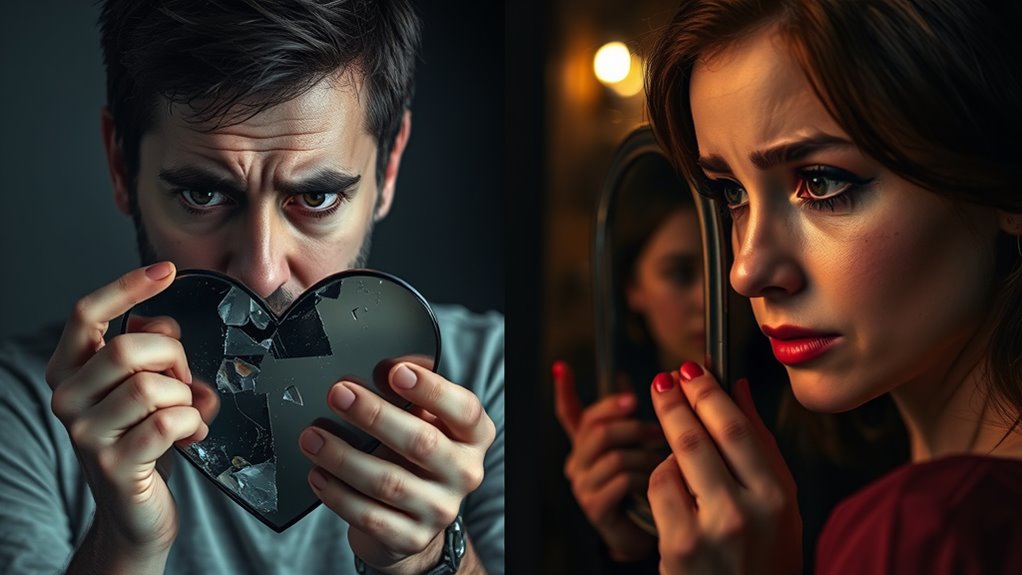

Love addiction isn’t just a gender issue; both men and women struggle with emotional dependencies rooted in attachment styles. Men may show anxiety or avoidance, while women often seek constant reassurance, but both face similar underlying issues like fear of abandonment or shame. Stereotypes oversimplify these patterns, making it harder to understand the true complexity of love addiction. If you’re curious about how these dynamics really work, you’ll find the insights ahead quite revealing.
Key Takeaways
- Love addiction manifests through emotional dependency, affecting both genders equally, challenging stereotypes of gender-specific behaviors.
- Men’s attachment styles often include anxious or avoidant tendencies, similar to women’s anxious attachment, contradicting stereotypes.
- Women are stereotypically seen as clingy, but men also experience dependency, sometimes through emotional distancing or obsessive behaviors.
- Stereotypes overlook the complex roots of love addiction, which stem from attachment styles and past experiences across both genders.
- Recognizing and addressing attachment issues is essential for healing, regardless of gender, to foster healthier relationships beyond stereotypes.
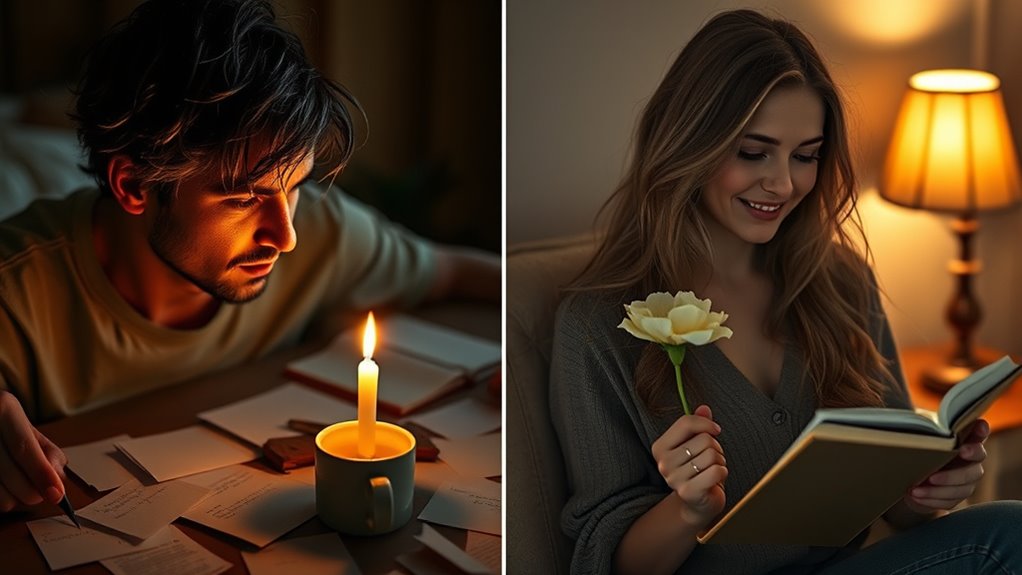
Have you ever wondered how love addiction manifests differently in men and women? It’s a question that often sparks stereotypes, but understanding the core dynamics reveals a more nuanced picture. Love addiction isn’t just about obsessing over someone; it’s deeply rooted in emotional dependency and attachment styles that shape how each gender experiences intimacy. When you’re caught in love addiction, your emotional dependency makes you rely heavily on your partner to fill an internal void, often leading to compulsive behaviors and an inability to feel secure on your own. This dependency affects your attachment style, which is the way you connect emotionally with others, and it plays a significant role in how love addiction develops and manifests.
Love addiction stems from emotional dependency and attachment styles shaping intimacy in men and women.
For men, love addiction might often be mistaken for a need to maintain control or prove their worth through relationships. They may develop anxious or avoidant attachment styles, where they either cling desperately to their partners out of fear of abandonment or withdraw altogether to protect themselves from emotional pain. Men with anxious attachment styles may become overly dependent on their partners for validation, leading to obsessive behaviors and a fear of losing the relationship. Conversely, men with avoidant styles might struggle to open up emotionally, yet still find themselves craving connection, which fuels compulsive attempts to seek intimacy despite their resistance to vulnerability. These patterns often mask deeper emotional dependencies, making it seem like love addiction in men is about dominance or detachment, but underneath, it’s about unresolved attachment issues. Recognizing the influence of attachment styles can be crucial in addressing love addiction effectively.
Women, on the other hand, often experience love addiction through a different lens. They may be more prone to develop anxious attachment styles, where they seek constant reassurance and become overly emotionally dependent on their partner’s affection. This dependency can lead to feelings of insecurity, guilt, or shame if they’re not receiving enough love or attention. Women might also internalize their emotional dependency, believing they’re responsible for their partner’s happiness, which intensifies their need for validation. Their love addiction can manifest as clinginess, obsessive behaviors, or sacrificing their needs to keep the relationship afloat. While societal stereotypes suggest women are more emotional, the reality is that their attachment styles and emotional dependencies are just as complex as men’s, often shaped by past experiences and internalized beliefs about love and worth.
In both cases, understanding emotional dependency and attachment styles is key to recognizing love addiction beyond stereotypes. It’s about seeing how deep-seated fears of abandonment, shame, or unworthiness drive compulsive attachment behaviors. Whether you’re a man or a woman, addressing these underlying issues offers a path toward healthier, more secure relationships, free from the cycle of love addiction.

How To Heal An Anxious Attachment Style: A Self Therapy Journal to Conquer Anxiety & Become Secure in Relationships
As an affiliate, we earn on qualifying purchases.
As an affiliate, we earn on qualifying purchases.
Frequently Asked Questions
Can Love Addiction Affect Men and Women Differently in Long-Term Relationships?
Love addiction can affect men and women differently over the long term, mainly due to variations in emotional dependency and attachment styles. You might notice that men with love addiction often struggle with emotional dependency, seeking constant reassurance, while women may cling to attachment styles rooted in fear of abandonment. Recognizing these differences helps you understand your patterns better and seek tailored support to build healthier relationships.
What Are the Most Common Signs of Love Addiction in Men Versus Women?
You might notice that love addiction signs differ by gender through attachment patterns and emotional dependency. Men often show emotional withdrawal or avoidance, craving reassurance, while women may become overly clingy or dependent. Both genders can experience intense longing and fear of abandonment, but the way they express emotional dependency varies. Recognizing these signs helps you understand that love addiction manifests uniquely, regardless of gender, emphasizing the importance of addressing attachment issues.
How Does Societal Perception Influence Treatment Options for Love Addiction?
Societal perception profoundly impacts treatment options for love addiction, often reinforcing stereotype impact and creating treatment disparities. You might find that men face less support due to stereotypes about masculinity, while women are more readily encouraged to seek help. Challenging these stereotypes can lead to more equitable treatment access, helping you find personalized approaches that address your unique needs without societal bias holding you back.
Are There Specific Triggers That Lead to Love Addiction in Men Compared to Women?
You might find that emotional triggers like low self-esteem or fear of abandonment impact men and women differently, influencing their love addiction. Men often experience triggers related to societal expectations of strength, while women may be more affected by relationship patterns rooted in dependency. Recognizing these emotional triggers helps you understand your behavior better, enabling you to address underlying issues and develop healthier relationship patterns for long-term well-being.
What Role Does Childhood Experience Play in Love Addiction Gender Differences?
Childhood experiences shape love addiction differently by influencing attachment styles. If you experienced childhood trauma, you might develop anxious or avoidant attachment, impacting how you pursue relationships. Men and women with similar traumas may respond differently due to societal expectations, but both can develop love addiction as a way to seek validation or escape. Recognizing these patterns helps you understand your emotional triggers and work toward healthier relationships.

Love Addiction Workbook: Evidence-Based Tools to Support Recovery and Help You Build Healthy Long-Term Relationships
As an affiliate, we earn on qualifying purchases.
As an affiliate, we earn on qualifying purchases.
Conclusion
Remember, love addiction doesn’t adhere to gender lines—it’s like a wildfire that can ignite in anyone’s heart. Whether you’re chasing after a fleeting ember or tending a steady flame, understand that stereotypes are just shadows in the night. By recognizing your own patterns, you can steer your journey toward healthier connections. Don’t let love’s illusion turn your life into a tangled web—choose awareness and break free, much like dawn breaking through the darkness.

12 Smart Things to Do When the Booze and Drugs Are Gone: Choosing Emotional Sobriety through Self-Awareness and Right Action (Berger 12)
12 Smart Things to Do When the Booze and Drugs Are Gone: Choosing Emotional Sobriety Through Self-Awareness and…
As an affiliate, we earn on qualifying purchases.
As an affiliate, we earn on qualifying purchases.

Wired for Love: How Understanding Your Partner's Brain and Attachment Style Can Help You Defuse Conflict and Build a Secure Relationship
As an affiliate, we earn on qualifying purchases.
As an affiliate, we earn on qualifying purchases.