For premium video doorbells for peace of mind, I’d start with the Google Nest Doorbell (Wired, 3rd Gen) for its 2K HDR video and dependable wired setup, while the eufy Security Video Doorbell E340 stands out for dual-camera coverage and local storage. The REOLINK PoE Video Doorbell is a strong fit if you want a wired connection and can run network cable. The main tradeoffs are power and installation effort, the breadth of doorstep coverage, and whether you prefer local storage or a cloud-dependent setup. The right choice depends on your entryway, wiring, and appetite for ongoing service plans. Read on for a ranked breakdown of all 11 options and a guide to matching one to your home.

Get gifts for the two of you delivered free with Prime
- Fast, free delivery on millions of items
- Prime Video, Amazon Music and more included
- Member-only deals all year
Key Takeaways
- Wired reliability sets the lead: The Google Nest Doorbell (Wired, 3rd Gen) ranks first for buyers who want 2K HDR video without relying on a battery charging routine.
- Two cameras can change the view: The eufy E340 and the Anona and Philips dual-camera models are distinct picks for buyers concerned about package visibility and blind spots near the threshold.
- Local storage is a real point of separation: The eufy E340 includes 8GB local storage, while buyers comparing other models should check recording access and any service-plan requirements before choosing.
- Installation determines the shortlist: The REOLINK PoE model needs network cabling, while the Blink, Roku, and battery-powered Nest are better suited to simpler installs.
- Premium means different things here: The 5MP Aosu prioritizes higher stated resolution, the Tapo D225 offers wired-or-battery flexibility, and the Blink emphasizes long battery life and easy setup.
| Blink Video Doorbell – HD View, Two-Year Battery Life, Easy Setup, Black | 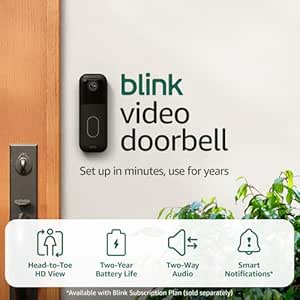 | Best for Low-Maintenance Battery Life | Video resolution: 1440 x 1440p | Field of view: 150° horizontal | Frame rate: 30 FPS | VIEW ON AMAZON | See Our Full Breakdown |
| Roku Smart Home Wireless Video Doorbell & Chime |  | Best for Simple, Weather-Resistant Coverage | Resolution: 1440p HD | Viewing angle: 150 degrees | Night vision: Yes | VIEW ON AMAZON | See Our Full Breakdown |
| Anona 3K Dual-Camera Video Doorbell with Chime |  | Best for Dual-View Local Recording | Camera resolution: 5MP main camera + 2MP secondary camera | Power: Rechargeable 5200mAh battery or hardwired | Battery life: Up to 100 days | VIEW ON AMAZON | See Our Full Breakdown |
| Philips Security Video Doorbell Camera with Chime, Dual Cameras, 2K QHD |  | Best for Subscription-Free Storage | Camera resolution: 2K QHD | Camera setup: Dual cameras | Night vision: Infrared | VIEW ON AMAZON | See Our Full Breakdown |
| Tapo D225 2K QHD Wired or Battery-Powered Smart Video Doorbell with Chime |  | Best for Broad Head-to-Toe Coverage | Model: D225 | Video resolution: 2K QHD | Field of view: 180° head-to-toe | VIEW ON AMAZON | See Our Full Breakdown |
| Google Nest Doorbell (Wired, 3rd Gen), 2K HDR, Hazel |  | Best for Google Home Households | Video resolution: 2K HDR | Field of view: 166° | Power: Corded electric | VIEW ON AMAZON | See Our Full Breakdown |
| Google Nest Doorbell (Battery), Ivy |  | Best for Flexible Installation | Resolution: HD | Photo sensor: 5 MP | Video features: HDR, night vision, 6× digital zoom | VIEW ON AMAZON | See Our Full Breakdown |
| REOLINK PoE Video Doorbell, 2K Wired Outdoor Security Camera with Chime V2 | 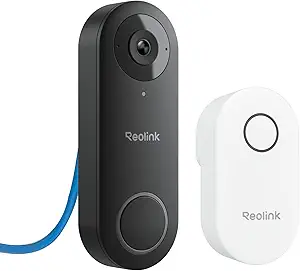 | Best for Local Recording | Video resolution: 2K | Aspect ratio: 4:3 | Field of view: 135° horizontal, 100° vertical, 180° diagonal | VIEW ON AMAZON | See Our Full Breakdown |
| aosu 2K Wireless Doorbell Camera with aosuBase | 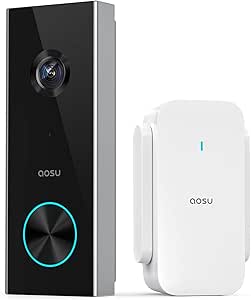 | Best for Subscription-Free Local Storage | Resolution: 2K | Field of view: 166° | Power: Battery, 5200 mAh | VIEW ON AMAZON | See Our Full Breakdown |
| eufy Security Video Doorbell E340, Dual Cameras, 2K FHD, 8GB Local Storage |  | Best for Package Coverage | Camera resolution: 2K FHD | Camera setup: Dual cameras | Viewing angle: 160° | VIEW ON AMAZON | See Our Full Breakdown |
| Aosu 5MP Ultra HD Wireless & Wired Video Doorbell Camera |  | Best for Detailed Local Recording | Resolution: 5MP Ultra HD | Field of view: 166° | Detection: Radar, PIR infrared, and AI human recognition | VIEW ON AMAZON | See Our Full Breakdown |
| premium video doorbells for peace of mind | Power | Field of view | Connectivity |
|---|---|---|---|
| Blink Video Doorbell | 3 AA 1.5V lithium batteries | 150° horizontal | 2.4 GHz Wi-Fi (802.11b/g/n) |
| Roku Smart Home Wireless Video | — | — | — |
| Anona 3K Dual-Camera Video Doo | Rechargeable 5200mAh battery or hardwired | — | 2.4GHz Wi-Fi; Wi-Fi 6 listed |
| Philips Security Video Doorbel | — | — | — |
| Tapo D225 2K QHD Wired or Batt | — | 180° head-to-toe | — |
| Google Nest Doorbell | Corded electric | 166° | Wired, Wi-Fi |
| Google Nest Doorbell | Battery; can also connect to existing doorbell wires | — | Wi-Fi 2.4 GHz and 5 GHz, Bluetooth |
| REOLINK PoE Video Doorbell | — | 135° horizontal, 100° vertical, 180° diagonal | Ethernet, Power over Ethernet; Wi-Fi not supported |
| aosu 2K Wireless Doorbell Came | Battery, 5200 mAh | 166° | — |
| eufy Security Video Doorbell E | Battery powered or wired | — | — |
| Aosu 5MP Ultra HD Wireless & W | Wireless battery or wired | 166° | 2.4 GHz and 5 GHz Wi-Fi |
More Details on Our Top Picks
Blink Video Doorbell – HD View, Two-Year Battery Life, Easy Setup, Black
The Blink Video Doorbell is the battery-life pick for buyers who want dependable doorstep alerts without frequent charging. Its up-to-two-year runtime on included AA lithium batteries is a clear advantage over the Roku doorbell’s stated six-month battery life, especially for a doorbell that is awkward to reach. The 1440 x 1440 head-to-toe view and infrared night vision cover routine visitor checks, while wireless or wired installation offers flexibility. Alexa integration adds convenient voice control, but this is a simpler security setup than the Tapo D225, which adds a 180° view and person, package, and vehicle detection. Blink’s main compromises are the separately sold Sync Module and subscription-dependent cloud storage and advanced features. I’d choose it for low upkeep, not for the richest local-recording or detection options.
Pros:- Up to two years of battery life with included AA lithium batteries
- 1440 x 1440 video with a square head-to-toe view and infrared night vision
- Wireless or wired installation gives flexibility at different entrances
- Alexa integration supports voice control and alerts
Cons:- Sync Module is sold separately
- Cloud storage and advanced features require a subscription
- Stable internet is needed for reliable connected use
Best for: Alexa households that want a straightforward wireless doorbell and prefer replacing batteries infrequently.
Not ideal for: Buyers who want included local storage, advanced detection, or cloud features without a subscription; the Sync Module is also sold separately.
- Video resolution:1440 x 1440p
- Field of view:150° horizontal
- Frame rate:30 FPS
- Power:3 AA 1.5V lithium batteries
- Chime wiring compatibility:8–24 VAC
- Connectivity:2.4 GHz Wi-Fi (802.11b/g/n)
- Dimensions:1.85 x 5.12 x 1.44 in
- Operating temperature:-5°F to 113°F
Our verdict“Choose Blink if long battery life and Alexa convenience matter more than built-in local storage or broader detection features.”
Roku Smart Home Wireless Video Doorbell & Chime
The Roku Smart Home Wireless Video Doorbell & Chime suits buyers who want the essential security checks—clear video, night vision, motion and sound detection, and two-way audio—in a weather-resistant wireless package. Its 1440p video and 150-degree view put it in the same broad coverage class as Blink, but the stated up-to-six-month battery life means more regular charging than Blink’s much longer claimed runtime. IP65 weather resistance is useful for exposed entrances, and Alexa and Google voice control offer wider assistant compatibility than Blink’s Alexa-focused integration. The included 90-day subscription period gives a short window to try cloud features, but ongoing cloud storage and advanced functions require a subscription. Setup may also be harder without existing doorbell wiring. This is a practical, uncomplicated pick, not the strongest choice for long battery intervals or subscription-free recording.
Pros:- 1440p HD video with night vision and a 150-degree viewing angle
- IP65 weather resistance for outdoor exposure
- Two-way audio plus motion and sound detection
- Works with Alexa and Google voice control
Cons:- Battery life is stated at up to six months, shorter than Blink’s claimed runtime
- Cloud storage and advanced features require a subscription after the included 90-day period
- Installation may be challenging without existing doorbell wiring
Best for: Households seeking a weather-resistant wireless doorbell with two-way talk and Alexa or Google voice control.
Not ideal for: People who want very long battery intervals or ongoing cloud storage without a subscription; setup may be challenging without existing wiring.
- Resolution:1440p HD
- Viewing angle:150 degrees
- Night vision:Yes
- Battery life:Up to 6 months
- Weather resistance:IP65
- Subscription included:90 days
- Detection:Motion and sound
- Voice assistant compatibility:Alexa and Google
Our verdict“Pick Roku for weather-resistant core coverage and broad voice-assistant support if regular recharging and a cloud subscription suit your routine.”
Anona 3K Dual-Camera Video Doorbell with Chime
Anona is the choice here for buyers who want to inspect both visitors and the area immediately below the doorbell. Its 5MP main camera and 2MP secondary camera offer a more explicitly split view than the single-camera Blink, while AI detection for people, pets, and packages can help focus alerts on relevant activity. The option to save footage to a microSD card up to 512GB gives it an advantage over subscription-led cloud setups, though the card is not included. Hardwiring enables 24/7 recording; battery operation instead is rated for up to 100 days, far shorter than Blink’s stated two years or Tapo’s up to eight months. That tradeoff makes Anona a better fit for owners willing to wire it or recharge more often in exchange for dual-camera coverage and local storage. Wi-Fi is limited to 2.4GHz.
Pros:- Dual cameras show visitors and activity near the doorstep
- AI detection covers people, pets, and packages
- Supports local microSD storage up to 512GB and hardwired 24/7 recording
- Battery or hardwired power, with color night vision and an indoor chime
Cons:- The microSD card is not included
- Battery life is rated for up to 100 days, shorter than Blink’s stated runtime
- Connectivity is limited to 2.4GHz Wi-Fi
Best for: Homeowners who want separate views of visitors and doorstep activity, plus local recording and AI alerts.
Not ideal for: People seeking long battery life or 5GHz Wi-Fi; battery use is rated for up to 100 days and the microSD card must be purchased separately.
- Camera resolution:5MP main camera + 2MP secondary camera
- Power:Rechargeable 5200mAh battery or hardwired
- Battery life:Up to 100 days
- Hardwired recording:24/7 recording
- Storage:Up to 512GB microSD card or optional cloud storage
- Connectivity:2.4GHz Wi-Fi; Wi-Fi 6 listed
- Detection:AI detection for people, pets, and packages
- Weather resistance:IP65
- Smart assistant compatibility:Amazon Alexa and Google Assistant
Our verdict“Choose Anona if dual-camera views and local recording matter more than extended battery life or 5GHz connectivity.”
Philips Security Video Doorbell Camera with Chime, Dual Cameras, 2K QHD
The Philips Security Video Doorbell is a strong match for buyers who want dual-camera coverage and recorded clips without a monthly storage plan. Its 2K QHD video, infrared night vision, and up to 8GB of encrypted video storage provide a self-contained approach that contrasts with Blink’s subscription-dependent cloud storage. Battery or wired power also makes installation more flexible, and Alexa and Google Assistant compatibility broadens its smart-home fit. The storage allowance is limited, though, so households that want a longer archive may prefer the Tapo D225, which accepts a microSD card up to 512GB—but that card is an extra purchase. Philips also limits live streaming to the front camera, reducing the usefulness of its second camera for real-time checks. I’d favor it for simpler fee-free recording, not for expansive storage or the widest live view.
Pros:- Dual cameras pair with 2K QHD video and infrared night vision
- Up to 8GB of encrypted video storage without a monthly storage fee
- Battery or wired power supports flexible installation
- Works with Alexa and Google Assistant
Cons:- Storage capacity is limited to 8GB
- Live streaming is available only from the front camera
- Wi-Fi is required for operation
Best for: Smart-home households that want dual-camera coverage and encrypted video storage without a monthly storage fee.
Not ideal for: Buyers who need large local archives or want to live-stream both camera views; storage is limited to 8GB and live view is front-camera only.
- Camera resolution:2K QHD
- Camera setup:Dual cameras
- Night vision:Infrared
- Power options:Battery or wired (8–24V, >10VA)
- Battery capacity:10,000mAh
- Storage:Up to 8GB encrypted videos
- Audio:Two-way
- Weather resistance:Yes
- Smart assistant compatibility:Alexa and Google Assistant
Our verdict“Choose Philips if fee-free encrypted clips and dual-camera coverage outweigh the limited archive and front-camera-only live streaming.”
Tapo D225 2K QHD Wired or Battery-Powered Smart Video Doorbell with Chime
The Tapo D225 is the most coverage-focused single-camera choice in this group: its 180° head-to-toe view is wider than the 150-degree Roku and Blink options, helping capture more of the doorstep in one frame. A motion-activated spotlight adds full-color night vision, while person, package, and vehicle detection can separate useful alerts from less relevant motion without a subscription. The included modular chime, wedges, and battery-or-wired power make installation more adaptable than Anona’s battery setup, though Anona’s dual cameras provide a distinct advantage for viewing the space close to the door. Tapo supports microSD storage up to 512GB, but the card is sold separately; cloud history requires Tapo Care. Its 2.4GHz-only Wi-Fi may also rule it out for buyers whose network depends on 5GHz.
Pros:- 180° head-to-toe field of view with 2K QHD video
- Full-color night vision with a motion-activated spotlight
- Person, package, and vehicle detection is available without a subscription
- Battery or wired power, microSD support, and a modular indoor chime
Cons:- Supports 2.4GHz Wi-Fi only, not 5GHz
- microSD card is sold separately
- Cloud video history requires a Tapo Care subscription
Best for: Households that want a wide doorstep view, color night vision, useful detection alerts, and a choice of local or cloud storage.
Not ideal for: Buyers whose Wi-Fi setup depends on 5GHz or who want included microSD storage and cloud history without a subscription.
- Model:D225
- Video resolution:2K QHD
- Field of view:180° head-to-toe
- Power options:Built-in 10,000mAh battery or 8–24V hardwiring
- Battery life:Up to 8 months
- Wi-Fi:2.4GHz; does not support 5GHz
- Local storage:microSD card up to 512GB
- Detection:Person, package, and vehicle
- Included accessories:Modular indoor chime, 15° horizontal wedge, and 5° vertical wedge
Our verdict“Choose the Tapo D225 for the broadest stated single-camera view and versatile detection, provided 2.4GHz Wi-Fi and separate storage costs work for you.”
Google Nest Doorbell (Wired, 3rd Gen), 2K HDR, Hazel
The wired Nest Doorbell is my pick for households that want detailed porch footage without managing a rechargeable battery. Its 2K HDR video, night vision, and 166° view help capture visitors across a broad entry area, while intelligent alerts and two-way audio support quick responses. Compared with the battery-powered Google Nest Doorbell (Battery), this model offers higher listed resolution and avoids charging interruptions, but it requires existing wiring or a suitable wired installation. Its strongest case is a home already organized around Google Home; some Gemini features require a Google Home Premium subscription, so those capabilities are not all included by default. Choose it over the REOLINK PoE Video Doorbell if you prefer Wi-Fi and Google integration to Ethernet-based local recording. Skip it if wiring is impractical or you want maximum recording control without subscriptions.
Pros:- 2K HDR video and a 166° field of view provide detailed, broad entry coverage.
- Wired power avoids routine battery recharging.
- Night vision, intelligent alerts, and two-way audio support monitoring after dark and remote conversations.
- Google Home integration suits households already using Google smart-home devices.
Cons:- Requires a wired installation, limiting placement and suitability for some homes.
- Some Gemini features require a Google Home Premium subscription.
Best for: Google Home households with existing doorbell wiring that want higher-detail video and alerts without battery charging.
Not ideal for: Renters or homeowners without usable doorbell wiring, and buyers who want every Gemini feature without a separate subscription.
- Video resolution:2K HDR
- Field of view:166°
- Power:Corded electric
- Connectivity:Wired, Wi-Fi
- Key features:Night vision, intelligent alerts, two-way audio
- Dimensions:5.16 × 1.65 × 1.14 inches
- Color:Hazel
Our verdict“Choose this wired Nest if your home has doorbell wiring and you value detailed coverage integrated with Google Home.”
Google Nest Doorbell (Battery), Ivy
The battery-powered Nest Doorbell is the flexible choice here: it can be installed without doorbell wiring or connected to existing wires, making it easier to fit more homes than the wired Nest. Its person, package, animal, and vehicle alerts help distinguish useful activity from general motion, and three hours of event history are available without a subscription. It also keeps up to one hour of events during Wi-Fi or power outages, a useful backup when a connection drops. The tradeoff is HD HDR video rather than the wired Nest’s 2K HDR, and it does not offer continuous 24/7 recording. Longer event history requires Nest Aware. Compared with the aosu 2K Wireless Doorbell, it emphasizes Google Home features and outage event storage over a higher stated resolution and included local-storage base.
Pros:- Can operate on battery or connect to existing doorbell wiring.
- Distinguishes people, packages, animals, and vehicles in alerts.
- Includes HDR, night vision, live viewing, and three hours of free event history.
- Can retain up to one hour of events during Wi-Fi or power outages.
Cons:- Does not support continuous 24/7 video recording.
- Longer event history requires a Nest Aware subscription.
- Its HD resolution is lower than the 2K HDR wired Nest in this lineup.
Best for: Renters and homeowners who need a battery-powered installation, want smart event categories, and already use the Google Home app.
Not ideal for: Buyers who need continuous recording, higher-resolution footage than HD, or extended event history without a subscription.
- Resolution:HD
- Photo sensor:5 MP
- Video features:HDR, night vision, 6× digital zoom
- Connectivity:Wi-Fi 2.4 GHz and 5 GHz, Bluetooth
- Power:Battery; can also connect to existing doorbell wires
- Event history:3 hours free; up to 60 days with Nest Aware
- Dimensions:0.95 × 1.8 × 6.3 inches
- Color:Ivy
Our verdict“Pick this Nest for flexible installation and categorized alerts if HD footage and event-based recording meet your needs.”
REOLINK PoE Video Doorbell, 2K Wired Outdoor Security Camera with Chime V2
For buyers who put recording control and local storage ahead of installation convenience, the REOLINK PoE doorbell makes a distinct case. It records 2K video in a 4:3 format with a 180° diagonal view, and supports microSD cards up to 512GB, Reolink NVR, or FTP/NAS storage. Local options and 24/7 recording can reduce dependence on cloud plans, while humanoid detection and motion zones help focus alerts. The included Chime V2 adds an indoor alert without making a phone the only way to hear a visitor. Unlike the Wi-Fi-based Google Nest Doorbell (Wired, 3rd Gen), this model requires Ethernet and does not support Wi-Fi; that can mean a more demanding installation, but it suits homes already wired for PoE. The power supply and microSD card are not included, and third-party NVRs are unsupported.
Pros:- 2K video and 180° diagonal coverage capture a broad entry area.
- Supports microSD storage up to 512GB, Reolink NVR, and FTP/NAS.
- Supports 24/7 recording and customizable motion zones.
- Includes Chime V2 with 10 tunes and adjustable volume.
Cons:- Requires Ethernet for PoE and does not support Wi-Fi.
- Power supply and microSD card are not included.
- Third-party NVRs are not supported.
Best for: Homeowners with Ethernet or PoE access who want local recording, 24/7 capture, and configurable motion monitoring.
Not ideal for: People who need a wireless installation, rely on Wi-Fi-only networking, or want to use a third-party NVR.
- Video resolution:2K
- Aspect ratio:4:3
- Field of view:135° horizontal, 100° vertical, 180° diagonal
- Connectivity:Ethernet, Power over Ethernet; Wi-Fi not supported
- Power options:IEEE 802.3af PoE, 12–24V AC, or 24V DC
- Night vision range:100 feet
- Weather resistance:IP65
- Storage:MicroSD up to 512GB, Reolink NVR, or FTP/NAS
Our verdict“Choose the REOLINK if you can run Ethernet and want local, continuous recording rather than a simpler Wi-Fi setup.”
aosu 2K Wireless Doorbell Camera with aosuBase
The aosu’s clearest advantage is that its included aosuBase Mini serves three jobs: it extends 2.4 GHz Wi-Fi coverage, acts as an indoor chime, and accepts a microSD card for local recording. That gives it a more self-contained setup than the eufy Security Video Doorbell E340, whose listed local storage is built in but whose full functionality may need a compatible chime or hub. The doorbell pairs 2K video and a 166° field of view with AI human detection, two-way talk, quick replies, and a voice changer. Those communication options are useful when a visitor arrives while nobody is near the door. The limits are a 2.4 GHz-only connection and a microSD card sold separately; cloud storage is also available as an option. Compared with the wired REOLINK PoE, aosu is easier to place but does not offer its listed 24/7 recording setup.
Pros:- 2K video and a 166° field of view cover a broad porch area.
- AI human detection can help reduce alerts triggered by other movement.
- Included aosuBase Mini works as a Wi-Fi extender and indoor chime.
- Local microSD storage is available without requiring a cloud plan.
Cons:- Supports 2.4 GHz Wi-Fi only, not 5 GHz.
- MicroSD card is sold separately.
- Cloud storage is optional and may require a subscription.
Best for: Households seeking a battery-powered 2K doorbell with an included indoor chime, local-storage capability, and app-based visitor replies.
Not ideal for: Homes that use only 5 GHz Wi-Fi or buyers who expect local recording to work without purchasing a microSD card.
- Resolution:2K
- Field of view:166°
- Power:Battery, 5200 mAh
- Wi-Fi:2.4 GHz; 5 GHz not supported
- Local storage:MicroSD up to 128GB; card sold separately
- Detection:AI human detection
- Audio:Two-way talk, quick replies, voice changer
- Compatibility:Alexa and Google Assistant
Our verdict“Choose aosu if you want a wireless doorbell with a bundled base and local-storage option, and your network supports 2.4 GHz.”
eufy Security Video Doorbell E340, Dual Cameras, 2K FHD, 8GB Local Storage
The E340 earns its place for households that worry about parcels left below a standard doorbell’s view. Its dual cameras add a second angle to the main 2K view, giving porch monitoring a more package-focused approach than the single-camera Google Nest Doorbell (Wired, 3rd Gen). The 8GB built-in local storage also keeps recordings on the device without a subscription fee, and wireless or wired installation offers more placement flexibility than the Ethernet-dependent REOLINK. Night vision and audio, motion, human, and package alerts add useful coverage for everyday arrivals. The tradeoffs are a 2.4 GHz-only Wi-Fi connection and a listed night-vision range of 16 feet. The plastic enclosure may also be less durable than a metal-bodied option. Buyers should check chime or hub compatibility before choosing it, since full functionality may require one.
Pros:- Dual cameras provide broader porch and package monitoring than a single-camera layout.
- Built-in 8GB local storage works without a subscription fee.
- Supports both battery-powered and wired installation.
- Provides 2K video, night vision, and package, human, motion, and audio alerts.
Cons:- Wi-Fi support is limited to 2.4 GHz.
- Listed night-vision range is 16 feet.
- A compatible chime or hub may be needed for full functionality, and the enclosure is plastic.
Best for: Households that receive frequent deliveries and want dual-angle porch coverage, local storage, and a choice of battery or wired power.
Not ideal for: Buyers with only 5 GHz Wi-Fi, those who need longer-range night vision, or anyone without a compatible chime or hub when full functionality is required.
- Camera resolution:2K FHD
- Camera setup:Dual cameras
- Viewing angle:160°
- Local storage:8GB eMMC
- Night vision range:16 feet
- Power:Battery powered or wired
- Wi-Fi:2.4 GHz
- Alert types:Audio, motion, human, package
Our verdict“Pick the E340 if package visibility and subscription-free local storage matter more than 5 GHz Wi-Fi or a longer stated night-vision range.”
Aosu 5MP Ultra HD Wireless & Wired Video Doorbell Camera
The Aosu 5MP is a strong fit for buyers who want sharp visitor and package footage without relying on a recording subscription. Its 8GB local storage supports up to 60 days of loop recording, while radar, infrared, and AI human recognition work together to cut down on alerts triggered by incidental motion. Compared with the aosu 2K Wireless Doorbell Camera with aosuBase, this model offers higher stated resolution and built-in local storage, though its 8GB capacity is limited. The 166° field of view helps cover a broad entry area, and battery or wired power gives more installation flexibility than a strictly wired option such as the REOLINK PoE Video Doorbell. The tradeoffs are its substantial 930 g weight, dependence on Wi-Fi for remote features, and IP66 weather rating, which may not suit buyers seeking the toughest outdoor construction.
Pros:- 5MP resolution and a 166° view capture detailed, broad entryway footage.
- Radar, PIR, and AI human recognition help reduce irrelevant motion alerts.
- Local loop recording works without a subscription.
- Battery and wired power options suit more installation setups.
Cons:- The 8GB local storage capacity limits how much footage can be retained.
- Remote features require a working Wi-Fi connection.
- At 930 g, it is heavy, and its IP66 rating may not satisfy buyers seeking higher weather protection.
Best for: Households that want detailed footage, fewer motion alerts, and subscription-free local recording with a choice of battery or wired power.
Not ideal for: Buyers who need extensive video archiving, strong remote features without reliable Wi-Fi, or a lightweight doorbell for a narrow mounting area.
- Resolution:5MP Ultra HD
- Field of view:166°
- Detection:Radar, PIR infrared, and AI human recognition
- Storage:8GB local storage; up to 60-day loop recording
- Power:Wireless battery or wired
- Connectivity:2.4 GHz and 5 GHz Wi-Fi
- Weather resistance:IP66
- Night vision range:23 feet
Our verdict“Choose the Aosu 5MP if detailed local recording and flexible power matter more than larger storage or a lighter, more rugged design.”

How We Picked
I ranked these doorbells around the parts of home security that most affect peace of mind: useful video coverage, dependable power, usable recording options, setup demands, and the likelihood that a household can maintain the system over time. I also weighed whether a model’s standout feature solves a distinct entryway problem, such as package visibility or avoiding frequent battery changes. A higher resolution alone did not earn a higher place; it matters less if the mounting position, network connection, or recording arrangement does not suit the home.
The Google Nest Doorbell (Wired, 3rd Gen) leads for its wired power and 2K HDR combination. The eufy E340 and REOLINK PoE follow for buyers prioritizing local recording or a wired network connection, while flexible and battery-focused choices rank well for homes where installation is the bigger constraint. The Blink, Roku, and battery Nest remain useful alternatives, but their simpler setup or power flexibility does not match every buyer’s preference for sustained monitoring. These rankings reflect feature fit and tradeoffs, not hands-on testing or a claim that one model suits every home.
Factors to Consider When Choosing Premium Video Doorbells For Peace Of Mind
Before choosing a model, I’d match the doorbell to the physical entryway and the way your household expects to retrieve footage. A camera can offer reassuring specifications yet be a poor fit if it misses packages, depends on wiring you do not have, or stores clips in a way you would not use. These broader questions help narrow the field before you compare individual models.
Choose the power setup you can maintain
Wired power reduces the need to remove a doorbell for charging, but it only helps if your existing wiring is compatible and stable. Battery models can avoid electrical work, though colder weather, frequent motion, and heavy activity may affect how often charging is needed. A dual-power model can provide flexibility, but switching options does not remove the need to plan for installation and upkeep. PoE adds a network cable run, which can be a substantial project even when the resulting connection suits a security-focused setup. Before buying, identify the available wiring, nearby outlets, and whether you are comfortable with installation work.
Plan the view around people and parcels
Resolution is only one part of a useful doorstep view. Mounting height, distance from the door, porch lighting, and the direction visitors approach can matter as much as a headline pixel count. A second camera may help show the area directly below the doorbell, but it will not fix a poor angle or an obstructed entry. Measure where packages are typically left and check whether the doorbell can be mounted to capture that area without pointing at a neighbor’s private space. Choose coverage for the actual layout rather than assuming a higher-resolution camera will solve every blind spot.
Compare recording access, not just storage capacity
Ask how you will review an event after it happens: live viewing alone may not provide the record you want when a visitor or delivery is missed. Local storage can reduce dependence on a remote service, while cloud recording may offer access away from home and a different approach to managing clips. Check which features remain available without a subscription, how long recordings are retained, and whether the system can be used if the internet is down. A stated storage capacity does not answer how easily you can search, export, or preserve footage. Make this decision before installation, since it shapes both privacy and ongoing maintenance.
Check the home network and chime experience
A video doorbell needs a reliable connection at the front of the home, where signal strength may be weaker than in the living room. A strong router elsewhere does not guarantee a stable feed at an exterior wall, especially around brick, metal, or long distances. Check whether the included chime meets your household’s needs or whether alerts will depend mainly on phones. Consider who needs notifications, whether several people can access the system, and how quickly alerts arrive on their devices. Testing the intended mounting spot’s Wi-Fi before installation can prevent a frustrating return or a repositioning job.
Treat privacy and account access as security features
Peace of mind includes control over who can view footage and how recordings are stored. Review account security options, sharing permissions, data retention settings, and whether footage can be kept locally or sent to a cloud service. Set access for household members deliberately instead of sharing one login broadly, and remove permissions when a person no longer needs them. Motion zones and notification controls also help limit alerts from sidewalks or neighboring properties. A doorbell is a security tool, so its privacy settings deserve the same attention as its camera specifications.
Frequently Asked Questions
Is a wired video doorbell a better choice than a battery model?
Wired power is often the better fit if your home has compatible wiring and you want to avoid taking the doorbell down to recharge. Battery models make installation easier where wiring is absent or inconvenient, but they add a recurring maintenance task. Activity levels and local conditions can affect charging frequency, so published battery-life claims may not reflect every home. The wired Nest is the clearest fit in this roundup for an established wired setup, while the Tapo D225 offers a choice of power approach. Choose based on the installation you can support, not on power type alone.
Do I need a subscription to save and review video?
That depends on the model and the recording features you expect to use. Some systems offer local storage, while others may rely more heavily on a cloud plan for clip history or certain functions. Check the current product documentation for what is available without a subscription, how long footage remains accessible, and whether event clips can be exported. The eufy E340 stands out in this lineup for including 8GB of local storage, but storage size is only one part of the experience. If avoiding recurring fees is a priority, confirm the no-plan workflow before buying.
Will a dual-camera doorbell show packages better?
A second camera can add a downward view that helps cover the doorstep area a single lens may miss. It is most useful when deliveries are commonly left directly below the doorbell or when the entry’s shape creates a blind spot. It cannot guarantee a clear view if the camera is mounted too high, the package sits outside its field of view, or the porch is poorly lit. Compare the camera angles and installation guidance rather than treating the number of lenses as a promise of full coverage. In this roundup, the eufy E340, Anona, and Philips models are the dual-camera options to examine first.
Should I choose local storage or cloud recording for peace of mind?
Local storage can give you a way to retain clips without sending every recording to a cloud service, but you still need to understand how the device stores and protects footage. Cloud recording can make remote access and clip management convenient, though access may depend on a subscription or an internet connection. Consider what you need if your network goes down, how long you want clips retained, and whether you need to share or export them. Neither approach is automatically right for every household. Compare the complete recording workflow, including account security and recovery options, rather than choosing by storage label alone.
What should I do if my Wi-Fi is weak at the front door?
Check signal strength at the exact mounting location before choosing a wireless doorbell; a connection that works inside may weaken through exterior walls. You may be able to improve coverage by repositioning a router or adding a suitable access point, but first confirm that the home network supports the device’s requirements. A PoE model such as REOLINK’s can suit a home where running network cable is practical and a direct wired connection is preferred. That option requires more installation work and is not a simple fix for everyone. If cabling is not feasible, prioritize a model that works reliably with your network and test the placement before final mounting.
Conclusion
For the broadest fit, I’d choose the Google Nest Doorbell (Wired, 3rd Gen) as best overall, especially for a home with compatible wiring and a preference for 2K HDR video. My best value pick is the Blink Video Doorbell for buyers who want easy setup and a long stated battery life without prioritizing dual-camera coverage. For a premium local-storage and package-view option, the eufy Security Video Doorbell E340 is the standout. Beginners should look closely at the Roku Smart Home Wireless Video Doorbell & Chime or Blink if straightforward installation matters most; buyers with an existing wired network may prefer the REOLINK PoE. If flexible power is the deciding factor, consider the Tapo D225; if higher stated resolution is the priority, compare the Aosu 5MP. Choose the model whose power, coverage, and recording approach match your entryway, rather than paying for features your setup cannot use.
Halloween Picks
halloween
As an affiliate, we earn on qualifying purchases.