
Couples communication workbooks can help partners practice listening, discuss conflict, and build healthier habits, but the right choice depends on how much structure and guidance you want. I’d name Complete Couples Communication Workbook the best overall starting point for its broad, practical focus, while Couples Conflict Resolution Workbook stands out for partners focused on arguments and Couples Therapy Workbook: 30 Guided Conversations for couples who prefer discussion prompts over a longer program. The main tradeoffs are focused conflict practice versus broader relationship work, and a short daily routine versus an extended multiweek plan. Some books center marriage or intimacy, so the title and intended audience matter as much as the word “communication.” Read on for the full breakdown and guidance on matching a workbook to your needs.

Get gifts for the two of you delivered free with Prime
- Fast, free delivery on millions of items
- Prime Video, Amazon Music and more included
- Member-only deals all year
Key Takeaways
- The broadest communication focus leads: Complete Couples Communication Workbook is the strongest all-purpose candidate, while conflict-specific titles are better when arguments are the main concern.
- Time commitments vary sharply: the 12-day, 20-minute format favors partners seeking a short routine, while the 8- and 12-week programs ask for longer-term participation.
- Guided conversations offer a different kind of structure: Couples Therapy Workbook: 30 Guided Conversations may suit couples who want prompts to discuss together rather than a day-by-day plan.
- Marriage and intimacy are distinct emphases: The Seven Principles for Making Marriage Work and How We Love Workbook focus on particular relationship themes, rather than serving as interchangeable communication manuals.
- Both partners’ participation is a practical dividing line: The Two-Pen Relationship Workbook is explicitly built for two, while couples should check the format of other books before assuming the exercises work equally well as solo reading.






| couples communication workbook | Format | Primary focus | Intended users | Program length |
|---|---|---|---|---|
| Complete Couples Communication | Workbook | Communication skills | Couples | — |
| Couples Conflict Resolution Wo | Workbook | Healthy conflict resolution | Couples | — |
| 8-Week Couples Therapy Workboo | Spiral-bound workbook | Communication and connection | Couples | Eight weeks |
| 8-Week Couples Communication W | Workbook | Communication | Couples | Eight weeks |
| Couples Communication Workbook | Workbook | Communication | Couples | 12 days |
| Communicate Your Feelings | Book | Expressing feelings to a partner | — | — |
| Communication Skills for Coupl | Guide | — | — | — |
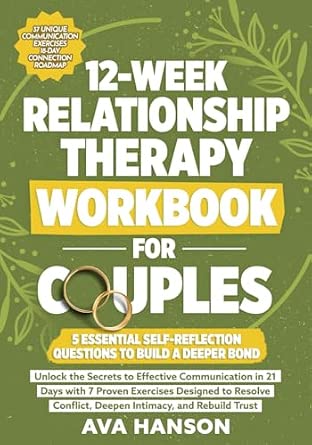
| 12-Week Relationship Therapy W | Workbook | — | — | 12 weeks |
| The Seven Principles for Makin | Practical guide | Making marriage work | — | — |
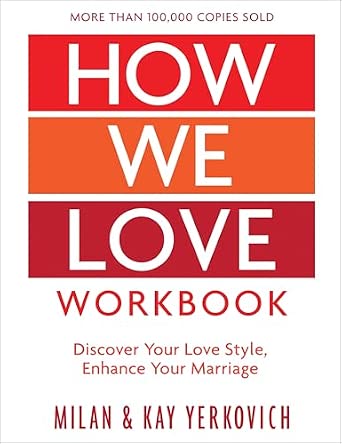
| How We Love Workbook | Workbook | Making deeper connections in marriage | — | — |
| Relationship Workbook for Coup | Couples workbook | — | Couples | 8 weeks |
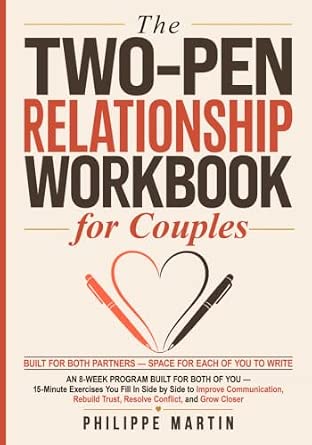
| The Two-Pen Relationship Workb | Couples workbook | — | Both partners | 8 weeks |
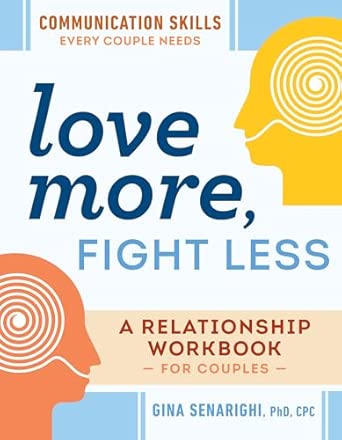
| Love More | Relationship workbook | Couples communication skills | Couples | Not specified in the available product information |
| Couples Therapy Workbook: 30 G | Couples workbook | Communication and reconnection | Couples | Not specified in the available product information |
| Reconnect: A Marriage Counseli | Marriage counseling workbook | Communication and intimacy | Couples | Not specified in the available product information |
More Details on Our Top Picks
Complete Couples Communication Workbook: Practical Skills to Build Stronger Relationships and Feel Heard
I rank this as the broadest communication-focused choice in this group: its stated aim is to help partners understand one another, feel heard, and reduce conflict through practical exercises. That makes it a sensible starting point for couples who want general skills rather than a program organized around a specific timeline. Compared with Couples Conflict Resolution Workbook, which puts problem-solving and disagreements at the center, this title presents a wider relationship communication remit. The tradeoff is limited detail about the exercises, tools, or sequence, so buyers cannot tell how much guidance it provides before starting. I would choose it for flexible practice, but not for a clearly mapped course or a workbook with a detailed preview of its methods.
Pros:- Focuses on practical communication exercises rather than discussion alone
- Addresses feeling heard and improving mutual understanding
- Includes conflict reduction within a broader relationship-skills focus
Cons:- The available description does not identify particular exercises or communication methods
- No duration or step-by-step structure is specified
- Buyers have little detail for judging the depth of the material before choosing
Best for: Couples who want flexible exercises for everyday listening and understanding, without committing to a dated multiweek plan
Not ideal for: Partners seeking a clearly outlined curriculum, specific communication tools, or a detailed preview of the workbook’s exercises
- Format:Workbook
- Intended users:Couples
- Primary focus:Communication skills
- Relationship goals:Stronger relationships and improved understanding
- Communication outcome:Helping partners feel heard
- Conflict focus:Reducing conflicts
Our verdict“Choose this for broad, flexible communication practice, but pick a timed workbook if you want a defined schedule.”
Couples Conflict Resolution Workbook: Stop Fighting, Communicate Better, Solve Problems as a Team
This is the most directly conflict-centered option in the batch. Its emphasis on resolving disagreements and solving problems as a team gives couples a clearer reason to choose it than the broader promise of Complete Couples Communication Workbook, which also targets feeling heard and general understanding. The practical exercises are framed around communication during conflict, making this a better match for partners who want to work on recurring arguments rather than cover relationship communication broadly. It belongs to the Relationship Skills Series, though the available information does not describe a shared method or how this title fits with other volumes. There is no stated schedule or detailed exercise outline, so couples wanting a paced course may prefer one of the eight-week or 12-day options.
Pros:- Keeps conflict resolution at the center of the workbook
- Connects communication practice with solving problems as a team
- Offers practical exercises for relationship skill-building
- Part of the Relationship Skills Series
Cons:- The available description does not list specific exercises or strategies
- No course length or session schedule is provided
- Its conflict-first focus may be narrower than couples seeking broader connection work
Best for: Couples who want exercises centered on recurring disagreements, calmer communication, and joint problem-solving
Not ideal for: Partners looking for a scheduled program or detailed information about the workbook’s specific methods and contents
- Format:Workbook
- Intended users:Couples
- Series:Relationship Skills Series
- Primary focus:Healthy conflict resolution
- Communication goal:Improve communication
- Problem-solving approach:Solve problems as a team
- Practice format:Practical exercises and strategies
Our verdict“Pick this when recurring disagreements are your main concern; choose the broader Complete Couples Communication Workbook for wider communication practice.”
8-Week Couples Therapy Workbook: Strategies to Connect and Improve Communication
The clearest advantage here is its eight-week structure: couples who want a routine can spread communication and connection exercises across a defined period instead of deciding what to do each day. Its spiral binding is a practical distinction from the other timed choice, 8-Week Couples Communication Workbook, and may make pages easier to keep open while both partners work through an activity. The title signals a therapy-workbook approach, but the description does not specify the exercises, weekly progression, or whether the material is intended to supplement professional support. That lack of detail makes it harder to judge the program’s depth. Choose this for a structured, hands-on format; skip it if you prefer a short daily plan or need a fully described curriculum before committing.
Pros:- Provides a defined eight-week framework
- Includes practical exercises and guidance for couples
- Spiral binding can keep pages accessible during shared activities
- Combines communication improvement with relationship connection
Cons:- The available description does not explain the weekly sequence or exercise content
- Requires sustained participation across multiple weeks
- The therapy-workbook label does not clarify whether professional guidance is part of the approach
Best for: Couples who prefer working through communication and connection exercises on a week-by-week schedule
Not ideal for: Partners who want a short, daily program or need detailed information about the weekly activities before choosing
- Format:Spiral-bound workbook
- Program length:Eight weeks
- Intended users:Couples
- Primary focus:Communication and connection
- Relationship goal:Strengthen the relationship
- Practice format:Practical exercises and guidance
Our verdict“Choose this for a spiral-bound, week-by-week routine, while the similarly timed 8-Week Couples Communication Workbook is the alternative to compare.”
8-Week Couples Communication Workbook
This title makes the strongest case for couples who want a step-by-step communication plan over eight weeks, with stated attention to emotional connection and conflict resolution. Compared with 8-Week Couples Therapy Workbook, it is described more explicitly as a communication workbook and calls out the combination of connection-building and conflict work. The supplied details do not identify a binding style, individual weekly topics, or the specific exercises behind its “proven” step-by-step claim, so that promise is difficult to evaluate in advance. The eight-week commitment also calls for regular follow-through, rather than the shorter daily cadence of the 12-day workbook. I would favor it when a paced communication course matters more than format details or a compact schedule.
Pros:- Offers a step-by-step eight-week structure
- Pairs communication practice with emotional connection
- Includes conflict resolution as a stated focus
- Designed for couples aiming to strengthen their partnership
Cons:- The available description does not identify specific exercises or weekly topics
- No binding or other physical format details are provided
- An eight-week schedule may not suit couples wanting a shorter commitment
Best for: Couples seeking a paced eight-week plan that combines communication practice, emotional connection, and conflict work
Not ideal for: Partners who want a short program, need a listed exercise sequence, or prefer a workbook with specified physical format details
- Format:Workbook
- Program length:Eight weeks
- Intended users:Couples
- Structure:Step-by-step exercises
- Primary focus:Communication
- Connection focus:Emotional connection
- Conflict focus:Resolving conflicts
Our verdict“Choose this for an eight-week communication plan with connection and conflict themes; select the 12-day workbook for a shorter schedule.”
Couples Communication Workbook: 20 Minutes a Day for 12 Days to Improve Listening, Resolve Conflicts, and Strengthen Your Relationship
The most distinctive feature is the compact routine: 20 minutes a day for 12 days gives couples a clear daily target without the longer runway of either eight-week workbook. Its focus on listening, conflict resolution, and relationship strength also makes the schedule more than a general habit challenge. Compared with 8-Week Couples Communication Workbook, this is a better fit for partners who want a short, defined burst of practice; the eight-week option offers more time for a slower pace. The tradeoff is the daily demand: missing sessions may disrupt the rhythm, and the available description does not name specific exercises or show how the 12 days build on one another. Pick it for concise, scheduled practice rather than an open-ended workbook.
Pros:- Sets a clear daily commitment of 20 minutes
- Defines a compact 12-day program
- Targets listening as well as conflict resolution
- Links daily practice to strengthening the relationship
Cons:- Requires consistent daily participation
- The available description does not identify particular exercises or tools
- A short schedule may feel rushed for couples who prefer slower, longer-term practice
Best for: Couples who can set aside a short daily session and want a defined, less-than-two-week communication routine
Not ideal for: Partners with unpredictable schedules, who prefer weekly pacing, or who want a detailed outline of the exercises before starting
- Format:Workbook
- Program length:12 days
- Daily time commitment:20 minutes
- Intended users:Couples
- Primary focus:Communication
- Listening focus:Improve listening
- Conflict focus:Resolve conflicts
- Relationship goal:Strengthen the relationship
Our verdict“Choose this for a short daily routine with a clear endpoint, but favor an eight-week workbook if you need a slower pace.”
Communicate Your Feelings (Without Starting a Fight): What to Say and What Not to Say to Your Partner
This book’s narrow focus is its advantage: it centers on how to express feelings in ways that invite understanding rather than escalation. That makes it a useful fit for couples who know what they feel but get stuck on how to say it. Compared with 12-Week Relationship Therapy Workbook for Couples, which is presented as a scheduled exercise program, this title appears more like a guide to communication choices than a long-term workbook plan. The tradeoff is that the available description does not establish how many exercises, prompts, or structured activities it includes, so couples seeking a hands-on routine may prefer a dedicated workbook. Its relationship-advice framing may also feel less tailored to partners who want a formal, week-by-week process.
Pros:- Focuses directly on wording feelings constructively
- Aims to reduce conflict while supporting honest expression
- Connects communication habits with emotional understanding
Cons:- The available product information does not specify exercises or workbook structure
- May suit readers seeking relationship advice better than couples wanting a guided practice program
Best for: Couples who want practical guidance on expressing difficult feelings without turning conversations into arguments
Not ideal for: Partners looking for a clearly scheduled workbook with a specified number of sessions, exercises, or weeks
- Format:Book
- Primary focus:Expressing feelings to a partner
- Communication approach:Choosing constructive words
- Conflict focus:Reducing conflict during emotional conversations
- Relationship focus:Couples and romantic partners
- Stated outcome:Improved understanding and emotional wellness
Our verdict“Choose this for help finding less inflammatory ways to express feelings, but pick a structured workbook if you want scheduled exercises.”
Communication Skills for Couples: Guide to Improve Communication, Resolve Conflict, Deepen Intimacy, Strengthen Marriage, and Create a Healthy Relationship
This title reaches beyond conversational technique to connect communication with conflict resolution, intimacy, and a healthier marriage. That broad scope may appeal to couples who want one guide to address several relationship goals rather than focus only on phrasing, as Communicate Your Feelings (Without Starting a Fight) does. The cost of that range is less visible depth on any single skill: the product details do not identify specific exercises, a schedule, or the methods used. Compared with the explicitly structured 12-Week Relationship Therapy Workbook for Couples, this is the less clearly programmatic choice. I’d favor it for couples seeking general guidance across multiple areas, but not for partners who need a detailed sequence of workbook activities or a clearly defined therapy-style plan.
Pros:- Addresses communication alongside conflict and intimacy
- Frames skills within broader relationship health
- Speaks directly to couples seeking to strengthen a marriage
Cons:- Available information does not clarify the content depth or specific techniques
- No stated schedule or exercise structure for couples to follow
Best for: Married or committed couples seeking broad guidance across communication, conflict, intimacy, and relationship health
Not ideal for: Couples who want a specified week-by-week workbook, detailed exercise list, or clearly described practice method
- Format:Guide
- Intended readers:Couples
- Communication focus:Improving communication skills
- Conflict focus:Resolving conflict
- Intimacy focus:Deepening intimacy
- Relationship focus:Strengthening marriage and building a healthy relationship
Our verdict“Pick this for broad relationship guidance across several themes, rather than a workbook with a defined practice schedule.”
12-Week Relationship Therapy Workbook for Couples
The main draw here is a guided process: the description presents a 12-week program and says it includes 21 days of exercises aimed at communication, conflict, intimacy, and trust. That gives couples more of a shared practice framework than the broad advice offered by Communication Skills for Couples. There is, however, an unclear fit between the 12-week framing and the stated 21 days of exercises; the available details do not explain how those pieces map together. Couples should not assume a daily exercise for all 12 weeks. The range of relationship goals may suit partners working on several areas at once, but those wanting a workbook solely for communication may find its scope wider than necessary.
Pros:- Presents a 12-week framework for sustained couple practice
- Describes 21 days of exercises
- Covers communication, conflict, intimacy, and trust
Cons:- The relationship between the 12-week program and 21 days of exercises is unclear
- The broad focus may be less direct for couples seeking communication-only practice
Best for: Couples who want a guided relationship program with exercises addressing communication, conflict, intimacy, and trust
Not ideal for: Partners who need a clearly explained daily schedule or want a workbook dedicated only to communication skills
- Format:Workbook
- Intended readers:Couples
- Program length:12 weeks
- Exercise duration:21 days of exercises
- Communication focus:Improving communication
- Additional topics:Conflict resolution, intimacy, and rebuilding trust
- Stated approach:Structured relationship therapy process
Our verdict“Choose this if you want a multi-topic, guided program and are comfortable with some uncertainty about its exercise schedule.”
The Seven Principles for Making Marriage Work: A Practical Guide from the Country’s Foremost Relationship Expert
This pick is better understood as a marriage guide organized around seven principles than as a conventional couples communication workbook. Its practical relationship advice may help couples place communication within the larger work of strengthening a marriage, while the more targeted Communicate Your Feelings (Without Starting a Fight) concentrates on wording emotional conversations. The tradeoff is specificity: the supplied description does not name the principles or confirm workbook-style prompts, so couples seeking activities to complete together may find the format less hands-on than 12-Week Relationship Therapy Workbook for Couples. It makes the most sense for readers who want a principle-led framework for marital growth, not partners who require a defined exercise sequence focused on communication practice.
Pros:- Organizes its approach around seven relationship principles
- Offers practical guidance aimed at improving marriage
- Places communication within broader relationship growth
Cons:- The available description does not identify specific communication exercises
- Workbook format or a couple-by-couple practice schedule is not established
Best for: Married couples who prefer practical, principle-based guidance for strengthening their relationship
Not ideal for: Couples seeking a clearly described workbook with communication prompts, scheduled exercises, or a defined program length
- Format:Practical guide
- Intended readers:Couples and married partners
- Framework:Seven principles
- Primary focus:Making marriage work
- Approach:Practical relationship advice
- Stated outcome:Strengthening and improving marriage
Our verdict“Choose this for a principle-led approach to marriage, but favor an exercise-based workbook if you want structured communication practice.”
How We Love Workbook, Expanded Edition: Making Deeper Connections in Marriage
Where Communicate Your Feelings (Without Starting a Fight) focuses on expressing emotions clearly, this workbook is framed around building deeper emotional connection in marriage through practical exercises and insights. That makes it a strong thematic choice for couples who see communication as part of a wider effort to understand one another and grow closer. Its drawback is limited detail: the description does not say what the exercises involve, how long the workbook takes, or how its approach differs from other relationship programs. Compared with the structured 12-Week Relationship Therapy Workbook for Couples, it offers a connection-focused promise but no stated timeline. I’d choose it for marriage-focused emotional work, while couples needing a clear schedule or a specific conflict-resolution sequence may prefer another option.
Pros:- Uses practical exercises to support relationship growth
- Centers deeper emotional connection in marriage
- Addresses understanding love dynamics
Cons:- The available details do not explain the exercise content or depth
- No schedule or program length is specified
Best for: Married couples who want exercises and insights aimed at emotional closeness and understanding their relationship
Not ideal for: Couples who need a defined program length, detailed exercise descriptions, or a communication-only curriculum
- Format:Workbook
- Edition:Expanded Edition
- Intended readers:Married couples
- Primary focus:Making deeper connections in marriage
- Activities:Practical exercises
- Additional focus:Understanding love dynamics and relationship growth
Our verdict“Pick this for marriage-focused emotional connection work, not for a workbook with a clearly mapped communication schedule.”
Relationship Workbook for Couples: 8-Week Program and Proven Strategies to Rebuild Trust, Resolve Conflict, Improve Communication, and Rekindle Intimacy
I’d choose this workbook when communication problems sit alongside damaged trust or distance, since its stated focus reaches beyond conversation skills to conflict resolution and intimacy. The 8-week structure gives couples a defined path, unlike Love More, Fight Less: Communication Skills Every Couple Needs, which is framed more narrowly around communication skills. That broader scope may suit partners who want to work on several connected areas rather than practice one conversation technique. The tradeoff is the time commitment: an eight-week program asks both people to keep showing up, and the available description does not detail the weekly exercises or how the strategies are taught. I’d skip it if you want a short, pick-up-and-use conversation prompt book; the 30 guided conversations in Couples Therapy Workbook: 30 Guided Conversations to Re-Connect Relationships sound more immediately session-based.
Pros:- Eight-week program provides a defined timeframe for sustained relationship work.
- Covers trust and conflict as well as communication, addressing issues that can affect conversations.
- Includes practical exercises rather than relying only on general relationship advice.
Cons:- Requires consistent participation over eight weeks, which may be difficult for busy or mismatched partners.
- The available description does not explain the exercise format or weekly progression in detail.
- Its broad focus may feel less targeted for couples who only want communication practice.
Best for: Couples who want a multi-week structure for working on trust, conflict, communication, and intimacy together.
Not ideal for: Partners seeking a short, clearly itemized set of conversation prompts or a workbook with detailed weekly contents available before purchase.
- Format:Couples workbook
- Program length:8 weeks
- Stated focus:Trust, conflict resolution, communication, and intimacy
- Activity type:Practical exercises and strategies
- Intended users:Couples
- ISBN/ASIN:B0DW985LFT
Our verdict“Choose this eight-week workbook if you want communication work tied to trust repair, conflict, and intimacy rather than conversation practice alone.”
The Two-Pen Relationship Workbook for Couples: An 8-Week Program Built for Both of You
The clearest distinction here is the two-person, side-by-side format: its described exercises take 15 minutes and are built for both partners to do together. That makes it a more direct fit for couples who want a small, scheduled communication habit than Relationship Workbook for Couples: 8-Week Program and Proven Strategies, whose description gives a broader repair agenda but no session length. The shared format can help keep the work mutual instead of leaving one partner to read and report back. It also asks both people to participate regularly across eight weeks; short exercises do not remove that commitment. The available information offers little detail about the topics or progression of the prompts, so couples who want a known set of conversation themes may prefer Couples Therapy Workbook: 30 Guided Conversations to Re-Connect Relationships.
Pros:- Designed for both partners to write and reflect side by side.
- Fifteen-minute exercises offer a defined, approachable session length.
- Eight-week program supports regular practice rather than a one-time conversation.
- Addresses trust and conflict alongside relationship closeness.
Cons:- The eight-week schedule still requires consistent participation from both partners.
- The available description does not identify specific prompts or weekly topics.
- Side-by-side work may not suit couples who communicate better through separate reflection first.
Best for: Couples who can set aside 15 minutes together and want a structured, shared routine for trust and conflict work.
Not ideal for: Partners who prefer independent reading, cannot commit to regular sessions, or need detailed information about the exercises before choosing.
- Format:Couples workbook
- Program length:8 weeks
- Exercise duration:15 minutes
- Exercise format:Side-by-side shared exercises
- Stated focus:Trust, conflict resolution, and closeness
- Intended users:Both partners
- ISBN/ASIN:B0HF8G2QG7
Our verdict“Pick this if brief, joint exercises are more appealing than a broader workbook with unspecified session lengths.”
Love More, Fight Less: Communication Skills Every Couple Needs
For couples whose main goal is to change how they talk through disagreements, I’d put this focused option ahead of broader repair programs. Its stated emphasis is communication skills and practical exercises, while Relationship Workbook for Couples: 8-Week Program and Proven Strategies also aims to address trust and intimacy over a set program. That narrower framing can make the choice simpler if conflict patterns are the issue you want to work on first. The tradeoff is that the description supplies no schedule, exercise count, or detail about the methods, so it is harder to judge how much structure the workbook offers. Couples who want a clearly defined shared routine may prefer The Two-Pen Relationship Workbook for Couples, with its described 15-minute exercises and eight-week format.
Pros:- Keeps its stated focus on communication skills rather than spreading attention across many relationship topics.
- Includes practical exercises for applying ideas to couple interactions.
- Addresses conflict reduction and healthier relationship dynamics.
Cons:- The available description gives no program length or session structure.
- Specific exercise content and methods are not detailed.
- Couples seeking explicit guidance on trust and intimacy may want a broader option.
Best for: Couples who want practical communication exercises aimed at reducing arguments and improving understanding, without a stated multi-week schedule.
Not ideal for: Partners looking for a clearly timed program, a detailed exercise outline, or a workbook explicitly centered on trust repair and intimacy.
- Format:Relationship workbook
- Primary focus:Couples communication skills
- Additional focus:Conflict reduction and understanding
- Activity type:Practical exercises and insights
- Program length:Not specified in the available product information
- Intended users:Couples
- ISBN:0593196651
Our verdict“Choose this for a communication-centered workbook, but opt for The Two-Pen Relationship Workbook if you want a defined schedule and session length.”
Couples Therapy Workbook: 30 Guided Conversations to Re-Connect Relationships
The standout here is a specific format: 30 guided conversations. That makes it the most clearly prompt-led choice in this group, and a better match for couples who want to sit down and talk through prepared exercises than Love More, Fight Less: Communication Skills Every Couple Needs, whose description mentions exercises but not their number or structure. The emphasis on reconnecting also gives the conversations a relationship-building aim, rather than presenting communication as a technique in isolation. Still, 30 activities can be a substantial undertaking, and the available description does not say how long each takes or whether they follow a planned sequence. Compared with The Two-Pen Relationship Workbook for Couples, it offers a count of conversations but no stated 15-minute session length or eight-week schedule.
Pros:- Thirty guided conversations provide a concrete supply of discussion exercises.
- Conversation-led format directly supports couples who need prompts to get started.
- Centers communication and reconnection rather than general relationship advice.
Cons:- The available description does not give the length or sequence of the conversations.
- Working through 30 exercises may require sustained partner engagement.
- The description does not clarify whether facilitator support is included or needed.
Best for: Couples who want a substantial set of guided prompts to help structure relationship conversations and reconnect.
Not ideal for: Partners who need short, timed sessions, a clearly described week-by-week plan, or guidance on working through conversations with a facilitator.
- Format:Couples workbook
- Number of activities:30 guided conversations
- Primary focus:Communication and reconnection
- Activity type:Guided conversation exercises
- Program length:Not specified in the available product information
- Intended users:Couples
- ISBN:1937661466
Our verdict“Choose this if having many guided conversation prompts matters more than a timed or week-by-week program.”
Reconnect: A Marriage Counseling Workbook
Reconnect: A Marriage Counseling Workbook is the least specified pick in this set, but its stated emphasis on guided conversations, communication, and intimacy makes it relevant for couples working to renew a long-standing relationship. It is broader in framing than Couples Therapy Workbook: 30 Guided Conversations to Re-Connect Relationships, which gives a definite count of conversation exercises; here, the description mentions guided conversations and exercises without saying how many or how they are organized. That leaves room for a more general relationship-growth approach, but also makes it harder to know what a session will involve before choosing. I’d favor it over a communication-only workbook when intimacy is part of the goal, while couples who need a clearly measured program may find The Two-Pen Relationship Workbook for Couples easier to plan around.
Pros:- Combines guided conversations with exercises for active partner participation.
- Addresses communication and intimacy, not just conflict.
- Its stated long-term relationship focus may suit couples seeking ongoing growth.
Cons:- The available description gives no exercise count, schedule, or session length.
- Specific communication methods and topics are not described.
- The broad focus may be less direct for couples seeking targeted conflict-resolution practice.
Best for: Married or long-term partners who want general exercises for improving communication and intimacy together.
Not ideal for: Couples who need a defined program length, a stated number of prompts, or detailed information about the workbook’s structure.
- Format:Marriage counseling workbook
- Activity types:Guided conversations and exercises
- Primary focus:Communication and intimacy
- Intended relationship stage:Long-lasting relationships
- Program length:Not specified in the available product information
- Intended users:Couples
- ISBN:0593689887
Our verdict“Consider this for broad communication and intimacy work in a long-term relationship, but choose a more clearly structured workbook if you need a plan to follow.”

How We Picked
I ranked these couples communication workbooks by how clearly their stated focus matches the needs readers usually bring: listening better, handling conflict, rebuilding connection, or following a guided practice plan. I also weighed the usefulness of the format as described by each title, including short daily exercises, multiweek programs, and conversation prompts. A broad communication workbook earns a higher place as an all-purpose recommendation; a narrower book can rank well for a specific need without being the best fit for every couple.
I also considered time commitment, audience, and scope. A title centered on marriage, intimacy, or therapy-style work may be a strong match for some partners but less suitable for people seeking basic communication practice. The list reflects those differences rather than treating every workbook as interchangeable. Product descriptions alone cannot establish clinical quality or guarantee results, so I focus on the intended use and practical tradeoffs readers can judge before choosing.
| couples communication workbook | Intended users |
|---|---|
| Complete Couples Communication | Couples |
| Couples Conflict Resolution Wo | Couples |
| 8-Week Couples Therapy Workboo | Couples |
| 8-Week Couples Communication W | Couples |
| Couples Communication Workbook | Couples |
| Communicate Your Feelings | — |
| Communication Skills for Coupl | — |
| 12-Week Relationship Therapy W | — |
| The Seven Principles for Makin | — |
| How We Love Workbook | — |
| Relationship Workbook for Coup | Couples |
| The Two-Pen Relationship Workb | Both partners |
| Love More | Couples |
| Couples Therapy Workbook: 30 G | Couples |
| Reconnect: A Marriage Counseli | Couples |
Factors to Consider When Choosing Couples Communication Workbooks
Before choosing a workbook, I’d match its structure to the conversations you actually want to improve. The title can signal a useful focus, but your available time, comfort with guided exercises, and shared goals matter just as much.
Choose a focus before choosing a format
Start by naming the pattern you want to change: talking past each other, recurring arguments, difficulty expressing feelings, or a broader loss of connection. A conflict-resolution workbook is a more direct match for repeated disputes than a general relationship program, while a feelings-focused book may fit partners who struggle to raise sensitive topics. One common mistake is choosing a broad title when a specific issue is driving the search. The reverse can also happen: a narrowly focused workbook may feel limiting if several relationship habits need attention. If you are unsure, favor a clearly broad communication focus and treat specialized books as targeted follow-up options. A workbook can guide practice, but it cannot decide which issue both partners are ready to address.
Be honest about the time you can share
A short daily plan can make regular practice feel manageable, while an eight- or twelve-week program creates room for a more sustained process. Neither format is automatically better; consistency matters more than an ambitious schedule that partners abandon. Before buying, discuss how often you can sit down together and whether you prefer brief sessions or a longer weekly conversation. Longer programs may provide a stronger sense of progression, but they also ask for more sustained attention. A compact plan can lower the barrier to starting, though it may not suit couples seeking extended work. Avoid choosing by the number of weeks alone—check whether the routine fits your real calendar.
Decide whether you want prompts or a curriculum
Some couples want a planned sequence of lessons and exercises; others need a prompt that gets an honest conversation started. Guided-conversation formats can feel more natural for partners who dislike homework, while structured programs may help people who want a clear next step each time they sit down. A frequent misstep is assuming a workbook will feel effortless simply because it is written for couples. One partner may prefer open discussion while the other wants defined exercises, so talk about that difference before choosing. A clear format can reduce uncertainty, but it should not make either person feel forced into a conversation they are not ready to have. Select the approach both partners are most likely to use.
Check the intended audience and relationship themes
Titles that refer to marriage, intimacy, trust, or therapy may put a particular theme at the center of the work. That focus can be helpful when it matches your relationship, but it may not suit dating partners or couples looking mainly for everyday listening skills. Read the full title and description rather than assuming every couples workbook is designed for the same audience. Marriage-focused material may also devote space to issues beyond communication, which can be a plus or a distraction depending on your goal. If both partners do not identify with the book’s framing, the exercises may be harder to adopt. Match the workbook’s language and stated scope to the relationship you are in.
Treat shared participation as part of the buying decision
A workbook only helps when its format works for both people, so check whether activities appear designed for joint use, individual reflection, or a mix. A two-person format signals shared participation directly; other titles may need a closer look to see how they divide the work. Do not assume one partner can complete the exercises alone and then transfer the results to the relationship. That can place too much responsibility on one person and leave the other disengaged. If schedules differ, agree on a realistic routine before starting and keep expectations modest. The best fit is often the book both partners are willing to open, not the one with the most ambitious plan.
Know when a workbook is not enough
Workbooks offer prompts and structured practice, but they do not provide live, individualized support. If conversations repeatedly become unsafe, intimidating, or impossible to pause, a self-guided book may not be the right first step. It is also reasonable to seek help from a qualified professional when a conflict involves serious distress or when attempts at practice keep escalating. Do not treat finishing every exercise as a measure of relationship success. A workbook can support reflection and discussion, but it cannot replace tailored care when that is needed. Choose self-guided material for practice you can approach constructively, and seek outside support when the situation calls for it.
Frequently Asked Questions
Which couples communication workbook is the best place to start?
I’d start with Complete Couples Communication Workbook if you want a broad communication focus rather than a book built around one relationship issue. It is the most natural all-purpose pick among these titles, while a conflict-focused workbook may be a closer fit if arguments are your main concern. If either partner is new to workbook exercises, agree on a small, regular session before committing to a long program. The right starting point is the one both people are willing to use. If the conversations feel unsafe or consistently escalate, consider professional support rather than relying on a workbook alone.
Should we choose a 12-day plan or an 8- or 12-week program?
Choose the shorter plan if a small daily commitment feels more realistic than a long-term schedule. An eight- or twelve-week program may suit couples who want a steadier sequence and have the time to return to it regularly. The longer timeline is not automatically more effective if it becomes difficult to keep up with. Compare the format with your calendar and the amount of practice you want, not just the total duration. If you are uncertain, a shorter structure can help you see whether shared workbook sessions suit you before taking on a longer plan.
Can one partner use a couples communication workbook alone?
One partner can use reflection prompts to clarify feelings or prepare for a conversation, but most couples-focused exercises are meant to support shared participation. Solo use cannot create the same exchange as listening and responding together. Before starting, ask whether your partner is willing to take part and agree on a format that feels manageable to both of you. The Two-Pen Relationship Workbook is explicitly described as built for both partners, while other titles may vary in how they divide individual and joint activities. If your partner is not ready, use any solo reflection carefully and avoid treating it as a substitute for mutual communication.
Are marriage-focused workbooks suitable for couples who are not married?
Some relationship skills can apply across different kinds of partnerships, but a marriage-focused book may center themes or language that do not match your relationship. Look at the title and description for signs that the material is aimed at marriage, intimacy, or a particular relationship stage. A broad communication workbook may be a more comfortable fit when you want practical skills without a marriage-specific frame. The Seven Principles for Making Marriage Work and How We Love Workbook have distinct marriage-oriented themes, so check their scope before choosing. If you and your partner feel represented by the book’s framing, its label alone need not rule it out.
When should we choose professional couples counseling instead of a workbook?
A workbook may be useful for practicing communication when both partners can take part in a calm, respectful way. Professional support is a better choice when discussions repeatedly escalate, one person feels unsafe or intimidated, or the issues need individualized guidance. A book cannot observe the interaction and adapt its advice to your circumstances. You can also use a workbook alongside professional care if your counselor agrees that the exercises are appropriate. Do not treat completing a program as a substitute for getting help when the relationship needs more direct support.
Conclusion
For an all-purpose recommendation, I’d choose Complete Couples Communication Workbook; it offers the broadest match for readers seeking practical communication work. For the clearest value in time commitment, consider Couples Communication Workbook: 20 Minutes a Day for 12 Days, especially if a short routine sounds easier to sustain than a multiweek course. Beginners may prefer the same manageable format, while partners seeking a more developed schedule can compare the eight- and twelve-week programs. For a premium-style, broader relationship reference, The Seven Principles for Making Marriage Work stands apart, though its marriage-centered scope is not for everyone. If conflict is the specific concern, choose Couples Conflict Resolution Workbook; if conversation prompts are the priority, look at Couples Therapy Workbook: 30 Guided Conversations. Match the structure to your shared time and goals, and seek professional support when self-guided work is not enough.
Halloween Picks
halloween
As an affiliate, we earn on qualifying purchases.