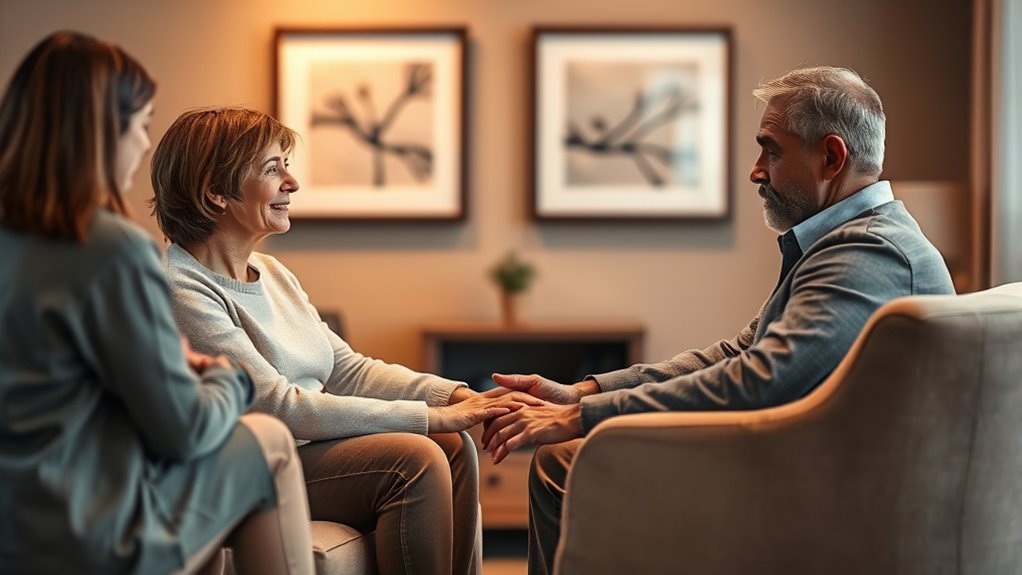

Couples therapy after infidelity helps you and your partner process pain, rebuild trust, and improve communication. You’ll create a safe space to honestly share feelings, explore why the betrayal happened, and develop trust through consistent, transparent actions. The process involves emotional healing, learning new ways to connect, and establishing respectful patterns. While it can be challenging, therapy guides you toward a stronger, more resilient relationship—if you’re willing to commit to the journey ahead.

Get gifts for the two of you delivered free with Prime
- Fast, free delivery on millions of items
- Prime Video, Amazon Music and more included
- Member-only deals all year
Key Takeaways
- Couples therapy creates a safe space for honest expression and exploring the reasons behind infidelity.
- It helps rebuild trust gradually through transparency, consistency, and small, deliberate actions.
- Therapy improves communication skills, fostering active listening and honest sharing of feelings.
- It supports emotional healing by processing complex emotions like anger, sadness, and confusion.
- The goal is to transform the relationship into a stronger, more resilient partnership beyond the initial betrayal.

Experiencing infidelity is one of the most challenging crises a couple can face, but with the right approach, healing is possible. When you decide to pursue couples therapy after infidelity, you’re taking a vital step toward reconnecting and rebuilding your relationship. The process begins with establishing a safe space where both of you can express your feelings honestly. In therapy, you’ll explore the reasons behind what happened, which helps in understanding each other’s perspectives. This understanding lays the groundwork for trust rebuilding, as both partners work to regain confidence and security in the relationship. It’s normal to feel anger, sadness, or confusion, but therapy provides guidance on how to process these emotions constructively, fostering emotional healing over time.
A key part of couples therapy after infidelity is addressing the breach of trust. Rebuilding trust isn’t something that occurs overnight; it’s a gradual process that requires transparency, consistency, and patience. Your therapist will help you develop concrete steps to demonstrate reliability and honesty, such as open communication and accountability. As these small, deliberate actions accumulate, you’ll notice a renewed sense of safety and faith in each other. Emotional healing is intertwined with trust rebuilding because it involves working through pain and vulnerability. Your therapist will guide you in expressing your feelings without blame, which promotes empathy and mutual understanding. This emotional work can be uncomfortable, but it’s essential for moving past betrayal and creating a new foundation for your relationship.
Couples therapy also emphasizes developing healthier communication skills. When infidelity occurs, communication often breaks down, leaving both partners feeling misunderstood or unheard. Therapy helps you learn to listen actively, validate each other’s experiences, and articulate your needs clearly. These skills foster emotional intimacy and create a solid platform for rebuilding your relationship. As trust begins to rebuild and emotional healing progresses, you’ll find it easier to reconnect and share your feelings openly. Over time, the therapy process supports you in establishing new patterns of interaction that are more respectful and supportive. Additionally, understanding the importance of color accuracy and how it impacts overall image quality can be a metaphor for how clear, honest communication strengthens your relationship.
Ultimately, couples therapy after infidelity isn’t just about repairing what was broken; it’s about transforming your relationship into something stronger and more resilient. It requires commitment from both partners to do the hard emotional work involved. While it may be painful at times, focusing on trust rebuilding and emotional healing allows you to move forward with hope. With patience, honesty, and professional guidance, you can navigate this difficult chapter and emerge with a renewed sense of partnership and understanding.
couples therapy books for infidelity
As an affiliate, we earn on qualifying purchases.
As an affiliate, we earn on qualifying purchases.
Frequently Asked Questions
How Long Does Couples Therapy Typically Last After Infidelity?
The therapy duration after infidelity varies based on your specific needs, but it typically lasts from three to six months. During this healing timeline, you’ll work through trust issues, emotional pain, and rebuilding your connection. Consistent sessions help you process feelings and develop healthier communication. Keep in mind that some couples may take longer, depending on the depth of hurt and commitment to the healing process.
Can Couples Therapy Fully Repair Trust After Betrayal?
Couples therapy can substantially aid trust rebuilding and emotional healing after betrayal, but it may not guarantee complete repair. Your commitment to open communication, patience, and honesty plays a vital role in the process. While therapy provides tools and support, both partners must actively work through their feelings and rebuild trust over time. With dedication, many couples find a way to move forward stronger and more connected.
Is Individual Therapy Recommended Alongside Couples Therapy?
Yes, individual therapy is recommended alongside couples therapy because it supports your personal progress and helps you set clear personal boundaries. While couples therapy addresses relationship dynamics, individual sessions let you explore your feelings, build resilience, and work through trust issues privately. This combined approach guarantees you’re strengthening yourself, which ultimately benefits the relationship, making healing more thorough and sustainable.
What Are Signs Therapy Is Working Effectively?
If your partner suddenly starts sharing feelings without a dramatic drumroll, congratulations—therapy’s working! You’ll notice increased emotional awareness and better communication skills, like talking instead of throwing pillows. When conversations become honest and less defensive, it’s a sign progress. If you’re both genuinely listening and understanding, even amidst disagreements, therapy’s making a difference. It’s like emotional gym training—your relationship is getting stronger, one heartfelt rep at a time.
How Should I Prepare Emotionally for Therapy Sessions?
To prepare emotionally for therapy sessions, focus on building your emotional resilience and being open to vulnerability. Recognize that sharing your feelings might feel uncomfortable, but openness fosters healing. Practice honesty with yourself and your partner, and try to set aside judgment or defensiveness. Remember, therapy is a safe space where vulnerability supports growth, so approach each session with a willingness to be honest and receptive to insights.
trust rebuilding exercises for couples
As an affiliate, we earn on qualifying purchases.
As an affiliate, we earn on qualifying purchases.
Conclusion
If you’re considering couples therapy after infidelity, know that healing is possible. Research shows that about 60% of couples who seek therapy report improved trust and connection over time. While it’s a challenging journey, therapy provides a safe space to process feelings, rebuild trust, and strengthen your relationship. Remember, with patience and commitment, many couples emerge stronger than ever—so take that first step toward healing today.
communication improvement tools for couples
As an affiliate, we earn on qualifying purchases.
As an affiliate, we earn on qualifying purchases.
emotional healing after betrayal
As an affiliate, we earn on qualifying purchases.
As an affiliate, we earn on qualifying purchases.
Evergreen bestsellers Picks
bestsellers
As an affiliate, we earn on qualifying purchases.