

Couples comparing The Seven Principles for Making Marriage Work by John Gottman and Nan Silver with Hold Me Tight by Sue Johnson are usually looking for more than general relationship encouragement: they want a book that helps them change what happens between them. Both are widely recommended, but they start from different places. The Seven Principles breaks relationship health into practical skills, including managing conflict and building shared meaning. Hold Me Tight focuses on emotional attachment and the conversations that help partners feel safer and closer.

Get gifts for the two of you delivered free with Prime
- Fast, free delivery on millions of items
- Prime Video, Amazon Music and more included
- Member-only deals all year

The Two-Pen Relationship Workbook for Couples
- ✔ Format: Relationship workbook
- ✔ Program length: 8 weeks
- ✔ Exercise duration: 15 minutes

The Seven Principles for Making Marriage Work: A Practical Guide from the Country’s Foremost Relationship Expert
- ✔ Format: Book
- ✔ Author: John Gottman
- ✔ Approach: Seven relationship principles
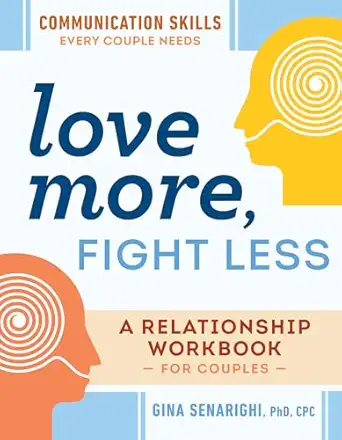
Love More, Fight Less: Communication Skills Every Couple Needs: A Relationship Workbook for Couples
- ✔ Format: Relationship workbook
- ✔ Stated focus: Communication skills
- ✔ Intended readers: Couples
The practical decision is whether you would rather have a skills-based guide with exercises or a more emotionally focused path through recurring relationship patterns. Choose The Seven Principles if you want clear habits to practice and a broad relationship toolkit. Choose Hold Me Tight if arguments seem tied to disconnection, fear, or difficulty reaching each other. Neither book is a substitute for professional help when a relationship involves abuse, coercion, or serious safety concerns.
At a Glance
| Criteria | The Seven Principles for Making Marriage Work | Hold Me Tight | Winner |
|---|---|---|---|
| Core approach | Relationship skills and habits informed by Gottman research | Attachment and emotional responsiveness as the basis of secure connection | Depends |
| Practical structure | Seven principles with exercises and self-assessment | Seven guided conversations focused on recurring emotional patterns | A |
| Conflict guidance | Concrete guidance for managing disagreement and repairing conflict | Helps identify the pursue-withdraw cycle beneath many arguments | A |
| Emotional connection | Builds friendship, appreciation, and shared meaning | Directly centers emotional safety, vulnerability, and closeness | B |
| Reading and discussion fit | Works for couples who prefer skills, examples, and structured practice | Works best for couples willing to discuss feelings and personal history | Depends |
| Best starting point | Couples seeking a broad, practical toolkit | Couples who feel emotionally distant or stuck in the same fight | Depends |
| Cost and value | Usually an affordable paperback; strong value for readers who will use the exercises | Usually an affordable paperback; worthwhile if its emotionally focused method fits | Tie |
The Two-Pen Relationship Workbook for Couples
The Two-Pen Relationship Workbook for Couples is our top choice for partners who want to turn relationship advice into a shared, repeatable practice. Its eight-week program gives couples a defined time frame, while the 15-minute exercises are designed to be completed side by side. That combination makes the commitment easier to picture than a general guide whose schedule and activities are not specified.The subject matter also spans more than one relationship challenge: the workbook is described as addressing trust, conflict resolution, and growing closer. That breadth makes it a practical starting point for couples looking to build habits rather than focus only on arguments. Compared with Love More, Fight Less, its stated program and exercise length offer a clearer sense of what partners will do. Compared with Gottman’s seven-principle book, it appears more explicitly designed for two people to work through together.The tradeoff is that this is a scheduled workbook, not a clearly described general reference. Couples who dislike planned exercises or want to read independently may find the format less natural. Short sessions also do not guarantee that both partners will be ready to discuss difficult subjects, and the description does not explain how the program handles more serious or persistent problems. We rank it first for clarity and couple participation, not because it is proven to suit every relationship.
Pros:
- A defined eight-week program makes it easier to plan a shared routine.
- 15-minute exercises offer a manageable session length for busy couples.
- Side-by-side activities are explicitly designed for both partners to participate.
- Addresses trust, conflict resolution, and connection rather than only one stated topic.
Cons:
- The structured sequence may feel restrictive to couples who prefer to read and apply ideas at their own pace.
- The available description does not explain the specific exercises or how the program addresses more complex concerns.
Best for: Couples who want a time-bounded plan with brief activities they can complete together each week.
Not ideal for: Partners who prefer independent reading, an open-ended reference, or a book with a fully described approach to complex relationship problems.
Bottom line: We recommend it first for couples seeking a clear, collaborative routine, while readers who want flexible reading should consider Gottman’s broader guide.
“We recommend it first for couples seeking a clear, collaborative routine, while readers who want flexible reading should consider Gottman’s broader guide.”
The Seven Principles for Making Marriage Work: A Practical Guide from the Country’s Foremost Relationship Expert
The Seven Principles for Making Marriage Work is the strongest alternative for readers who want a marriage-focused framework rather than a short, scheduled workbook. Its central promise is organized around seven principles for building and maintaining a strong relationship, and it is written by relationship expert John Gottman. That makes it a natural choice for couples who would rather understand a set of guiding ideas than commit to the specific eight-week exercise plan in The Two-Pen Relationship Workbook.Its broader positioning may also suit partners who want to read, discuss, and return to advice as needed instead of setting aside a regular exercise session. The supplied product information, however, does not specify chapter-level content, activities, or a couple-work schedule. We therefore rank it second: it has a clear marriage-oriented framework, but less stated practical structure than the Two-Pen workbook. It is also more specifically framed around marriage, whereas the other two titles are positioned for couples generally.Readers should not mistake a recognized author or an organized framework for a guaranteed fit. Couples seeking explicit, short activities to do together may find the Two-Pen workbook easier to use; those looking specifically to work on communication may be drawn to Love More, Fight Less. The information provided does not establish how interactive this book is or whether it follows a workbook format. Choose it for its principle-based marriage focus, not on the assumption that it includes a particular exercise routine.
Pros:
- Organized around seven principles for building and maintaining a strong relationship.
- Written by relationship expert John Gottman.
- Its marriage focus gives it a distinct role beside the two couple-oriented workbooks.
- May suit readers who prefer a broader guide over brief scheduled exercises.
Cons:
- The supplied details do not state a program length or exercise duration.
- The description does not establish how much the book asks couples to work through together.
- Its marriage framing may be less directly suited to unmarried partners seeking general couple guidance.
Best for: Married couples who want a broad, principle-based guide and are comfortable applying ideas without a stated short-session schedule.
Not ideal for: Couples who specifically want a step-by-step workbook, a defined eight-week plan, or a communication-only focus.
Bottom line: We favor this guide for married readers who want a broad framework, but couples seeking clearly specified activities should start with The Two-Pen workbook.
“We favor this guide for married readers who want a broad framework, but couples seeking clearly specified activities should start with The Two-Pen workbook.”
Love More, Fight Less: Communication Skills Every Couple Needs: A Relationship Workbook for Couples
Love More, Fight Less has the most direct topic signal in this group: its title and description center on communication skills for couples. That makes it a plausible match for partners who want to focus their reading on how they communicate, particularly when their main interest is handling disagreements more constructively. Unlike The Two-Pen Relationship Workbook, however, the supplied description does not confirm a session length, schedule, or broader program that combines communication work with trust and connection.Its workbook positioning suggests a practical orientation, but we have too little information to say what the exercises involve or how partners use them. That makes it harder to compare its usability with the Two-Pen workbook, whose side-by-side format and eight-week plan are explicitly described. It is narrower in its stated focus than The Seven Principles for Making Marriage Work, which offers a broader marriage framework. For a buyer who wants communication to be the priority, that focus may be appealing; for a buyer who wants to know exactly what the commitment looks like, the missing detail is a meaningful drawback.We rank it third because its central subject is clear but its specific method is not. The description does not identify a program length, exercise format beyond calling it a workbook, or any additional areas of relationship growth. We would choose it when communication is the primary need and accept that the available information leaves questions about structure. Couples who want a known plan and session length have a more concrete option in The Two-Pen workbook.
Pros:
- Communication skills are the clearly stated central focus.
- Positioned as a relationship workbook for couples.
- Its narrower topic can help couples prioritize communication over a general relationship guide.
Cons:
- The available description provides no detail about the exercises or how partners complete them.
- No program length or session duration is stated.
- Its broader coverage beyond communication is not established.
Best for: Couples whose main stated interest is developing communication skills and who are comfortable choosing a workbook with limited available format details.
Not ideal for: Readers who need a clearly outlined schedule, specific exercise duration, or a wider relationship program before choosing.
Bottom line: We would shortlist it for a communication-first approach, but the Two-Pen workbook is easier to evaluate when structure and shared exercises matter.
“We would shortlist it for a communication-first approach, but the Two-Pen workbook is easier to evaluate when structure and shared exercises matter.”
As an Amazon Associate we earn from qualifying purchases.
Key Differences
The books differ most in how they explain relationship trouble. Gottman and Silver emphasize behaviors couples can learn: turning toward one another, maintaining fondness, handling conflict, and creating shared meaning. Johnson emphasizes attachment: when partners do not feel emotionally available or responsive, they can fall into a repeating cycle of protest, withdrawal, or escalation. These approaches overlap in valuing connection and respect, but they give readers different first moves. One asks, “What habit can we practice?” The other asks, “What is happening underneath this fight, and what do we need from each other?”
That difference shapes how each book works at home. The Seven Principles is the safer default for couples who want varied, concrete tools and are not sure where to begin. Hold Me Tight can be the more resonant choice when recurring conflict feels less like a disagreement about logistics and more like a painful struggle to feel heard or secure. Neither format suits every couple: structured exercises can feel mechanical to readers who resist assignments, while emotionally open conversations may feel demanding to partners who prefer practical steps or are not ready to discuss vulnerability.
Detailed Comparison
Core approach (major difference)
The Seven Principles organizes advice around relationship behaviors and habits, drawing on Gottman’s research and clinical work. Hold Me Tight explains conflict through attachment needs and emotional responsiveness. Neither framework is automatically better; they direct attention to different parts of the same relationship. The win depends on whether you need a behavioral map or an emotional one, so this is a major difference rather than a universal victory.
Practical structure (The Seven Principles for Making Marriage Work wins — moderate)
The Seven Principles wins moderately for readers who want a clear sequence of topics, self-checks, examples, and exercises to try together. Its structure makes it easier to turn reading into a routine. Hold Me Tight also has an organized sequence, but its conversations ask couples to explore emotional experience rather than simply rehearse a skill. In practice, A is easier to use as a workbook; B is more like a guided conversation program.
Conflict guidance (The Seven Principles for Making Marriage Work wins — moderate)
The Seven Principles has the edge for couples seeking usable tools for disagreement, including ways to approach problems, listen, repair, and recognize differences that may not be fully resolvable. Hold Me Tight helps readers understand the emotional cycle that keeps a fight going, which can be more useful when a familiar argument is really about feeling rejected or alone. A wins narrowly for direct conflict-management instruction; B may fit better when the cycle, not the topic, is the central problem.
Emotional connection (Hold Me Tight wins — major)
Hold Me Tight wins clearly here. It puts emotional safety, openness, and responsiveness at the center and guides partners toward conversations about what they need from each other. The Seven Principles also encourages friendship, affection, and shared meaning, but emotional attachment is not its primary organizing lens. For couples who feel lonely inside the relationship, B speaks more directly to the issue; the gap is major for that particular need.
Reading and discussion fit (moderate difference)
This is a genuine split. Couples comfortable with examples, checklists, and practicing a skill between chapters may find The Seven Principles easier to approach. Partners who can talk openly about vulnerable feelings may get more from Hold Me Tight. B can feel exposing if one person shuts down around emotional discussion; A can feel like homework if a couple wants a deeper account of why they keep reaching for each other badly. Neither wins for every couple, and the difference is moderate.
Best starting point (The Seven Principles for Making Marriage Work wins — minor)
The Seven Principles is the stronger general-purpose starting point for couples who want to improve a relationship without having identified one central emotional pattern. It covers several dimensions of relationship life and gives readers multiple places to begin. Hold Me Tight is a sharper starting point when distance, insecurity, or a recurring pursue-and-withdraw dynamic is already apparent. A has a modest advantage for uncertain readers; B is more targeted when the problem is clear.
Cost and value (minor difference)
Both books are commonly available as reasonably priced paperbacks, and neither carries a meaningful premium over the other in most buying situations. There is no clear value winner based on purchase price alone. The Seven Principles returns more value to readers who work through its range of exercises; Hold Me Tight is better value for readers whose main need is emotionally focused connection. Choose by fit, not by a small price difference.
The Seven Principles for Making Marriage Work: Pros and Cons
Pros:
- A broad set of practical relationship skills and habits
- Structured chapters and exercises support action between reading sessions
- Direct guidance for common disagreements and relationship maintenance
- A useful general starting point when the couple’s main need is unclear
Cons:
- May feel like a workbook to couples who dislike structured exercises
- Less centered on attachment needs and emotional vulnerability
- Some readers may need support applying the advice to complex or entrenched conflict
Hold Me Tight: Pros and Cons
Pros:
- Strong focus on emotional safety, closeness, and feeling understood
- Helps couples recognize repeating conflict cycles beneath surface disagreements
- Guided conversations can help partners articulate needs and fears
- A targeted fit for emotional distance or disconnection
Cons:
- Requires willingness to discuss vulnerable emotions
- Less like a broad checklist of everyday relationship habits
- Can be difficult to use alone if conversations become intense or unsafe
Who Should Choose What
Choose The Seven Principles for Making Marriage Work if:
- You want concrete exercises and habits to practice together.
- You want a broad relationship guide covering friendship, conflict, and shared meaning.
- You are unsure what the main problem is and want a practical place to start.
- You prefer skills and examples over extended conversations about emotional history.
Choose Hold Me Tight if:
- You feel emotionally distant even when you keep discussing the same issues.
- Arguments follow a familiar pattern of one partner pursuing and the other withdrawing.
- You want help expressing vulnerability and responding to each other with reassurance.
- Both partners are willing to have guided, emotionally open discussions.
Skip both if: Neither self-help book is an adequate first response when there is abuse, coercion, fear for safety, or a crisis requiring clinical support. Consider a qualified couples therapist or an appropriate support service.
Value for Money
These titles are usually close enough in price that paying a little more for one over the other is rarely justified on cost alone. The better value is the book whose method you will actually use. The Seven Principles earns its keep for couples who will complete exercises and return to its practical tools. Hold Me Tight is worth buying when emotional disconnection is the issue and both partners are ready for its conversations. If you are uncertain, A offers broader coverage; that makes it a sensible default, not a better choice for every relationship.
Final Verdict
For most couples seeking a first relationship advice book, choose The Seven Principles for Making Marriage Work. Its broad coverage and practical exercises make it the more adaptable starting point, especially when you want skills to use in everyday interactions. Choose Hold Me Tight instead if your main struggle is emotional disconnection, insecurity, or a repeated cycle in which one partner reaches out and the other pulls away. The deciding factor is whether you need a toolkit for relationship habits or a guided route back to emotional responsiveness. Buy neither expecting a book to resolve unsafe or severe conflict without qualified support.
Frequently Asked Questions
Which book is better for couples who argue a lot?
The Seven Principles is the more direct pick if you want tools for handling disagreements and repairing conflict. If the same argument keeps returning because one partner feels abandoned and the other feels overwhelmed, Hold Me Tight may better address the emotional cycle beneath it.
Can we read these books together?
Yes. Both can prompt useful discussion, but use the format that feels workable for both partners. With The Seven Principles, agree on one exercise or habit to try at a time. With Hold Me Tight, pause if a conversation becomes too heated and return when both partners can participate safely and respectfully.
Which book should we choose if we feel distant?
Hold Me Tight is the more focused choice for couples who feel disconnected and want to talk about emotional needs and responsiveness. If the distance is paired with a desire for concrete everyday routines to rebuild friendship, The Seven Principles is also a strong option.
Are these books a replacement for couples therapy?
No. They can offer shared language and exercises, but a book cannot assess a couple’s situation or provide tailored support. Seek a qualified professional when problems are severe, persistent, or difficult to discuss without escalation. If either partner feels unsafe, prioritize safety and specialized support rather than a joint reading exercise.
Fall Picks
fall essentials
As an affiliate, we earn on qualifying purchases.