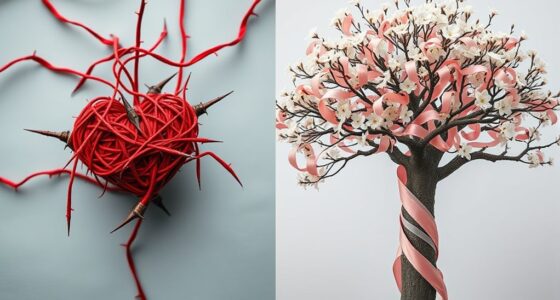

If you cling to an idealized version of love, you may ignore your partner’s real flaws and overlook warning signs. This fantasy pattern makes you emotionally dependent on validation and hopeful for a perfect love that’s unlikely to exist. As a result, you might stay stuck in unfulfilling relationships, risking heartbreak. By recognizing these illusions, you can start to see love more honestly and build stronger, more authentic connections. Keep exploring to discover how to break free from this pattern.

Get gifts for the two of you delivered free with Prime
- Fast, free delivery on millions of items
- Prime Video, Amazon Music and more included
- Member-only deals all year
Key Takeaways
- Idealizing partners and ignoring real flaws fosters unrealistic expectations and emotional dependency.
- Romanticizing love creates a fragile illusion that can lead to disappointment and heartbreak.
- Dismissing conflicts as minor or temporary prevents addressing genuine issues, weakening the relationship.
- Fixating on an unattainable perfect love causes attachment to illusions rather than authentic connection.
- Developing awareness and acceptance of flaws helps build healthier, more resilient relationships grounded in reality.

Many people fall into the trap of the Fantasy Relationship Pattern, where they idealize their partners and overlook real-world flaws. You might find yourself captivated by the idea of perfect love, believing that your partner’s every word and gesture confirms your deepest hopes. This isn’t just about admiration; it’s about emotional dependency, where your happiness depends on your partner’s actions or approval. You convince yourself that this idealized love is what you’ve always wanted, even if it’s distant from reality. You ignore warning signs, dismiss conflicts, and convince yourself that imperfections are just temporary setbacks. Instead, you cling to that fantasy, hoping it will transform into something tangible and lasting.
Idealizing partners blinds you to flaws, fueling dependency and preventing authentic, lasting love.
This pattern feeds your desire for a love story straight out of fairy tales. You see your partner through rose-colored glasses, focusing only on their best qualities while dismissing or minimizing their flaws. Over time, this creates an unbalanced dynamic where your sense of worth becomes intertwined with their affection. You might feel anxious or insecure if they’re not constantly available, because your emotional dependency relies heavily on their validation. You believe that being with them will fill an emotional void, but in reality, it often deepens your feelings of loneliness and longing. Your mind convinces you that this idealized love will save you from loneliness or make you complete, but it’s a fragile illusion that keeps you trapped. Recognizing how visual perception influences love and attraction can help you gain a more balanced perspective.
The danger of this pattern is that it prevents genuine connection. Instead of seeing your partner as they truly are, you project your hopes onto them. You ignore their flaws or dismiss conflicts as minor issues, convincing yourself that love should be perfect, even when reality says otherwise. As this cycle continues, your emotional dependency grows stronger, and you become more reluctant to face the truth. You might stay in a relationship that’s not truly fulfilling, afraid to let go of the fantasy. This keeps your heart vulnerable to heartbreak because you’re not engaging with real intimacy; you’re chasing an ideal that’s impossible to sustain. Developing awareness of emotional dependency can also aid in breaking free from this pattern, as it helps you recognize when your attachment is driven more by illusions than genuine connection. Additionally, understanding relationship expectations can help you set healthier boundaries and foster more authentic connections. Breaking free from this pattern requires recognizing that your attachment is rooted in an illusion of idealized love. You need to see your partner for who they truly are, flaws and all, and accept that love isn’t about perfection. Developing emotional independence can help you find stability within yourself, so your happiness doesn’t hinge solely on your partner’s behavior. Understanding the importance of realistic expectations can help you avoid falling back into the same cycle. When you let go of the fantasy, you open the door to genuine connection—one built on authenticity rather than illusions. Only then can you forge a relationship that’s truly meaningful and resilient, instead of one that’s destined to break hearts over and over again.
As an affiliate, we earn on qualifying purchases.
Frequently Asked Questions
How Can I Recognize This Pattern Early in a Relationship?
You can recognize this pattern early by noticing if you often feel love addiction or emotional dependency taking over your feelings. If you find yourself clinging to someone, ignoring red flags, or feeling anxious when you’re apart, it’s a sign. Be aware of idealizing your partner and ignoring reality. These signs suggest you might be caught in a cycle of fantasy relationships that could lead to heartbreak.
What Emotional Signs Indicate I’M Stuck in This Pattern?
You might notice emotional triggers, like intense anxiety or disappointment, that flare up unexpectedly, signaling you’re stuck in this pattern. Relationship red flags, such as feeling consistently undervalued or ignored, also appear. These signs indicate you’re emotionally entangled in a cycle of unfulfilled fantasies rather than genuine connection. Recognizing these cues early helps you step back, reflect, and potentially break free from the pattern before it deepens.
Can This Pattern Affect My Self-Esteem Long-Term?
Think of this pattern as a storm that repeatedly hits your emotional fortress. Over time, it weakens your walls, impacting your self-esteem and emotional resilience. Long-term, you may start doubting your worth, feeling unworthy of healthy love. This ongoing turmoil chips away at confidence, making it harder to trust future relationships. To rebuild, you need to recognize the storm’s pattern and strengthen your emotional defenses.
Are There Specific Personality Traits Linked to This Pattern?
Yes, certain personality traits and attachment styles are linked to this pattern. You might notice traits like idealism, insecurity, or low self-esteem, which often stem from anxious or avoidant attachment styles. These traits can make it harder for you to recognize healthy boundaries or accept reality, keeping you stuck in a cycle of romantic fantasies. Understanding your personality and attachment style can help you break free from this pattern and foster healthier relationships.
How Do I Break Free From This Destructive Relationship Cycle?
To break free from this destructive cycle, start by recognizing your emotional triggers that draw you into familiar patterns. Establish clear relationship boundaries to protect your well-being and prevent repeated hurt. Practice self-awareness and reflect on past experiences to identify patterns. Seek support if needed, and commit to prioritizing your emotional health. Over time, these steps help you create healthier relationships and break free from the cycle.
As an affiliate, we earn on qualifying purchases.
Conclusion
If you recognize this pattern in your own love life, remember you’re not alone—about 60% of people have experienced similar heartbreak cycles. Breaking free from the fantasy relationship pattern requires awareness and a willingness to embrace real, imperfect love. Don’t settle for illusions; instead, focus on building genuine connections rooted in honesty and vulnerability. Your heart deserves a love that’s real, not just a fantasy. Take the first step toward healing today.
emotional dependency recovery tools
As an affiliate, we earn on qualifying purchases.
As an affiliate, we earn on qualifying purchases.
love and relationship coaching courses
As an affiliate, we earn on qualifying purchases.
As an affiliate, we earn on qualifying purchases.
Halloween Picks
halloween
As an affiliate, we earn on qualifying purchases.