
The best couples therapy workbooks give partners a clear way to talk, practice new skills, and work through recurring problems at a manageable pace. My best overall pick is The Seven Principles for Making Marriage Work for its broad, practical focus; Hold Me Tight stands out for emotional connection, while Love More, Fight Less suits couples who want to work on communication and conflict. The main tradeoff is between structured programs with regular exercises and less prescriptive books built around conversations or relationship ideas. The right fit depends on whether you want help with everyday communication, trust repair, intimacy, or a specific relationship pattern. Read on for how all 14 options compare and which type of couple each one may suit.

Get gifts for the two of you delivered free with Prime
- Fast, free delivery on millions of items
- Prime Video, Amazon Music and more included
- Member-only deals all year
Key Takeaways
- The Seven Principles for Making Marriage Work is the strongest all-around choice because its practical relationship guidance can serve couples who are not focused on a single issue.
- Hold Me Tight and the EFT-focused eight-week workbook prioritize emotional connection and attachment, making them more targeted than general communication guides.
- Several options use an eight-week format, but a clear schedule is useful only if both partners can consistently set aside time to complete exercises together.
- Love More, Fight Less and Fight Right focus on conflict and communication, while the trust-rebuilding titles are better matched to couples working through a specific rupture.
- The lineup ranges from guided conversations to longer programs; buyers should choose based on how much structure they want, not just the word “workbook” in a title.
| 8-Week Couples Therapy Workbook: Strategies to Connect, Improve Communication, and Strengthen Your Relationship |  | Best for a Structured Starting Point | Format: Workbook | Program duration: 8 weeks | Stated focus: Connection | VIEW LATEST PRICE | See Our Full Breakdown |
| Hold Me Tight: Seven Conversations for a Lifetime of Love |  | Best for Guided Relationship Conversations | Author: Sue Johnson | Format: Book | Conversation structure in title: Seven conversations | VIEW LATEST PRICE | See Our Full Breakdown |
| Love More, Fight Less: Communication Skills Every Couple Needs | 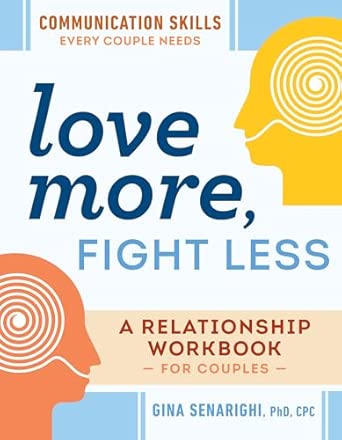 | Best for a Communication-First Focus | Format: Workbook | Audience: Couples | Stated focus: Communication skills | VIEW LATEST PRICE | See Our Full Breakdown |
| The Seven Principles for Making Marriage Work: A Practical Guide |  | Best for Marriage-Focused Guidance | Format: Practical guide | Framework: Seven principles | Stated audience: Married couples | VIEW LATEST PRICE | See Our Full Breakdown |
| 8-Week Couples Relationship Therapy Workbook: Build Emotional Connection and Secure Attachment Through EFT |  | Best for an EFT-Based Program | Format: Workbook | Program length: 8 weeks | Approach: Emotionally Focused Therapy (EFT) | VIEW LATEST PRICE | See Our Full Breakdown |
| The Two-Pen Relationship Workbook for Couples: An 8-Week Program | 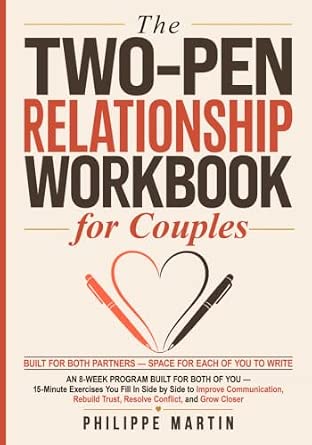 | Best for Short, Shared Sessions | Program length: 8 weeks | Exercise duration: 15 minutes | Exercise format: Completed side by side | VIEW LATEST PRICE | See Our Full Breakdown |
| Couples Therapy Workbook: Strategies to Connect, Restore Love and Trust, Improve Communication, Intimacy, and Validation |  | Best for Connection and Validation | Format: Workbook | Target audience: Couples | Topics: Communication, trust, intimacy, and validation | VIEW LATEST PRICE | See Our Full Breakdown |
| 12-Week Relationship Therapy Workbook for Couples: Communication Exercises to Resolve Conflict, Deepen Intimacy, and Rebuild Trust | 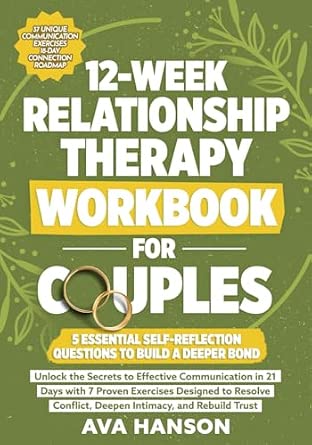 | Best for a Longer Communication Plan | Format: Workbook | Program length: 12 weeks | Communication plan: 21 days | VIEW LATEST PRICE | See Our Full Breakdown |
| Relationship Workbook for Couples: An 8-Week Program to Rebuild Trust and Improve Communication |  | Best for a Focused Eight-Week Reset | Format: Workbook | Program length: 8 weeks | Intended audience: Couples | VIEW LATEST PRICE | See Our Full Breakdown |
| Getting the Love You Want: A Guide for Couples (Third Edition) |  | Best Guide-Style Alternative | Format: Book | Edition: Third Edition | Intended audience: Couples | VIEW LATEST PRICE | See Our Full Breakdown |
| The Complete Couples Therapy Workbook | 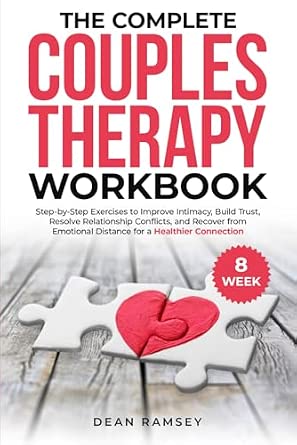 | Best for Broad Relationship Repair | Format: Couples therapy workbook | Exercise style: Step-by-step exercises | Stated focus: Improving intimacy | VIEW LATEST PRICE | See Our Full Breakdown |
| Couples Therapy Workbook: 30 Guided Conversations to Reconnect Relationships |  | Best for Conversation-Led Reconnection | Format: Workbook | Guided conversations: 30 | Stated purpose: Support couples in reconnecting | VIEW LATEST PRICE | See Our Full Breakdown |
| Rebuilding Trust: Guided Therapy Techniques and Activities to Restore Love, Trust, and Intimacy in Your Relationship |  | Best for Trust-Focused Relationship Work | Title-stated content: Guided therapy techniques and activities | Stated focus: Restoring love | Stated focus: Rebuilding trust | VIEW LATEST PRICE | See Our Full Breakdown |
| Fight Right: How Successful Couples Turn Conflict Into Connection |  | Best for a Conflict-First Approach | Format information: Described as a book; workbook format not confirmed | Stated subject: Couples and conflict | Stated premise: Turn conflict into connection | VIEW LATEST PRICE | See Our Full Breakdown |
| couples therapy workbook | Stated focus | Format |
|---|---|---|
| 8-Week Couples Therapy Workboo | Connection | Workbook |
| Hold Me Tight: Seven Conversat | — | Book |
| Love More | Communication skills | Workbook |
| The Seven Principles for Makin | Building a strong marriage | Practical guide |
| 8-Week Couples Relationship Th | Emotional connection | Workbook |
| The Two-Pen Relationship Workb | — | — |
| Couples Therapy Workbook: Stra | — | Workbook |
| 12-Week Relationship Therapy W | — | Workbook |
| Relationship Workbook for Coup | — | Workbook |
| Getting the Love You Want: A G | — | Book |
| The Complete Couples Therapy W | Improving intimacy | Couples therapy workbook |
| Couples Therapy Workbook: 30 G | — | Workbook |
| Rebuilding Trust: Guided Thera | Restoring love | — |
| Fight Right: How Successful Co | — | — |
More Details on Our Top Picks
8-Week Couples Therapy Workbook: Strategies to Connect, Improve Communication, and Strengthen Your Relationship
An eight-week plan gives couples a defined pace for working on communication and connection, which can be easier to follow than an open-ended relationship book. I’d place it ahead of Love More, Fight Less for partners who want a stated program length, since the latter’s supplied details identify its communication focus but not a schedule. Its stated aims are broad, though: the available description does not name a therapy approach, specific exercises, or how partners should handle difficult conversations. That makes it a practical fit for couples seeking a general guided routine, but a less clear choice for those looking for a method-specific workbook like the EFT-based eight-week workbook. The tradeoff is structure without much detail about what each week contains.
Pros:- An eight-week program offers a defined working pace
- Communication and connection are explicit areas of focus
- Workbook format signals an activity-oriented approach
- Aims to strengthen the relationship, not only address conflict
Cons:- The supplied description does not explain the weekly exercises or progression
- No specific therapeutic approach is identified
- The broad focus may not suit couples seeking targeted help with a particular issue
Best for: Couples who want a time-bounded, general workbook plan focused on communication and connection
Not ideal for: Partners seeking a named therapy method, detailed exercise descriptions, or guidance tailored to a particular relationship challenge
- Format:Workbook
- Program duration:8 weeks
- Stated focus:Connection
- Stated focus:Communication
- Stated aim:Strengthening the relationship
- Audience:Couples
Our verdict“Choose this for a general, time-limited couples workbook, but pick the EFT option if you specifically want a named therapeutic framework.”
Hold Me Tight: Seven Conversations for a Lifetime of Love
Seven conversations give this book a distinct focus: it is organized around relationship dialogue rather than an explicitly described workbook schedule. That makes it a different kind of pick from 8-Week Couples Therapy Workbook, whose stated structure is a weekly program. Sue Johnson is the named author, and the title frames the material around lasting love, but the supplied product data does not describe specific exercises, chapter details, or a therapy approach; I would not assume those features from the title alone. Couples who prefer reading and discussing a book together may find this format more appealing than a workbook, while those who want written activities or a clear week-by-week sequence may prefer one of the two eight-week workbooks. Its main limitation here is the lack of detail about how the conversations are guided.
Pros:- The title centers seven conversations, offering a clear organizing idea
- Identifies Sue Johnson as the author
- Book format may suit couples who prefer reading and discussing together
Cons:- Supplied details do not confirm workbook exercises or activities
- No program duration is provided
- The source information does not describe the conversation topics or method
Best for: Couples who prefer a book organized around relationship conversations rather than a stated weekly workbook program
Not ideal for: Partners who want a clearly specified workbook format, a fixed-duration plan, or documented exercise details
- Author:Sue Johnson
- Format:Book
- Conversation structure in title:Seven conversations
- Stated title focus:A lifetime of love
- Audience:Couples
- Program duration:Not provided
Our verdict“Pick this if you want a conversation-centered relationship book; choose an eight-week workbook for a more explicit program format.”
Love More, Fight Less: Communication Skills Every Couple Needs
Communication skills are the clearest reason to choose this workbook: the supplied description explicitly says it is designed for couples and centers communication. Compared with 8-Week Couples Therapy Workbook, it does not come with a stated schedule, so it may appeal to partners who want to focus on how they talk rather than follow a defined eight-week plan. The available information does not identify its exercises, therapeutic framework, or specific conflict tools, however, so I can’t distinguish its approach beyond that central theme. This makes it a narrower and less clearly structured choice than the EFT workbook, which names both a method and program length. It suits couples seeking a communication-led starting point, but those who want clear pacing or method-specific guidance will have less to go on.
Pros:- Designed specifically for couples
- Communication skills are the stated central focus
- Workbook format suggests a practical rather than purely narrative resource
Cons:- No program duration is supplied
- The available description gives no details about exercises or structure
- No therapeutic approach is identified
Best for: Couples whose main priority is improving communication and who do not need a specified program length
Not ideal for: Partners who want a detailed schedule, a named therapy approach, or clearly documented activities before choosing
- Format:Workbook
- Audience:Couples
- Stated focus:Communication skills
- Program duration:Not provided
- Therapeutic approach:Not provided
- Exercise details:Not provided
Our verdict“Choose this for a communication-first workbook without a stated schedule, and favor the eight-week options if you want clearer pacing.”
The Seven Principles for Making Marriage Work: A Practical Guide
Seven principles give this practical guide a broad framework for building and maintaining a strong marriage, making it a different choice from exercise-led workbooks such as 8-Week Couples Therapy Workbook. The supplied description also identifies the author as a relationship expert, though it does not provide a name or further details. I’d steer married couples toward this option when they want guidance framed around the health of a marriage rather than a fixed therapeutic program. The tradeoff is that the source information does not confirm a workbook format, program length, or specific activities; couples wanting scheduled partner exercises have clearer format details in the two eight-week workbooks. Its marriage-specific framing may also be less directly suited to unmarried partners looking for a general couples resource.
Pros:- Organized around seven stated principles
- Explicitly framed as a practical guide
- Focuses on building and maintaining a strong marriage
- Description identifies the author as a relationship expert
Cons:- The supplied details do not confirm workbook exercises
- No program length or pacing is provided
- Marriage-specific framing may be less relevant to unmarried couples
Best for: Married couples seeking a practical, principle-based guide to building and maintaining their relationship
Not ideal for: Unmarried couples or partners who specifically want a workbook with a stated schedule and hands-on activities
- Format:Practical guide
- Framework:Seven principles
- Stated audience:Married couples
- Stated focus:Building a strong marriage
- Stated focus:Maintaining a strong marriage
- Author description:Relationship expert
Our verdict“Choose this for broad, marriage-focused principles, but select an eight-week workbook if you want a defined sequence of activities.”
8-Week Couples Relationship Therapy Workbook: Build Emotional Connection and Secure Attachment Through EFT
EFT is the defining difference here: this workbook pairs a named Emotionally Focused Therapy approach with an eight-week program and stated goals of emotional connection and secure attachment. That gives buyers more method-specific information than the general 8-Week Couples Therapy Workbook, whose supplied description names communication and connection goals but no therapeutic framework. Couples who want a planned course of work grounded in a particular approach may find this the clearest fit in the lineup. The tradeoff is its narrower framing: partners who simply want communication practice, without choosing an EFT-based resource, may prefer Love More, Fight Less. The supplied description does not detail the weekly activities or explain how the material handles complex relationship needs, so the named method should not be mistaken for a guarantee of individualized support.
Pros:- Names Emotionally Focused Therapy as its approach
- Provides a stated eight-week program length
- Focuses on emotional connection and secure attachment
- Designed for couples
Cons:- The supplied description does not explain the weekly activities
- EFT-specific framing may not suit couples seeking a general skills workbook
- No information is provided about individualized support or adapting the program
Best for: Couples who want an eight-week workbook explicitly based on Emotionally Focused Therapy and focused on emotional connection
Not ideal for: Partners seeking a general communication workbook, a different therapeutic approach, or detailed exercise information before buying
- Format:Workbook
- Program length:8 weeks
- Approach:Emotionally Focused Therapy (EFT)
- Audience:Couples
- Stated focus:Emotional connection
- Stated focus:Secure attachment
Our verdict“Choose this over the general eight-week workbook if you specifically want an EFT-based structure focused on attachment and emotional connection.”
The Two-Pen Relationship Workbook for Couples: An 8-Week Program
The Two-Pen format makes this a strong fit for couples who want to work side by side rather than take turns with separate assignments. Its 15-minute exercises lower the time commitment for each session, while the eight-week sequence gives partners a regular routine to return to. Compared with 12-Week Relationship Therapy Workbook for Couples, this program is shorter and its exercise timing is clearer; the other book lists a 21-day communication plan and seven exercises, but gives less detail about session format. The tradeoff is that both people need to show up and participate together, which can make missed sessions harder to absorb. I would choose this for couples who can set aside brief, recurring time, not for partners seeking solo reflection or a flexible self-paced plan.
Pros:- Designed for both partners to participate in each exercise
- 15-minute sessions make regular practice easier to fit into a busy week
- Eight-week structure gives couples a defined path through the program
Cons:- Requires both partners to take part at the same time
- The eight-week schedule may feel restrictive to couples who want to work at their own pace
Best for: Couples who can schedule brief, regular sessions together and prefer guided side-by-side exercises.
Not ideal for: Partners who want to work independently, have mismatched schedules, or need a self-paced workbook that can pause without shared sessions.
- Program length:8 weeks
- Exercise duration:15 minutes
- Exercise format:Completed side by side
- Intended audience:Couples
- Series:The Two-Pen Series
- Product type:Relationship workbook
Our verdict“Choose this if you want short, structured exercises to complete together and can commit to a shared weekly routine.”
Couples Therapy Workbook: Strategies to Connect, Restore Love and Trust, Improve Communication, Intimacy, and Validation
This workbook is aimed at couples who want practical prompts around communication, trust, intimacy, and validation, rather than a clearly timed course. Its guided exercises are presented as ways to strengthen connection and restore trust, giving it a broader emotional focus than The Two-Pen Relationship Workbook for Couples, which stands out for short, side-by-side sessions and a defined eight-week schedule. Here, the available description does not specify a program length or exercise format, so buyers get less clarity about how to build a routine before starting. That flexibility may suit partners who want to work through relationship topics without a fixed calendar, but both people still need to participate actively. I would not treat it as a replacement for professional support when relationship problems are severe.
Pros:- Covers communication, trust, intimacy, and validation
- Uses guided exercises to turn relationship goals into shared activities
- Designed specifically for couples seeking to strengthen their partnership
Cons:- The provided details do not identify a program length or explain the exercise format
- Requires active effort from both partners to make progress
- May not provide enough support for severe relationship problems
Best for: Couples who want guided work on validation and connection alongside communication, trust, and intimacy.
Not ideal for: Partners who need a detailed week-by-week schedule or are addressing serious relationship issues that call for professional care.
- Format:Workbook
- Target audience:Couples
- Topics:Communication, trust, intimacy, and validation
- Exercise approach:Guided exercises
- Relationship focus:Connection and partnership strengthening
- ASIN:B0BRMT2928
Our verdict“Pick this for broad, exercise-based work on connection and validation if a clearly defined schedule is not your priority.”
12-Week Relationship Therapy Workbook for Couples: Communication Exercises to Resolve Conflict, Deepen Intimacy, and Rebuild Trust
For couples who want a longer runway, this workbook pairs a 12-week program with a 21-day communication plan and seven exercises focused on conflict, intimacy, and trust. The shorter plan within the larger program gives partners a specific communication component, while the full 12 weeks allow more time than Relationship Workbook for Couples: An 8-Week Program to Rebuild Trust and Improve Communication. That extra structure may appeal to couples who prefer a longer course, but the listing does not explain what the seven exercises involve or how the workbook is organized. Compared with The Two-Pen Relationship Workbook, which specifies short side-by-side sessions, this option provides less guidance about the format of each meeting. I would choose it for its defined duration and communication plan, while accepting some uncertainty about the day-to-day experience.
Pros:- Provides a 12-week program for couples who want an extended course
- Includes a 21-day communication plan
- Addresses conflict resolution, intimacy, and rebuilding trust
Cons:- The seven exercises are not described in detail in the available product information
- The workbook’s session format is not specified
- A 12-week commitment may be too long for couples seeking a brief, focused program
Best for: Couples who want a longer guided timeline and a distinct communication plan as part of their relationship work.
Not ideal for: Buyers who need detailed information about exercise instructions or want to know exactly how each session is structured before choosing.
- Format:Workbook
- Program length:12 weeks
- Communication plan:21 days
- Number of exercises:7
- Intended audience:Couples
- Topics:Communication, conflict, intimacy, and trust
Our verdict“Choose this if the 12-week structure and 21-day communication plan appeal more than detailed information about each exercise.”
Relationship Workbook for Couples: An 8-Week Program to Rebuild Trust and Improve Communication
This is a straightforward choice for couples who want a defined eight-week program covering trust, communication, conflict, and intimacy. Its topic range makes it broader than a workbook centered only on communication, while the concise timeline is easier to commit to than the 12-Week Relationship Therapy Workbook for Couples. It also overlaps with The Two-Pen Relationship Workbook in length, but the available description does not specify short sessions or a side-by-side exercise format, so the Two-Pen title is the clearer pick for couples who need to know how shared work will fit into their schedules. This book’s appeal is its focused scope; the tradeoff is limited detail about the exercises and how the program unfolds. I would favor it when the eight-week timeframe and core relationship topics matter more than a described session method.
Pros:- Eight-week program provides a defined timeframe
- Covers trust, conflict resolution, and communication
- Includes strategies aimed at rekindling intimacy
- Focuses on several common relationship concerns within one workbook
Cons:- The available description does not explain the exercises or session format
- No specific activity schedule or exercise length is provided
Best for: Couples looking for an eight-week workbook that addresses trust and communication alongside conflict and intimacy.
Not ideal for: Partners who want clearly described exercises, a specified session length, or a detailed week-by-week format before starting.
- Format:Workbook
- Program length:8 weeks
- Intended audience:Couples
- Topics:Trust, conflict resolution, communication, and intimacy
- Relationship focus:Rebuilding trust and improving communication
- ASIN:B0DW985LFT
Our verdict“Choose this for a focused eight-week plan across core relationship topics, but pick the Two-Pen workbook if session format is a deciding factor.”
Getting the Love You Want: A Guide for Couples (Third Edition)
Getting the Love You Want is the outlier in this group: its listed format is a guide book, not a workbook with a stated program length or set of exercises. The third edition may interest couples who want a book specifically intended for relationship improvement, but the product information supplied here gives no details about its methods, activities, or topics. That makes it harder to judge as a hands-on couples therapy workbook than The Two-Pen Relationship Workbook, which specifies 15-minute shared exercises over eight weeks, or the 12-week title with its named communication plan. The tradeoff is clear: this may suit readers seeking a general couples guide, but buyers wanting a predictable workbook structure have less to go on. I would choose it only if a guide format matters more than documented exercises.
Pros:- Specifically intended for couples
- Identified as the third edition
- Guide format may suit readers who prefer a book over a scheduled program
Cons:- The available product details do not describe its content or methods
- No program length or exercise format is provided
- The listing offers little basis for comparing its practical activities with dedicated workbooks
Best for: Couples who prefer a general relationship guide and are comfortable choosing without detailed information about its exercises or structure.
Not ideal for: Buyers specifically seeking a workbook with a stated program length, guided activities, or a clear couples-therapy exercise format.
- Format:Book
- Edition:Third Edition
- Intended audience:Couples
- Product type:Relationship guide
- Program length:Not specified
- Exercise format:Not specified
Our verdict“Choose this if you want a couples guide rather than a clearly structured workbook, and skip it if specific exercises are your priority.”
The Complete Couples Therapy Workbook
The Complete Couples Therapy Workbook is the broadest fit here for partners who want exercises aimed at several connected concerns rather than one narrow problem. Its step-by-step activities address intimacy, trust, conflict, and emotional distance, giving couples multiple places to start. Compared with Rebuilding Trust, whose title points to a trust-centered focus, this workbook appears better suited to couples dealing with a mix of relationship strains. That breadth is also its tradeoff: the available description does not explain the exercise formats, sequence, or level of guidance, so buyers seeking a clearly defined program may prefer a workbook with a stated session count, such as 30 Guided Conversations. I’d choose this for flexible, issue-spanning work, not as a substitute for individualized therapy when conflict feels unsafe or entrenched.
Pros:- Step-by-step exercises give couples a practical starting point for relationship work.
- Addresses both intimacy and trust rather than focusing on only one area.
- Includes conflict and emotional distance among its stated focus areas.
Cons:- The available description does not specify how many exercises or sessions are included.
- No details are provided about the exercise formats or how the material progresses.
- Its broad focus may feel less targeted than a workbook devoted to a specific concern.
Best for: Couples who want guided activities addressing several issues at once, including trust, intimacy, conflict, and emotional distance.
Not ideal for: Partners who need a clearly outlined program with a known number of sessions or detailed information about each exercise before choosing.
- Format:Couples therapy workbook
- Exercise style:Step-by-step exercises
- Stated focus:Improving intimacy
- Stated focus:Building trust
- Stated focus:Resolving relationship conflicts
- Stated focus:Addressing emotional distance
Our verdict“Choose this workbook if you want step-by-step activities spanning several common relationship concerns, and skip it if you need a precisely described program.”
Couples Therapy Workbook: 30 Guided Conversations to Reconnect Relationships
30 Guided Conversations makes its format unusually clear: the workbook is built around a set of 30 conversations intended to help couples reconnect. That structure may suit partners who find open-ended relationship exercises hard to begin; a defined prompt gives each discussion a starting point. Compared with The Complete Couples Therapy Workbook, which covers several named concerns through step-by-step exercises, this pick signals a more conversation-centered approach. The tradeoff is limited product information: the available details do not describe the topics, prompts, or how the conversations are sequenced. I’d favor it for couples who want a repeatable reason to sit down and talk, but not for buyers who need to know whether the material targets a specific issue such as conflict or rebuilding trust.
Pros:- Provides a stated set of 30 guided conversations.
- A conversation-led format offers a clear starting point for couples who struggle to initiate discussions.
- Its reconnection aim gives the workbook a distinct focus within this group.
Cons:- The available product details do not explain the conversation topics or prompts.
- No information is provided about how the 30 conversations are organized or sequenced.
- The description does not establish whether it includes exercises beyond guided conversations.
Best for: Couples who want a defined set of guided discussions to create regular opportunities to reconnect.
Not ideal for: Partners who need a clearly described focus on a particular issue, or who prefer written exercises over conversation prompts.
- Format:Workbook
- Guided conversations:30
- Stated purpose:Support couples in reconnecting
- Product title:Couples Therapy Workbook: 30 Guided Conversations to Reconnect Relationships
- ASIN:1937661466
- Exercise details:Not provided in the available product information
Our verdict“Pick this for a defined conversation-based route to reconnecting, but choose a more fully described workbook if you need topic-specific guidance.”
Rebuilding Trust: Guided Therapy Techniques and Activities to Restore Love, Trust, and Intimacy in Your Relationship
Rebuilding Trust is the most specifically positioned choice in this group for couples whose main concern is restoring trust. Its title also names love and intimacy, suggesting a relationship-repair focus rather than a broad survey of every communication skill. Compared with The Complete Couples Therapy Workbook, which explicitly spans trust, conflict, intimacy, and emotional distance, this title signals a narrower center of gravity. That focus may help couples choose a workbook aligned with their immediate concern, but the product information provided contains no description of the actual activities, structure, or intended level of support. I can’t judge how much practical guidance it offers from the title alone. Couples who need transparent details before buying may be better served by 30 Guided Conversations, whose stated format is clearer.
Pros:- Its stated subject directly addresses rebuilding trust.
- The title also identifies love and intimacy as relationship goals.
- The trust-centered positioning distinguishes it from broader workbooks such as The Complete Couples Therapy Workbook.
Cons:- No product description or activity details were provided.
- The available information does not establish how the techniques or activities are organized.
- Buyers cannot tell from the supplied details whether it covers concerns beyond trust, love, and intimacy.
Best for: Couples whose primary goal is working on trust and who are comfortable choosing a workbook based on its stated subject rather than detailed exercise descriptions.
Not ideal for: Buyers who need to preview the workbook’s structure, activities, or guidance level, or couples seeking a clearly described conflict-resolution program.
- Title-stated content:Guided therapy techniques and activities
- Stated focus:Restoring love
- Stated focus:Rebuilding trust
- Stated focus:Restoring intimacy
- Relationship audience:Couples
- Product description:No additional details provided
Our verdict“Consider this for a trust-centered focus, but choose a workbook with fuller product details if you need to know how its activities work before buying.”
Fight Right: How Successful Couples Turn Conflict Into Connection
Fight Right is the clearest match here for couples who want to rethink how they handle disagreements. Its stated premise is that conflict can become a route to connection, making it distinct from Rebuilding Trust, whose title centers trust, love, and intimacy. Compared with The Complete Couples Therapy Workbook, this book appears more focused on conflict as the starting point rather than offering exercises across several relationship concerns. One caveat for workbook shoppers: the supplied description calls it a book but does not confirm that it includes worksheets, guided activities, or a workbook format. I’d shortlist it for readers seeking ideas about conflict and connection, while couples specifically shopping for hands-on exercises should verify the format before choosing it.
Pros:- Focuses directly on the relationship between conflict and connection.
- Offers a distinct conflict-first angle compared with trust-focused titles.
- The stated premise may appeal to couples seeking a reframing of disagreements.
Cons:- The supplied description does not confirm a workbook format or include details about hands-on exercises.
- No information is provided about the book’s structure or specific conflict techniques.
- Its stated focus is narrower than a workbook addressing trust, intimacy, conflict, and emotional distance together.
Best for: Couples who want to learn a conflict-centered approach to turning disagreements toward connection and are open to a book rather than a confirmed workbook.
Not ideal for: Shoppers who require worksheets or structured exercises, or whose main goal is rebuilding trust rather than changing conflict patterns.
- Format information:Described as a book; workbook format not confirmed
- Stated subject:Couples and conflict
- Stated premise:Turn conflict into connection
- Intended audience:Couples
- Exercise details:Not provided in the available product information
- Product title:Fight Right: How Successful Couples Turn Conflict Into Connection
Our verdict“Choose this for a conflict-centered perspective, but verify that its format meets your need for workbook exercises before buying.”

How We Picked
I compared these couples therapy workbooks by the kind of relationship need they address, how clearly their titles and formats signal a path through the material, and whether the approach appears suited to shared work rather than reading alone. I gave weight to practical exercises, conversation prompts, defined program lengths, and the ability to use a book for a specific concern such as conflict, emotional connection, or trust. I also considered whether a title offers broad relationship guidance or a narrower method, since those choices affect who is likely to benefit.
The ranking favors options that appear useful to a wider range of couples and make their purpose easy to identify. More specialized books rank lower as general recommendations, not because a focused approach is inherently weaker, but because it may fit fewer situations. A workbook’s title cannot establish the quality of its clinical guidance or replace professional support, so couples facing serious distress should treat books as a supplement rather than a substitute for a qualified therapist.
| couples therapy workbook | Format |
|---|---|
| 8-Week Couples Therapy Workboo | Workbook |
| Hold Me Tight: Seven Conversat | Book |
| Love More | Workbook |
| The Seven Principles for Makin | Practical guide |
| 8-Week Couples Relationship Th | Workbook |
| The Two-Pen Relationship Workb | — |
| Couples Therapy Workbook: Stra | Workbook |
| 12-Week Relationship Therapy W | Workbook |
| Relationship Workbook for Coup | Workbook |
| Getting the Love You Want: A G | Book |
| The Complete Couples Therapy W | Couples therapy workbook |
| Couples Therapy Workbook: 30 G | Workbook |
| Rebuilding Trust: Guided Thera | — |
| Fight Right: How Successful Co | — |
Factors to Consider When Choosing Couples Therapy Workbooks
Before choosing among couples therapy workbooks, I would match the book’s method and workload to the reason you want one. A title designed for conflict habits may not help much with rebuilding trust, and a structured course can feel burdensome if you want occasional prompts for conversation.
Choose the issue you want to work on first
Couples often shop for a workbook because several problems feel connected, but trying to address everything at once can make the exercises hard to follow. Start with the pattern that causes the most strain: recurring arguments, emotional distance, trust concerns, or difficulty talking openly. Then check whether the book’s stated approach matches that need, rather than assuming any relationship title will cover it equally well. Broad guides offer flexibility, while focused books can give more attention to a particular challenge. A common mistake is choosing a trust-repair workbook for ordinary disagreements, or a conflict guide when the deeper concern is emotional disconnection. If the main issue is unclear, a general guide or a therapist’s recommendation may be a better starting point than a highly specific program.
Match the program format to your time and follow-through
An eight- or twelve-week plan can help couples build a routine, but the schedule only works if both partners can keep showing up. Think about how often you can set aside uninterrupted time and whether you prefer a weekly assignment, a guided conversation, or material you can read at your own pace. A defined program may be helpful when structure is motivating; it can become a source of frustration when life is already overloaded. Do not assume a longer plan is more thorough or a shorter one is easier to use. Look for an approach that leaves room to pause when a topic brings up strong feelings. Consistency and honest participation matter more than completing pages quickly.
Decide how much structure you both want
Some couples want prompts that tell them what to discuss and in what order; others prefer concepts they can bring into conversations as needed. Structured exercises reduce the effort of deciding where to begin, but they may feel rigid if your concerns do not match the program’s sequence. Conversation-led books can be more flexible, though partners may need to take more initiative to turn ideas into regular practice. Before buying, ask whether both people are comfortable writing, answering prompts, or talking through sensitive questions. A workbook can also be used together without filling in every activity, but that approach works best when both partners agree on how to use it. The format should support discussion, not become a scorecard for judging each other.
Check whether the method feels like a good fit
Relationship books may draw on different ideas, including attachment-focused work, communication skills, conflict practices, or broader relationship principles. A method can shape what the book asks you to notice and how it frames recurring problems. Choose language and exercises that feel understandable to both partners, rather than selecting a title only because its approach sounds authoritative. If one partner finds a framework alienating, the exercises may be harder to use honestly. For couples already working with a therapist, it can help to ask whether a workbook complements the work you are doing together. A book is a tool for reflection and practice; it cannot diagnose a relationship or tailor guidance to every couple’s history.
Be realistic about trust, safety, and emotional intensity
Guided conversations about trust, intimacy, or past conflict can bring up powerful reactions, so a workbook is not automatically the right setting for every topic. Consider whether both partners can speak openly without fear of retaliation, intimidation, or pressure to disclose more than they are ready to share. If a relationship involves abuse, coercion, or immediate safety concerns, a workbook should not be treated as a safe substitute for individual professional help or other support. Even in less acute situations, couples may benefit from agreeing on a pause signal and stopping an exercise when either person feels overwhelmed. The goal is constructive discussion, not forcing a resolution in one sitting. When the issue is serious or stuck, professional guidance can provide support a book cannot.
Think about how you will use the book together
A workbook is more useful when both partners agree on a practical routine before the first exercise. Decide when you will work, how long a session will last, and whether you will read the material beforehand or together. Avoid turning completed exercises into evidence in an argument; that can undermine the honesty the prompts are meant to encourage. If one person prefers writing and the other does not, consider whether the book allows discussion without requiring equal written responses. You can also agree to try a small number of activities before committing to the full program. These choices help prevent a common disappointment: buying a promising guide and then leaving it unused because its format never fit your shared habits.
Frequently Asked Questions
Can a couples therapy workbook replace seeing a therapist?
A workbook can provide shared prompts and communication exercises, but it cannot assess a couple’s situation or respond to the way a difficult conversation unfolds. It may suit partners who want to practice skills or reflect on relationship habits between professional sessions. If conflict feels unsafe, either partner feels controlled, or the same problems remain stuck despite sustained effort, a qualified therapist may offer support a book cannot. Couples already in therapy can ask their clinician whether a particular workbook fits their goals. Treat self-guided material as an aid, not a replacement for care when more support is needed.
Should we choose a workbook focused on one problem or a general relationship guide?
Choose a focused title when both partners can name a clear concern, such as recurring conflict, emotional distance, or rebuilding trust. A general guide can make more sense when several everyday relationship habits need attention or you are not sure where to start. A narrow method may go further into its chosen topic but may leave other concerns untouched. A broad book may feel less targeted if one issue is causing most of the distress. If you are unsure, compare each book’s stated focus with the conversations you actually want help having.
What if my partner does not want to complete written exercises?
Do not treat reluctance to write as proof that a partner is unwilling to work on the relationship. Ask whether they would rather discuss prompts aloud, read a chapter together, or try a less worksheet-heavy format. Some couples benefit from written reflection, while others engage more openly through guided conversation. Agree on a small trial rather than insisting on completing a full program before you know whether the format works. If one partner is being pressured to participate, pause and discuss what kind of shared effort feels acceptable to both of you.
How do we choose between an eight-week workbook and a book of guided conversations?
An eight-week workbook offers a planned sequence and can help couples create a regular practice, provided they have time to keep up with it. A guided-conversation book may be easier to use selectively when you want to address a topic without following a set schedule. The tradeoff is structure versus flexibility: a program gives more direction, while conversation prompts leave more responsibility with the couple. Look at your recent routines honestly rather than choosing the format you wish you had time for. Either approach can be useful if both partners agree on when and how to use it.
Can we use a workbook when trust has been damaged?
A trust-focused workbook may help couples reflect on communication, repair, and the steps they want to take, but it cannot guarantee that trust will return. Both partners need to feel safe enough to participate, and repair usually takes more than completing a set of exercises. If there is ongoing deception, coercion, abuse, or a major imbalance in what each partner can freely say, seek appropriate professional support rather than relying on a self-guided book. A workbook may be more useful as a supplement when both people are ready to engage honestly. Stop an exercise if it escalates distress or pressure instead of supporting a constructive conversation.
Conclusion
For a single starting point, I recommend The Seven Principles for Making Marriage Work as the best overall pick because it offers broad, practical relationship guidance. For readers seeking a value-minded, focused route into communication skills, Love More, Fight Less is a strong option; those who want a more emotionally centered approach should look at Hold Me Tight. Beginners who benefit from a clear schedule may prefer one of the eight-week workbooks, while couples with a specific concern can narrow the field to the conflict, trust, or guided-conversation titles that match it. My best premium-style pick for depth is Getting the Love You Want, which is better suited to readers who want a more developed guide than a short sequence of prompts. Choose the format both partners are willing to use, and seek professional help when the situation calls for support beyond self-guided work.