This guide helps couples choose a relationship advice book that fits their current needs and use its ideas in practical, respectful conversations. It is for partners who want to work on everyday communication, conflict, closeness, or shared goals—not a substitute for professional care when there is abuse, coercion, or a serious safety concern. No prior experience with relationship books is needed. Plan about 2-4 hours to compare options and complete the first reading session, then several weeks for a book’s exercises.

The Seven Principles for Making Marriage Work: A Practical Guide from the Country’s Foremost Relationship Expert
- ✔ Format: Book
- ✔ Approach: Practical guide
- ✔ Framework: Seven principles

The Two-Pen Relationship Workbook for Couples
- ✔ Format: Relationship workbook for couples
- ✔ Program length: 8 weeks
- ✔ Exercise duration: 15 minutes
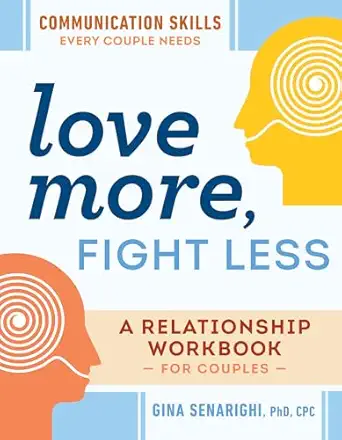
Love More, Fight Less: Communication Skills Every Couple Needs: A Relationship Workbook for Couples
- ✔ Format: Relationship workbook
- ✔ Intended readers: Couples
- ✔ Stated focus: Communication skills
Difficulty: Beginner | Time: 2-4 hours to choose and begin; 4-8 weeks to work through a book
What You’ll Need
Tools & Materials:
- A shortlist of relationship books from a library, bookstore, or reputable publisher
- A phone, notebook, or shared document for recording goals and exercises
- A quiet place where both partners can talk without interruption
Knowledge:
- A willingness to describe needs without insults or blame
- A basic understanding that each partner can pause or decline an exercise
Agree that reading is an invitation to learn, not a way to diagnose, correct, or pressure your partner. If either person fears the other’s reaction, or the relationship includes threats, violence, or coercive control, do not use a joint self-help exercise as the main response. Seek confidential support from a qualified local service or clinician.
The Seven Principles for Making Marriage Work: A Practical Guide from the Country’s Foremost Relationship Expert
For couples looking for more than one targeted skill, The Seven Principles for Making Marriage Work is the strongest all-round starting point in this group. Its stated approach is built around seven principles for building and maintaining a strong relationship, giving it a broader marriage-improvement remit than Love More, Fight Less, which centers on communication, or the Two-Pen workbook, which organizes couples’ work into an eight-week program. The book is written by relationship expert John Gottman, a useful point of distinction for readers who want a guide associated with an established relationship specialist.Its practical-guide format may suit partners who want ideas and principles to consider without committing to a set sequence of short, side-by-side exercises. That flexibility is also a tradeoff: the supplied details do not identify a program length, exercise schedule, or specific workbook activities. Couples who need a clear prompt to sit down together each day may find Two-Pen easier to act on. And if the immediate goal is specifically to improve communication, Love More, Fight Less has the narrower topical focus, although its description gives us less information about how it does so.We rank this first because it offers the clearest combination of breadth and practical intent. It is best suited to couples who want to examine their marriage through several principles rather than work through a short, prescribed program. Readers should skip it if they need a highly structured workbook or want detailed information about exercises before choosing.
Pros:
- Organized around seven principles for strengthening and maintaining a marriage
- Written by relationship expert John Gottman
- Practical-guide positioning suits couples seeking ideas beyond a single communication topic
- Broader stated scope than the two workbooks in this comparison
Cons:
- The supplied description does not specify exercises, chapter structure, or a recommended timeline
- Less clearly designed for scheduled, side-by-side work than The Two-Pen Relationship Workbook
Best for: Couples seeking a practical, broad-based guide to building and maintaining a strong marriage.
Not ideal for: Partners who want a defined weekly schedule, short activities to complete side by side, or a workbook format with clearly described exercises.
Bottom line: We recommend it for couples who want a practical marriage framework, while partners who need a guided routine should choose the more structured Two-Pen workbook.
“We recommend it for couples who want a practical marriage framework, while partners who need a guided routine should choose the more structured Two-Pen workbook.”
The Two-Pen Relationship Workbook for Couples
The Two-Pen Relationship Workbook for Couples is the clearest pick for partners who want the book to tell them how to begin and how to keep going. Its eight-week program turns relationship work into a defined commitment, while the 15-minute exercises are designed to be completed side by side. That makes it more immediately actionable than The Seven Principles, whose supplied description presents a practical framework but no schedule or activity length.The workbook’s stated themes—trust, conflict resolution, and connection—also give couples a sense of the ground it intends to cover. Its short sessions may be easier to fit into a busy week than an open-ended reading plan, and the paired format signals that this is work for both partners rather than advice for one person to apply alone. Compared with Love More, Fight Less, Two-Pen offers a much more specific account of its structure and intended use.That structure is its advantage, but it can also be limiting. Couples who want to explore marriage through a broader set of principles may prefer Gottman’s guide, and an eight-week plan may feel too prescriptive to partners who would rather dip into topics as needed. The product details do not say how the exercises are sequenced or whether the program addresses concerns beyond its named themes, so we would not assume it fits every relationship challenge. Choose it for a shared routine, not because a workbook can guarantee a particular outcome.
Pros:
- Provides a defined eight-week structure
- Exercises are designed to take 15 minutes
- Side-by-side format makes joint participation central
- Names trust, conflict resolution, and connection as focus areas
Cons:
- The set program may feel prescriptive to couples who prefer choosing topics as needed
- Available details do not explain the exercise sequence or the depth of each topic
Best for: Couples who want a time-bounded, side-by-side program with short sessions focused on trust, conflict, and connection.
Not ideal for: Readers who prefer an open-ended marriage guide, want a communication-only resource, or need a clearly stated approach to a specific complex issue.
Bottom line: Choose Two-Pen when a short, shared routine matters more than the broader marriage framework offered by The Seven Principles.
“Choose Two-Pen when a short, shared routine matters more than the broader marriage framework offered by The Seven Principles.”
Love More, Fight Less: Communication Skills Every Couple Needs: A Relationship Workbook for Couples
When the main issue a couple wants to address is how they communicate, Love More, Fight Less has the most direct title and stated focus in this lineup. It is described as a relationship workbook for couples centered on communication skills, making it a more targeted alternative to The Seven Principles, whose stated scope covers several principles for marriage, and to Two-Pen, which names trust, conflict resolution, and connection within a set eight-week plan.The limitation is how little detail is available about the workbook itself. We know it is designed for couples and focuses on communication skills, but the supplied information does not tell us whether partners complete exercises together, how long the book takes, what methods it uses, or how it approaches disagreements. That means we can identify its intended topic but cannot compare its practical structure with Two-Pen’s short side-by-side activities. Couples who want a known routine should lean toward Two-Pen; those who want a broader framework may find The Seven Principles better defined.We place this third not because communication is a lesser concern, but because the available description leaves more unanswered questions for a buyer. It makes sense as a consideration for couples seeking a communication-centered workbook, provided they are comfortable checking the book’s full details before committing. Skip it if you need a clear program outline or want to know exactly what partners will do together.
Pros:
- Explicitly focuses on communication skills
- Identified as a relationship workbook rather than a general advice book
- Designed for couples
- Addresses a narrower need than the broader marriage framework in The Seven Principles
Cons:
- Supplied description provides no detail about exercises or methods
- No program length or activity duration is stated
- The available information is too limited to compare its structure with Two-Pen confidently
Best for: Couples specifically looking for a workbook focused on communication skills and willing to review fuller product details before deciding.
Not ideal for: Partners who need a confirmed schedule, known exercise length, or a detailed account of the workbook’s activities before buying.
Bottom line: Consider it for a communication-first approach, but choose Two-Pen if you want a better-described couples’ program and routine.
“Consider it for a communication-first approach, but choose Two-Pen if you want a better-described couples’ program and routine.”
As an Amazon Associate we earn from qualifying purchases.
Before You Start
Talk briefly about whether both partners want to try a book and what would make the process feel fair. Pick a time limit for each reading session, such as 20-30 minutes, and agree that either person can ask for a pause. Avoid starting with a difficult exercise during an argument or when either of you is tired, intoxicated, or rushed. You do not need to agree with every claim in a book; focus on whether an idea is useful and respectful in your relationship.
Step-by-Step Instructions
Step 1: Name the issue you want to work on
Write down one relationship area you would like to improve, and ask your partner to do the same independently. Make each goal specific and observable: replace “be better together” with “finish difficult conversations without interrupting” or “set aside one evening a week for time together.” Share your goals and choose one area you both agree to address first. If your priorities differ, identify a shared starting point instead of letting one person’s concern erase the other’s.
Tip: Keep the first goal narrow. A book is easier to use when you know what behavior you want to practice.
Check: You can state one shared goal in a sentence, and both partners agree it is worth working on.
Step 2: Choose a suitable book
Search for books that directly address your shared goal. Read the publisher’s description, contents page, and a sample chapter, then check who the book is written for and what approach it uses. Look for practical exercises, clear explanations, and advice that respects both partners’ autonomy. Check the publication date and the author’s qualifications when the book makes clinical or research-based claims. Borrow or preview a copy before buying if possible.
Compare at least two options. Ask each other whether the tone feels respectful, whether the examples fit your situation, and whether the exercises seem manageable. Choose the book you can both imagine opening regularly, not simply the one with the strongest promise on its cover.
Tip: A book written for couples generally works better for shared exercises than a general dating or personal-growth title.
Check: Both partners accept the book, understand its focus, and can identify a chapter or exercise related to the shared goal.
Step 3: Agree on how you will use it
Schedule a weekly reading time and decide whether to read the same chapter separately or aloud together. Choose a realistic pace, such as one chapter per week, and set a session length. Agree on how to handle disagreement: each person explains what they understood, asks a question, and can pause before responding. Do not assign your partner homework or use a passage as proof that they are wrong.
Tip: If reading aloud feels awkward, read separately and bring one idea each to the discussion.
Check: You have a specific time, reading pace, and shared rule for pausing or disagreeing.
Step 4: Read one section and select one idea
Read the first relevant chapter or section at the pace you agreed on. Mark one idea that seems useful and one question or concern, and ask your partner to do the same. During your session, take turns explaining your choices without debating whether the other person is allowed to feel that way. Select just one exercise or behavior to try during the coming week. Translate broad advice into an observable action, such as taking turns speaking for two minutes before responding.
Tip: Do not try to change several habits at once. A single repeatable experiment gives you a clearer sense of what helps.
Check: You have chosen one practical action and can explain when and how you will try it.
Step 5: Practice the exercise at a calm time
Schedule the selected activity for a time when neither partner is already overwhelmed. Follow the book’s directions, but adjust or stop if the exercise feels unsafe, shaming, or too intense. Use first-person statements about your own experience, such as “I feel disconnected when we cancel our plans,” rather than labels about your partner. If emotions rise, take a mutually agreed break and set a time to return to the conversation.
Tip: A pause should include a plan to resume, not be used to punish or shut down the other person.
Check: Both partners had a chance to speak, and you completed the activity or agreed on a respectful reason to stop.
Step 6: Review the result and decide what to do next
At your next check-in, answer these questions separately, then share your answers: What felt helpful? What felt uncomfortable or impractical? What should we change next time? Record one example of a behavior that improved, even if the change was small. Keep the exercise, adapt it, or choose another idea from the book based on both partners’ feedback. Revisit your shared goal after a few weeks and decide whether to continue, switch books, or seek additional support.
Tip: Judge progress by actions and conversations, not by whether you agree on every interpretation in the book.
Check: You can name what you learned and have a mutually agreed next action.
Common Mistakes to Avoid
- Choosing a book because it promises a quick fix or matches only one partner’s view of the problem. — Compare the book’s approach with your shared goal, preview its tone, and ask both partners to approve the choice.
- Using advice or quotations to prove that a partner is wrong. — Discuss what an idea means to each of you, then decide together whether to test it. Treat the book as a tool, not an authority over your partner.
- Trying to complete too many exercises or chapters at once. — Choose one manageable action per week and leave time to discuss how it worked.
- Continuing an exercise after one partner feels unsafe or pressured. — Agree in advance that either person can pause or stop. Seek individual professional or specialist support when safety or coercion is involved.
Troubleshooting
Problem: One partner does not want to read the chosen book.
Solution: Ask what concerns them without arguing. Offer to preview a sample together, choose a shorter resource, or begin with one discussion question. Do not force participation; a couples exercise needs voluntary involvement.
Problem: The book’s advice does not fit your relationship or circumstances.
Solution: Skip the exercise, adapt it only if both partners agree, or choose another title with a better fit. Advice presented as universal may not account for culture, disability, family demands, or relationship structure.
Problem: Reading sessions turn into arguments about who is at fault.
Solution: Stop the discussion and return to the agreed pause rule. At the next session, each person can share one personal reaction rather than evaluate the other’s behavior. Consider a couples therapist if the pattern continues and both partners can participate safely.
Problem: You complete exercises but see no improvement.
Solution: Check whether the goal is specific, the action is being practiced, and both partners are willing to participate. Try a different exercise or book. If distress remains high or problems persist, consult a qualified relationship professional.
What Success Looks Like
You have a book both partners accept, a shared goal, and a realistic schedule. You have tried at least one specific exercise or behavior and discussed its effect without using the book to shame or control either person. Success does not require solving every problem; it means you can identify a useful next action, recognize when advice is a poor fit, and know when outside support is appropriate.
Next Steps
Continue with one chapter or exercise at a time and check in weekly. After three or four weeks, review the original goal and note concrete changes, such as more uninterrupted listening or fewer conversations ending abruptly. Keep the practices that help and drop those that do not. If the book exposes persistent conflict, trauma, or needs beyond self-help, contact a qualified couples therapist; if there is danger or coercion, seek confidential specialist support separately.
Frequently Asked Questions
Should couples read the book together or separately?
Either approach can work. Reading separately gives each person time to reflect; reading together makes it easier to discuss examples immediately. Choose the format both partners prefer, and bring one observation or question to each check-in.
How do we choose a book if we disagree about the main problem?
Each partner should name one concern, then look for a shared skill that could help with both, such as listening or handling disagreements. If you cannot agree, take turns selecting a short sample to review rather than making one person’s preferred book mandatory.
How long should we try a relationship advice book?
Try a consistent routine for three or four weeks before judging whether the approach is useful, unless an exercise feels unsafe or harmful. Review progress against a specific behavior, not a promise that the relationship will change completely.
Can a relationship book replace couples therapy?
A book can support everyday learning, but it cannot assess or treat every relationship problem. Seek a qualified professional for persistent distress, repeated conflict that you cannot manage, or concerns that require clinical guidance. For abuse or coercive control, prioritize confidential safety support rather than joint exercises.