

In many faith traditions, porn addiction in marriage is seen as a serious moral and spiritual breach that damages trust and intimacy. You’re encouraged to realign your life with spiritual principles through sincere repentance, prayer, and ongoing commitment. Marriage counseling and community support are essential steps in healing. Strengthening your connection with faith and your spouse can help restore integrity and deepen your spiritual journey. To understand more about how faith guides overcoming this challenge, continue exploring these perspectives.
Key Takeaways
- Many faiths view pornography addiction as a moral breach that damages trust and intimacy in marriage.
- Overcoming addiction involves sincere repentance, spiritual discipline, and aligning one’s life with religious principles.
- Marriage counseling combined with prayer, accountability, and spiritual practices is recommended for healing and restoration.
- Community support and accountability partners play a vital role in spiritual growth and overcoming temptation.
- Addressing pornography addiction is seen as a spiritual obstacle that requires holistic healing through faith, repentance, and relationship renewal.
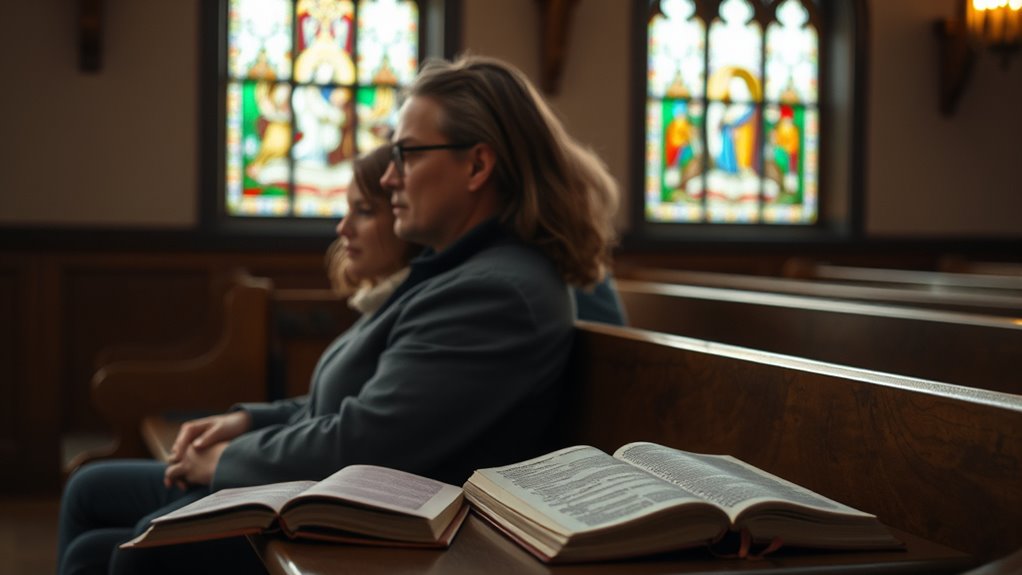
Many religious traditions view pornography addiction in marriage as a serious breach of spiritual and moral values. It disrupts the sacred bond between spouses and undermines the trust and intimacy that are crucial to a healthy marriage. When you find yourself struggling with this issue, many faith communities recommend seeking marriage counseling as an essential step toward healing. Marriage counseling provides a safe space where you and your partner can openly discuss the impact of addiction, address underlying issues, and work toward restoring your relationship. Religious counselors often incorporate spiritual disciplines into therapy, emphasizing prayer, accountability, and repentance as tools for recovery. These practices are designed not only to help you break free from the addiction but also to deepen your spiritual connection and reinforce your commitment to your faith and your partner.
Seeking marriage counseling and spiritual discipline are vital steps to healing from pornography addiction in marriage.
In many faiths, overcoming pornography addiction isn’t just about stopping the behavior; it’s about realigning your life with spiritual principles. Practicing spiritual discipline becomes fundamental in this process. This includes establishing daily routines of prayer, meditation, and scripture reading to strengthen your inner resolve and reconnect with your faith’s teachings. By actively engaging in these disciplines, you’re cultivating self-control, humility, and a sense of accountability—qualities that can combat the temptations that lead to addiction. Spiritual discipline is about more than just willpower; it involves creating a lifestyle that supports moral integrity and reinforces your commitment to living according to your faith’s standards.
Furthermore, many religious traditions emphasize the importance of community and accountability in overcoming pornography addiction. You may be encouraged to find a trusted spiritual mentor or accountability partner who can support you in your journey. This person can help keep you accountable through regular check-ins, prayer, and encouragement, reinforcing the importance of consistency in your spiritual practices. The goal isn’t just abstinence but transformation—renewing your mind and heart to reflect your faith’s values. This holistic approach, combining marriage counseling, spiritual discipline, and community support, helps you rebuild trust with your spouse and align your life with your spiritual beliefs.
Ultimately, many faiths view pornography addiction as a spiritual obstacle that must be addressed through sincere repentance and ongoing commitment. By integrating spiritual discipline into your daily life and seeking guidance through marriage counseling, you’re taking proactive steps to heal and restore your marriage. These efforts reflect a desire not just to stop harmful behaviors but to grow closer to your faith and your partner, reaffirming the sacredness of your marriage vows.

The Meaning of Marriage: Facing the Complexities of Commitment with the Wisdom of God
As an affiliate, we earn on qualifying purchases.
As an affiliate, we earn on qualifying purchases.
Frequently Asked Questions
How Do Different Religions Define Pornography and Its Moral Implications?
Different religions define pornography based on their moral codes, often viewing it as harmful or sinful. You might find that some see it as a violation of purity or fidelity, while others emphasize its potential to lead you astray. Secular viewpoints may focus on personal freedom or mental health, and legal considerations vary by country. Recognizing these diverse perspectives can help you navigate your beliefs and choices responsibly.
What Religious Rituals or Practices Support Recovery From Porn Addiction?
You can find strength through prayer rituals and fasting ceremonies that many religions recommend for recovery. These practices help you seek divine guidance, build self-control, and foster repentance. As you engage in prayer, you open a channel for healing, and fasting sharpens your resolve. Together, they create a powerful spiritual foundation, supporting your journey to overcome porn addiction and renew your commitment to your faith and marriage.
How Do Religious Communities Address Shame Associated With Porn Addiction?
Religious communities often address shame associated with porn addiction by fostering shame reduction through compassionate support and open dialogue. They create safe spaces where you can share struggles without judgment, emphasizing forgiveness and renewal. Community support plays a crucial role, encouraging accountability and spiritual growth. This approach helps you confront shame, rebuild confidence, and find healing within a faith-based environment that values redemption and understanding.
Are There Specific Religious Counseling Programs for Couples Dealing With This Issue?
Yes, there are specific religious counseling programs designed for couples facing porn addiction. You might find faith-based therapy and spiritual support groups tailored to address these struggles, offering guidance rooted in your beliefs. These programs often combine counseling with spiritual practices, helping you rebuild trust and intimacy. Engaging in such tailored programs can be a crucial step toward healing, providing hope and practical tools rooted in your faith.
How Does Religious Doctrine Influence Forgiveness and Reconciliation in Marriage After Porn Addiction?
Your faith-based accountability plays a crucial role in forgiveness and reconciliation after porn addiction. Religious doctrine emphasizes spiritual healing, encouraging you to seek God’s forgiveness and extend it to your partner. This spiritual process fosters genuine reconciliation, helping you rebuild trust and restore your marriage. By embracing faith-based principles, you find strength to forgive and move forward, knowing that spiritual healing aligns with divine teachings and supports lasting reconciliation.

Celebrating the Disciplines: A Workbook Journal to Accompany Celebration of Discipline – A Year-Long Christian Path to Deeper, Joyful Spiritual Living
As an affiliate, we earn on qualifying purchases.
As an affiliate, we earn on qualifying purchases.
Conclusion
Ultimately, understanding your faith’s stance helps you navigate porn addiction in marriage with conviction and compassion. Remember, “Actions speak louder than words,” so your commitment to overcoming challenges reflects your true values. By seeking guidance and support within your spiritual community, you reinforce the importance of trust and fidelity. Stay steadfast in your journey, knowing that faith can be a guiding light through even the darkest times, leading to healing and renewed connection.
faith-based accountability partner app
As an affiliate, we earn on qualifying purchases.
As an affiliate, we earn on qualifying purchases.

From This Day Forward Curriculum Kit: Five Commitments to Fail-Proof Your Marriage
As an affiliate, we earn on qualifying purchases.
As an affiliate, we earn on qualifying purchases.