
Swiping on dating apps while married can be seen as emotional infidelity, especially if it crosses boundaries you and your partner agree upon. It blurs the line between harmless curiosity and serious betrayal, potentially damaging trust and intimacy. Whether it’s considered cheating depends on your relationship rules and emotional boundaries. If you want to understand how these online actions impact marriage and how to set healthy limits, explore the deeper insights ahead.
Key Takeaways
- Swiping on dating apps may be considered cheating if it leads to emotional intimacy or breaches agreed-upon boundaries.
- The perception of cheating depends on mutual understanding and the couple’s specific boundaries regarding online interactions.
- Emotional connections formed through swiping or messaging can be just as damaging as physical infidelity.
- Open communication about acceptable online behavior helps clarify whether swiping constitutes cheating.
- Respecting a partner’s comfort level with dating apps and digital interactions is essential to maintaining trust.
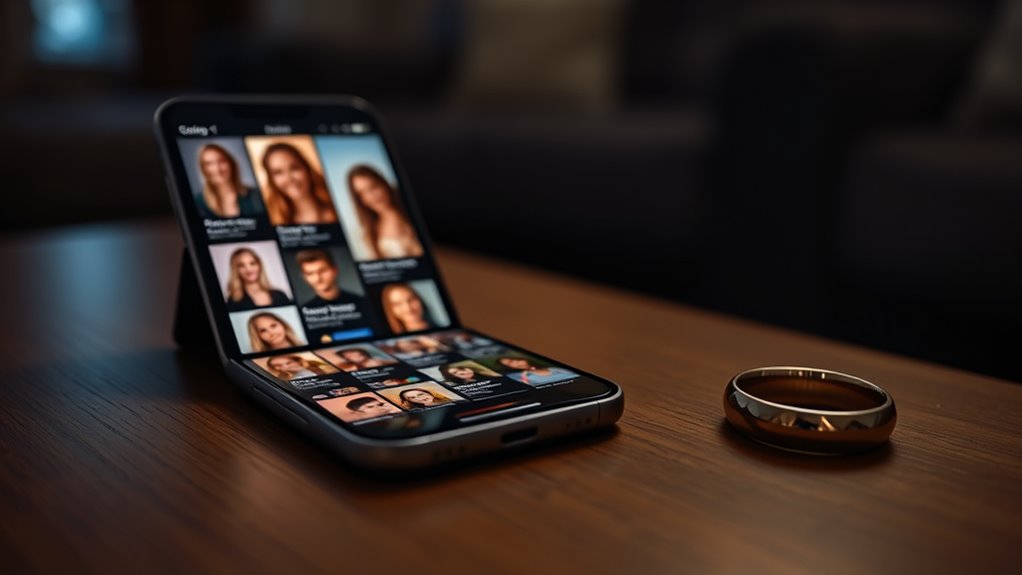
In recent years, more married people are turning to dating apps, often seeking connection or excitement outside their relationships. This trend raises questions about what constitutes cheating and where boundaries lie. Many wonder if swiping on a dating app qualifies as emotional infidelity or if it’s just harmless fun. It’s important to recognize that these apps can blur the lines of fidelity, especially when they lead to emotional intimacy. When you start sharing personal thoughts, feelings, or secrets with someone outside your marriage, it can feel like emotional infidelity, even if there’s no physical contact. This emotional connection can be just as damaging as physical cheating because it erodes trust and intimacy in your primary relationship.
Digital boundaries are essential here. If your partner’s use of dating apps makes you uncomfortable, it’s a clear sign that these boundaries are being crossed. Boundaries aren’t just about physical interactions; they also involve respecting each other’s emotional needs and limits. When you or your partner are engaging with others online in ways that threaten your emotional security, it’s time to have an honest conversation. Many couples find that simply setting rules about what’s acceptable online helps prevent misunderstandings and hurt feelings. For example, agreeing not to share intimate details or to avoid messaging with others late at night can be effective boundaries. If these boundaries are violated, feelings of betrayal can grow, and trust can break down.
Understanding the concept of emotional infidelity is crucial, as it can often be overlooked but has significant impacts on a marriage. It’s normal to feel curiosity or even excitement when exploring dating apps, but it’s vital to reflect on how that affects your marriage. Are you seeking validation, companionship, or excitement outside your partnership? If these feelings are leading you to develop emotional bonds or secret interactions, you might be crossing a line that’s more serious than it appears. Remember, emotional infidelity isn’t always about physical acts; it’s about the emotional investment that can divert attention and affection from your spouse.
Being open with your partner about your feelings and intentions can help avoid misunderstandings. If you’re feeling disconnected or tempted, talking about those feelings instead of acting on them is healthier and more respectful. Ultimately, whether swiping on a dating app is cheating depends on your agreements and what you both consider acceptable. But in all cases, keeping digital boundaries clear and honoring emotional fidelity are key to maintaining trust and respect in your marriage.

Boundaries Updated and Expanded Edition: When to Say Yes, How to Say No To Take Control of Your Life
As an affiliate, we earn on qualifying purchases.
As an affiliate, we earn on qualifying purchases.
Frequently Asked Questions
Can Using Dating Apps Secretly Be Considered Emotional Infidelity?
Yes, secretly using dating apps can be considered emotional infidelity. It leads to emotional betrayal by hiding your actions and intentions, which can cause trust erosion in your relationship. When you keep such behavior hidden, your partner may feel betrayed and hurt, even if no physical cheating occurs. Being honest and transparent helps maintain trust and prevents emotional damage, fostering healthier connection and respect.
What Are the Legal Implications of Cheating via Dating Apps?
Cheating via dating apps can have serious legal consequences, especially in divorce cases. If your spouse proves infidelity, it might influence custody or property disputes. While not illegal in itself, some jurisdictions consider extramarital affairs as grounds for divorce, affecting settlement terms. You should understand your state’s laws, as cheating could lead to increased alimony or division of assets, making it vital to consult a legal professional.
How Do Different Cultures Perceive Swiping While Married?
You might find it ironic that in some cultures, swiping feels like harmless fun, while in others, it’s seen as betrayal. Cultural norms deeply influence relationship perceptions—what’s acceptable in one society could be scandalous in another. In places with strict views on fidelity, swiping can be considered a serious breach of trust, whereas more permissive cultures might see it as a minor flirtation. So, your swipe might be innocent or scandalous, depending on where you are.
Is Browsing Dating Profiles Without Messaging Considered Cheating?
Browsing dating profiles without messaging can be considered cheating if it crosses your emotional boundaries or violates your partner’s trust. You might not be messaging, but it still raises privacy concerns and can create feelings of insecurity. If you’re doing it secretly or it affects your relationship’s honesty, it’s best to discuss boundaries openly. Respecting each other’s emotional boundaries helps maintain trust and keeps your relationship healthy.
How Can Couples Set Boundaries Around Dating App Use?
You can set boundaries around dating app use by establishing clear trust and communication boundaries with your partner. Start by openly discussing what’s acceptable and what isn’t, like whether swiping or messaging is okay. Coincidentally, sharing your feelings and concerns fosters understanding. Regular check-ins help maintain these boundaries, ensuring both of you feel secure. Prioritizing honesty and mutual respect keeps your relationship strong amid evolving digital interactions.

Digital Wellness for Couples: When Nothing Is Broken, Yet Everything Feels Thinner – Rebuilding Attention, Presence, and Intimacy in a High-Stimulus World
As an affiliate, we earn on qualifying purchases.
As an affiliate, we earn on qualifying purchases.
Conclusion
Ultimately, whether swiping on dating apps counts as cheating depends on your relationship’s boundaries. If you and your partner agree that exploring connections online is off-limits, then it’s a clear red flag. But if you’re both transparent and comfortable, it might not be. Remember, honesty is the best policy—don’t let the cat out of the bag and find yourself in hot water. Trust your partner, and keep the lines of communication open.

With These Words: Five Communication Tools for Marriage and Life
As an affiliate, we earn on qualifying purchases.
As an affiliate, we earn on qualifying purchases.

Love More, Fight Less: Communication Skills Every Couple Needs: A Relationship Workbook for Couples
As an affiliate, we earn on qualifying purchases.
As an affiliate, we earn on qualifying purchases.