
TL;DR

Get gifts for the two of you delivered free with Prime
- Fast, free delivery on millions of items
- Prime Video, Amazon Music and more included
- Member-only deals all year
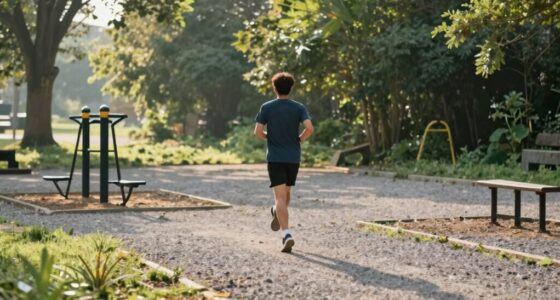
A first-person report in The Good Men Project follows a 61-year-old runner during a 16-mile race in Derry, New Hampshire, in severe cold as snow approaches. The runner says he is trying to follow a measured pacing plan after earlier races in which starting too fast led to exhaustion and physical distress; the supplied account ends before the race’s result.
A 61-year-old runner set out to cover the first 10 miles of a 16-mile race in Derry, New Hampshire, at an average pace of 8:30 per mile, describing the effort as a test of restraint after a history of starting too fast. In a first-person report published by The Good Men Project, he recounts running in 2-degree cold as snow approached, but the supplied excerpt ends before the finish, leaving the race result unknown.
The runner says he had completed a two-mile warm-up but still felt out of breath during the uphill first mile. He had set his watch to display only elapsed miles and average pace, and made sticking to his plan his main goal: reach 10 miles in 85 minutes. After the first mile came in slower than target, two downhill miles pulled his average to 8:12 per mile at mile three. He says he was concerned by the faster average but tried not to draw conclusions so early in the race.
The report describes a course the runner had attempted twice before. He finished in 2:27 two years earlier and 2:23 the previous year. He characterizes the route as difficult, with steep climbs between miles nine and 12. In earlier attempts, he walked those climbs once and ran them slowly the next time.
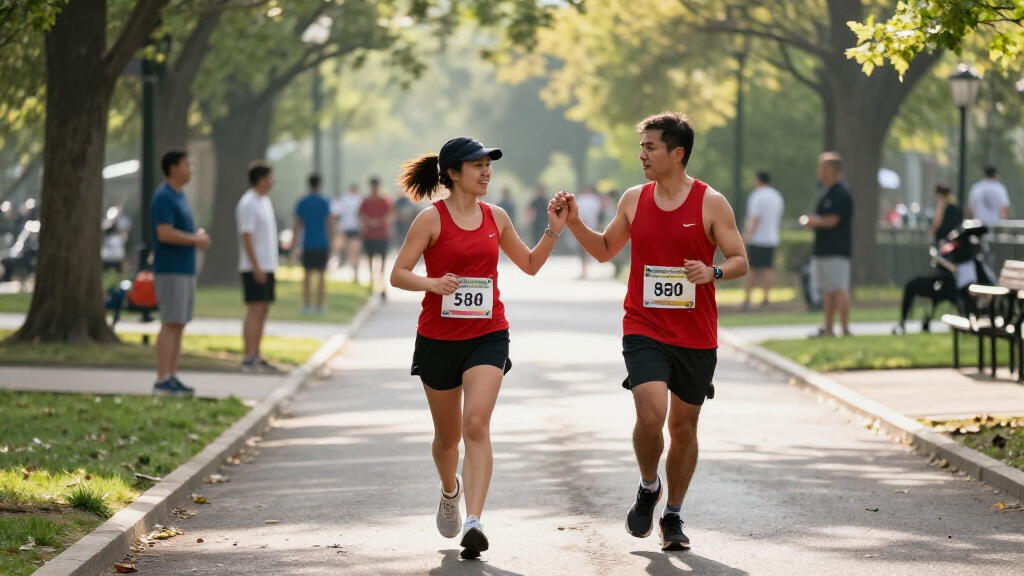
Race officials offered a 9 a.m. “sunshine” start, usually intended for runners who expect to need more time. With a major snowfall forecast to begin at 1 p.m., the report says officials suggested that everyone start early. The runner joined most participants in doing so. By the fourth mile, he noticed flecks of snow, though he also says his face had warmed enough that ice was no longer forming on his eyelashes.
Pacing Against Past Race Mistakes
The account centers on the practical consequences of starting too quickly, rather than on a confirmed race result. The runner connects early bursts of speed to later exhaustion, describing past experiences that included vomiting after races and prolonged feverish aches. Those are his personal account of his own physical reactions, not a medical assessment.
His past examples show why he sees pacing as more than a timekeeping choice. At the New York City Half-Marathon, he says he ran his fastest-ever 10K during the opening 6.2 miles, with another 6.9 miles still to go. At the Black Canyon 100K, he recalls pushing through deep mud early, then running strongly for 31 miles on dry terrain before struggling through the remaining distance and finishing in just over 20 hours. His story gives readers a concrete look at how course conditions, excitement and effort management can shape an endurance event.
The weather adds another immediate pressure: runners had to balance their plans against a severe cold start and a forecast snowfall. But the excerpt does not report whether the snow affected the race, whether the runner kept to his pace, or how he finished.
Popular right now

Vitamix Propel Series 750 Professional-Grade Blender, 4 Programs, Black

TCL 85 Designer Series QD-Mini LED TV (Model 85A400U) with Google Smart TV

LG 85-inch QNED75B Mini LED Smart TV Bundle with HDMI and CPS Protection Plan
As an affiliate, we earn on qualifying purchases.
Earlier Races Shaped the Plan
The runner describes a repeated pattern over several years of half-marathons, 20-mile races, marathons and ultramarathons: an easy-feeling start leads him to abandon his plan and run faster than he believes his fitness can sustain. He attributes that pattern partly to adrenaline and a tendency he calls “monkey mind,” a phrase he uses for impulsive, overexcited decisions.
That history informs the specific strategy he brought to Derry: keep the first 10 miles near 8:30 per mile and avoid treating early comfort or downhill speed as proof that a faster pace is sustainable. He also describes trying to adapt to the terrain by easing off on climbs and allowing speed on descents without forcing it. The account is personal reflection, not a report of race-wide performance or professional coaching guidance.
“My only real goal today is to stick to the plan: get through the first 10 miles at an average of 8:30 per mile, or 85 minutes.”
— The runner, in The Good Men Project report
The Race Result Is Missing
The supplied report excerpt stops during the fourth mile, as the runner begins to see snow in the air. It does not establish whether he completed the race, met his 10-mile pacing target, or improved on either of his previous finishing times. It is also unclear from the excerpt whether snowfall changed the course, schedule or conditions for other runners.
The account does not give a publication date, a race name beyond its location and distance, or independent statements from race officials. The weather forecast and start arrangements are described by the author; no separate organizer or weather-service confirmation is included in the source material.
A Finish Still to Be Reported
The next information needed to complete the race narrative is the remainder of the runner’s account: whether he maintained his planned effort through the steep climbs, how the snow developed, and his finishing time, if he finished. The supplied source material does not state whether a fuller version or follow-up report is available.
Until those details are established, the confirmed development is the account of a runner attempting a controlled opening pace under difficult winter conditions—not a reported race outcome. Any claims about his finish or the storm’s effect on the event would go beyond the material provided.
Key Questions
What race is described in the report?
The report describes a 16-mile race in Derry, New Hampshire, held in mid-January. The supplied excerpt does not provide the race’s name.
What pace did the runner plan to hold?
He aimed to average 8:30 per mile for the first 10 miles, which he calculated as 85 minutes.
How cold was it at the start?
The runner says the temperature was 2 degrees at the start. He also describes ice forming on his eyelashes during the opening mile.
Did the runner finish the race?
The supplied excerpt does not say. It ends during the fourth mile, before the race’s outcome or finishing time is reported.
Why was the start moved earlier?
According to the report, officials suggested that runners use the 9 a.m. “sunshine” start because snow was forecast to begin at 1 p.m. The excerpt does not provide independent confirmation of the forecast or any later effect on the event.
Source: rss