Relationship advice books span a wide spectrum, from research-backed frameworks rooted in decades of couples therapy to quick communication workbooks you can finish in a weekend. After comparing eleven leading titles, Attached stands out as the best overall pick because its attachment-science framework explains why couples repeat the same patterns, not just how to argue better. For couples in active conflict, Fight Right offers the most practical conflict playbook, while Rebuilding Trust is the clear choice for repairing after betrayal. The main tradeoff you’ll face is between deep, science-heavy books that demand real reflection and lighter, exercise-driven guides that deliver faster but shallower results. Keep reading for the full breakdown of each title and who each one is actually for.

Get gifts for the two of you delivered free — and shop member deals
- Fast, free delivery on millions of items
- Access to Prime Big Deal Days deals on October 6–7
- Prime Video, Amazon Music and more included
Key Takeaways
- The strongest titles in this lineup share clinical grounding — Attached, Fight Right, and The Seven Principles for Making Marriage Work all draw on documented couples research, and that separated them from advice-only books built on anecdotes.
- Workbook-style picks like Love More, Fight Less and Rebuilding Trust deliver faster results for couples in crisis, but they solve specific problems rather than building broader relational understanding.
- Several books overlap heavily in the communication niche — Love More, Fight Less, Communication Skills for Couples, and Fight Right all cover conflict — so buying more than one of these adds redundancy, not value.
- Dating-stage readers and married readers need different books: Attached and Why Men Love Bitches serve people choosing partners, while His Needs, Her Needs and The Seven Principles assume a committed long-term relationship.
- Books requiring partner participation (Getting the Love You Want, Love More, Fight Less) are more powerful than solo-read titles but useless if only one partner is willing to engage.
| Why Men Love Bitches: From Doormat to Dreamgirl―A Woman’s Guide to Holding Her Own in a Relationship |  | Best for Dating Confidence | Primary Focus: Self-confidence and boundaries in dating | Audience: Women, primarily dating-stage relationships | Author: Sherry Argov | VIEW LATEST PRICE | See Our Full Breakdown |
| The Seven Principles for Making Marriage Work: A Practical Guide from the Country’s Foremost Relationship Expert |  | Best Overall | Primary Focus: Marriage strengthening across all dimensions | Audience: Committed and married couples | Author: John Gottman, PhD, and Nan Silver | VIEW LATEST PRICE | See Our Full Breakdown |
| Attached: The New Science of Adult Attachment and How It Can Help You Find—and Keep—Love |  | Best for Understanding Your Patterns | Primary Focus: Adult attachment styles and partner compatibility | Audience: Singles and couples seeking self-understanding | Authors: Amir Levine and Rachel Heller | VIEW LATEST PRICE | See Our Full Breakdown |
| Fight Right: How Successful Couples Turn Conflict Into Connection |  | Best for Conflict Resolution | Primary Focus: Conflict resolution and repair | Audience: Couples in recurring conflict | Author: Julie Schwartz Gottman and John Gottman | VIEW LATEST PRICE | See Our Full Breakdown |
| Secure Love: Create a Relationship That Lasts a Lifetime |  | Best for Long-Term Security | Primary Focus: Emotional security and lasting bonds | Audience: Committed couples seeking longevity | Approach: Practical strategies for deepening emotional connection | VIEW LATEST PRICE | See Our Full Breakdown |
| Love More, Fight Less: Communication Skills Every Couple Needs | 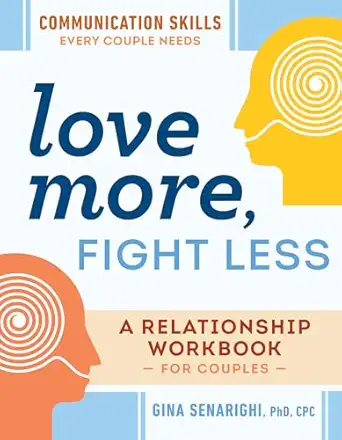 | Best Workbook Format | Format: Workbook with exercises | Primary Focus: Communication and conflict resolution | Audience: Couples | VIEW LATEST PRICE | See Our Full Breakdown |
| Communication Skills for Couples: Guide to Improve Communication, Resolve Conflict, Deepen Intimacy, and Strengthen Marriage |  | Best Budget Entry Point | Format: Guide (non-workbook) | Primary Focus: Communication, conflict, intimacy | Audience: Couples and married partners | VIEW LATEST PRICE | See Our Full Breakdown |
| Rebuilding Trust: Guided Therapy Techniques and Activities to Restore Love, Trust, and Intimacy in Your Relationship |  | Best for Repairing Broken Trust | Format: Guided activities and therapy techniques | Primary Focus: Trust repair and healing | Audience: Couples in crisis or post-betrayal | VIEW LATEST PRICE | See Our Full Breakdown |
| The Relationship Cure: A 5 Step Guide to Strengthening Your Marriage, Family, and Friendships |  | Best Beyond Romance | Format: 5-step guide | Primary Focus: All relationships: marriage, family, friendship | Audience: General readers and couples | VIEW LATEST PRICE | See Our Full Breakdown |
| Getting the Love You Want: A Guide for Couples, Third Edition |  | Best Classic for Deep Patterns | Format: Guide with couples exercises | Edition: Third edition | Primary Focus: Unconscious patterns, intimacy, connection | VIEW LATEST PRICE | See Our Full Breakdown |
| His Needs, Her Needs: Making Romantic Love Last |  | Best for Traditional Marriages | Author: Willard F. Harley Jr. | Focus: Identifying and meeting 10 emotional needs in marriage | Format: Paperback | VIEW LATEST PRICE | See Our Full Breakdown |
| relationship advice book | Audience | Format | Approach | Primary Focus |
|---|---|---|---|---|
| Why Men Love Bitches: From Doo | Women, primarily dating-stage relationships | Paperback | Direct, opinionated advice with practical tips | Self-confidence and boundaries in dating |
| The Seven Principles for Makin | Committed and married couples | Paperback, revised edition | Research-based principles with couple exercises | Marriage strengthening across all dimensions |
| Attached: The New Science of A | Singles and couples seeking self-understanding | Paperback | Psychological research translated for general readers | Adult attachment styles and partner compatibility |
| Fight Right: How Successful Co | Couples in recurring conflict | Hardcover | Research-based conflict strategies | Conflict resolution and repair |
| Secure Love: Create a Relation | Committed couples seeking longevity | Print and digital editions | Practical strategies for deepening emotional connection | Emotional security and lasting bonds |
| Love More | Couples | Workbook with exercises | Practical, exercise-driven | Communication and conflict resolution |
| Communication Skills for Coupl | Couples and married partners | Guide (non-workbook) | Practical strategy guide | Communication, conflict, intimacy |
| Rebuilding Trust: Guided Thera | Couples in crisis or post-betrayal | Guided activities and therapy techniques | Therapy-derived exercises | Trust repair and healing |
| The Relationship Cure: A 5 Ste | General readers and couples | 5-step guide | Research-based framework | All relationships: marriage, family, friendship |
| Getting the Love You Want: A G | Couples | Guide with couples exercises | Imago therapy-based | Unconscious patterns, intimacy, connection |
| His Needs | Married and engaged couples | Paperback | Practical, prescriptive framework with couple exercises | — |
More Details on Our Top Picks
Why Men Love Bitches: From Doormat to Dreamgirl―A Woman’s Guide to Holding Her Own in a Relationship
Among the more research-heavy titles in this lineup, this book takes a very different route: it is blunt, punchy, and aimed squarely at self-respect in early-stage dating. Where Attached explains why you cling and The Seven Principles for Making Marriage Work assumes you’re already coupled, this pick targets the woman who keeps over-giving and losing herself in the process. The assertiveness framework is its real value — readers walk away with boundaries they can actually state out loud. The tradeoff is real, though: the tone leans on gender stereotypes that will grate on some readers, and the advice fits heterosexual dating dynamics far better than long-term partnership repair. This option makes the most sense for singles recalibrating, not couples in crisis.
Pros:- Highly actionable assertiveness advice you can apply immediately
- Genuinely empowering tone for readers stuck in people-pleasing patterns
- Widely recommended and battle-tested by a large readership
- Accessible, fast read compared with denser psychology titles
Cons:- Relies on gender stereotypes that feel dated to many readers
- Poor fit for non-heterosexual or established long-term relationships
- Popular but polarizing — the provocative title reflects an equally provocative tone
Best for: Women in the dating phase who habitually over-please and want to rebuild confidence and boundaries before committing
Not ideal for: Married or long-term couples working on repair — its dating-game framing doesn’t address cohabitation, conflict, or shared-life problems
- Primary Focus:Self-confidence and boundaries in dating
- Audience:Women, primarily dating-stage relationships
- Author:Sherry Argov
- Format:Paperback
- Approach:Direct, opinionated advice with practical tips
- Relationship Stage:Dating and early commitment
Our verdict“Buy this if you’re single and need a confidence reset; skip it if you’re married and looking for repair tools.”
The Seven Principles for Making Marriage Work: A Practical Guide from the Country’s Foremost Relationship Expert
If one book in this roundup earns the top slot, it’s this one — and the reason is evidence density. Built on decades of observational research from the Gottman Institute, it translates what actually predicts divorce into seven principles a couple can practice. Compared with Fight Right, which zooms in on conflict alone, this book covers the full marriage arc: friendship, influence, gridlock, and shared meaning. Compared with Attached, it’s less about your psychological wiring and more about day-to-day behaviors, which makes it easier to act on as a pair. The tradeoff: there are no quick fixes here. Couples expecting a weekend read that dissolves problems will be disappointed — the exercises demand sustained, sometimes uncomfortable effort from both partners.
Pros:- Grounded in decades of clinical observation rather than opinion
- Written by arguably the most cited name in marriage research
- Structured principles with concrete couple exercises
- Covers the full relationship, not just one problem area
Cons:- Requires real effort — not a quick-fix read
- Denser and longer than lighter titles like Love More, Fight Less
- Some content feels familiar if you’ve read other Gottman books
Best for: Committed couples who want a structured, research-backed program and are willing to do the exercises together over weeks or months
Not ideal for: Readers seeking a fast, lightweight fix or those whose partner won’t participate — the exercises require engagement from both people
- Primary Focus:Marriage strengthening across all dimensions
- Audience:Committed and married couples
- Author:John Gottman, PhD, and Nan Silver
- Approach:Research-based principles with couple exercises
- Relationship Stage:Established partnership
- Format:Paperback, revised edition
Our verdict“The safest default purchase for a couple serious about long-term improvement — as long as both partners will actually do the work.”
Attached: The New Science of Adult Attachment and How It Can Help You Find—and Keep—Love
This pick earns its place by answering the question most advice books skip: why you keep repeating the same relationship mistakes. Its attachment-style framework — anxious, avoidant, secure — gives readers a vocabulary that explains everything from jealous texting to emotional shutdown. Compared with Why Men Love Bitches, which coaches behavior from the outside in, this book works from the inside out, and its insights hold up across genders and orientations in a way that title’s don’t. It also pairs well with Secure Love: read this first to understand your pattern, then that one to build on it. The drawback is that it’s diagnostic-heavy and prescriptive-light — readers who finish it may understand themselves well but want more concrete next steps, and the science sections can drag for casual readers.
Pros:- Evidence-based framework grounded in real attachment research
- Explains recurring conflict patterns with unusual clarity
- Applies across genders and relationship types
- Written by a clinical psychologist with academic credibility
Cons:- Denser and more technical than pop-advice titles
- Diagnosis is stronger than prescription — fewer concrete exercises than Gottman’s work
- Anxious-avoidant pairing examples can feel repetitive
Best for: Analytically minded readers who keep landing in the same painful dynamics and want a psychological explanation before a fix
Not ideal for: Action-first readers who want scripts and exercises immediately — the theory-first structure delays practical payoff
- Primary Focus:Adult attachment styles and partner compatibility
- Audience:Singles and couples seeking self-understanding
- Authors:Amir Levine and Rachel Heller
- Approach:Psychological research translated for general readers
- Relationship Stage:Dating through long-term partnership
- Format:Paperback
Our verdict“The best choice if you want to understand your patterns before changing your behavior — pair it with a workbook-style title for follow-through.”
Fight Right: How Successful Couples Turn Conflict Into Connection
Where The Seven Principles for Making Marriage Work spreads across the whole marriage, this book narrows to the moment most couples dread: the fight itself. Its premise — that conflict handled well becomes connection rather than damage — is drawn from the same Gottman research tradition, but the focus is tighter and the guidance more situational. Compared with lighter communication titles like Love More, Fight Less, this one goes deeper into the physiology and structure of arguments, which makes it better for couples whose fights escalate fast. That same depth is the tradeoff: readers with occasional mild friction may find it more book than they need, and those wanting a simple checklist of phrases should start elsewhere. For high-conflict couples, though, it’s the most targeted tool in this lineup.
Pros:- Directly addresses the single most common relationship pain point
- Backed by decades of observational couples research
- Practical strategies usable mid-argument, not just in theory
- Deeper and more credible than checklist-style communication guides
Cons:- Single-topic scope — doesn’t cover intimacy, trust repair, or dating
- May overwhelm couples needing only basic communication tweaks
- Assumes both partners are willing to engage with the material
Best for: Couples whose arguments regularly escalate or go unresolved and who want a focused method for fighting productively
Not ideal for: Couples with rare, mild disagreement — the depth on conflict mechanics will feel like more than the problem warrants
- Primary Focus:Conflict resolution and repair
- Audience:Couples in recurring conflict
- Author:Julie Schwartz Gottman and John Gottman
- Approach:Research-based conflict strategies
- Relationship Stage:Established partnership
- Format:Hardcover
Our verdict“The right buy for couples who fight often and badly; unnecessary for those who mainly need general communication polish.”
Secure Love: Create a Relationship That Lasts a Lifetime
This title occupies the emotional-security niche — it’s about building the steady, safe bond that keeps a relationship durable for decades, not about dating strategy or winning arguments. Think of it as the applied sequel to Attached: where that book diagnoses your attachment style, this one focuses on creating security in practice through daily emotional availability. Compared with Getting the Love You Want, which leans on Imago therapy exercises, this approach is gentler and less framework-heavy, which some couples will prefer and others will find under-structured. The honest drawback is its youth: it lacks the decades of reader validation behind the Gottman titles, and the content overview is thinner, so buyers are taking more on faith. Still, for couples past the crisis stage who want to invest in longevity, it fills a gap the others leave open.
Pros:- Focuses specifically on emotional security rather than crisis repair
- Gentle, accessible approach without heavy clinical frameworks
- Well suited to long-term committed couples
- Complements attachment-theory titles with practical follow-through
Cons:- Newer title with limited reader reviews and validation
- Thinner published content detail makes pre-purchase evaluation harder
- Less structured than exercise-driven books like The Seven Principles
Best for: Stable couples past the crisis stage who want to proactively deepen emotional safety for the long haul
Not ideal for: Couples in active crisis or readers who want a heavily validated, long-track-record methodology — newer and less battle-tested than the Gottman classics
- Primary Focus:Emotional security and lasting bonds
- Audience:Committed couples seeking longevity
- Approach:Practical strategies for deepening emotional connection
- Relationship Stage:Long-term partnership
- Format:Print and digital editions
- Position in Roundup:Longevity and prevention focus
Our verdict“A forward-looking pick for already-solid couples building toward lifelong security rather than fixing a broken dynamic.”
Love More, Fight Less: Communication Skills Every Couple Needs
Love More, Fight Less stands out in this lineup for being a true workbook rather than a straight read. Where The Relationship Cure explains theory and leaves application up to you, this title puts pen to paper with structured exercises aimed at the fights couples actually have. That makes it a natural companion to Fight Right — one teaches you how conflict works, this one drills the skills. The tradeoff is real: it only pays off if both partners genuinely do the exercises, and a partner who resists homework will stall progress fast.
Pros:- Hands-on exercises that convert concepts into daily habits
- Tightly focused on conflict and communication, not scattered across topics
- Low barrier to entry for couples new to self-help work
- Pairs well with more theory-driven books like Fight Right
Cons:- Requires active participation from both partners to deliver results
- Thin on the psychological ‘why’ behind the techniques
- Limited information on length and format before buying
Best for: Couples who learn by doing and want structured exercises instead of abstract theory
Not ideal for: Couples where one partner is disengaged — the workbook format collapses without buy-in from both sides
- Format:Workbook with exercises
- Primary Focus:Communication and conflict resolution
- Audience:Couples
- Approach:Practical, exercise-driven
- Reading Style:Interactive rather than narrative
- Best Paired With:Fight Right
Our verdict“If you and your partner will actually fill in the pages together, this is the most actionable communication pick here.”
Communication Skills for Couples: Guide to Improve Communication, Resolve Conflict, Deepen Intimacy, and Strengthen Marriage
This title covers the full communication curriculum — conflict, intimacy, marriage health — in one inexpensive package, which is exactly why it earns a spot. Compared with Love More, Fight Less, it reads more like a guide than a workbook, so it suits couples who prefer to absorb strategies without exercises. The breadth is a double-edged sword: where Attached goes deep on one framework, this spreads across many topics, so readers chasing a single root cause of their problems may finish wanting more depth. Results also depend on sustained effort over weeks, not a weekend read.
Pros:- Covers communication, conflict, and intimacy in one affordable book
- Accessible starting point before committing to denser expert titles
- Marriage-strengthening focus keeps goals practical
- Lighter commitment than workbook-based alternatives
Cons:- Broad scope means less depth on any single issue
- Few independent reviews or ratings to gauge credibility
- Results require consistent effort over time
Best for: Budget-conscious couples wanting a broad, low-commitment introduction to communication skills
Not ideal for: Couples with a specific deep problem — an affair aftermath, attachment wounds — who need a specialized title like Rebuilding Trust
- Format:Guide (non-workbook)
- Primary Focus:Communication, conflict, intimacy
- Audience:Couples and married partners
- Approach:Practical strategy guide
- Depth:Broad coverage, moderate depth
- Price Position:Budget-friendly
Our verdict“A sensible, low-risk first purchase for couples testing whether self-help books work for them.”
Rebuilding Trust: Guided Therapy Techniques and Activities to Restore Love, Trust, and Intimacy in Your Relationship
Most books in this roundup try to make good relationships better; this one exists for relationships in active crisis. Its therapy-derived techniques and guided activities target the specific work of healing betrayal, which sets it apart from generalist titles like Communication Skills for Couples — that book would barely scratch the surface here. Compared with The Seven Principles for Making Marriage Work, it trades preventive research for repair-focused exercises. Be honest about the tradeoff: the material demands sustained emotional commitment, and no book substitutes for actual couples therapy when damage is severe.
Pros:- Fills a repair niche most relationship books ignore
- Therapy-grounded techniques rather than pop-psychology platitudes
- Guided activities give couples a concrete path forward
- Directly addresses intimacy erosion after betrayal
Cons:- Requires significant emotional commitment from both partners
- Sparse reviews and ratings make quality hard to verify
- Not a replacement for professional therapy in serious cases
Best for: Couples recovering from betrayal, infidelity, or a serious breach of trust who want structured healing work
Not ideal for: Couples with a stable relationship looking to grow — the wound-focused content won’t match their needs
- Format:Guided activities and therapy techniques
- Primary Focus:Trust repair and healing
- Audience:Couples in crisis or post-betrayal
- Approach:Therapy-derived exercises
- Depth:Specialized, single-issue focus
- Best Paired With:Professional couples counseling
Our verdict“If trust has been broken and you want a guided at-home starting point before or alongside therapy, this is the pick.”
The Relationship Cure: A 5 Step Guide to Strengthening Your Marriage, Family, and Friendships
Written by researcher John Gottman, this book applies his observational research to every relationship in your life — marriage, family, friendships — through a clear five-step framework. That breadth is its defining difference: where Getting the Love You Want narrows to romantic partnership, this one treats connection as a general skill. Readers who liked The Seven Principles for Making Marriage Work will recognize the research backbone, but in a more accessible, less marriage-centric package. The catch is focus — couples whose problems are specifically romantic may find friendship and family chapters feel like detours.
Pros:- Research-backed approach from a leading relationship scientist
- Five-step structure makes the material easy to follow and apply
- Useful far beyond romantic relationships
- More accessible than Gottman’s denser marriage-specific work
Cons:- Broad scope dilutes attention on marital problems specifically
- Strategies take time and repetition to show results
- Self-help framing may feel light to readers wanting clinical depth
Best for: Readers who want one framework to improve all their relationships, not just their marriage
Not ideal for: Couples seeking targeted marital repair — other picks here stay on that problem full-time
- Format:5-step guide
- Primary Focus:All relationships: marriage, family, friendship
- Audience:General readers and couples
- Approach:Research-based framework
- Author Background:Academic relationship research
- Structure:Five sequential steps
Our verdict“The right choice if your goal is stronger connection everywhere, from your spouse to your siblings.”
Getting the Love You Want: A Guide for Couples, Third Edition
Getting the Love You Want is the veteran on this list — a decades-old classic from Harville Hendrix’s Imago therapy tradition, now in a revised third edition. Unlike the quick-skill books here, it digs into childhood-driven patterns that shape how partners love and fight, which puts it closer to Attached in spirit but with a structured couples exercises component attached. The depth is the tradeoff: readers wanting fast tactical fixes will find Love More, Fight Less gets to exercises sooner, and the therapeutic framing can feel heavy for couples with modest problems.
Pros:- Decades of track record with generations of readers
- Addresses root emotional patterns, not just surface arguments
- Includes structured couples exercises rooted in Imago therapy
- Updated third edition refines the original material
Cons:- Slow build before practical exercises begin
- Therapeutic language may feel intensive for minor issues
- Third-edition specifics and formatting details are sparse in listings
Best for: Couples who suspect old emotional patterns keep sabotaging their relationship and want a proven, deep method
Not ideal for: Couples wanting quick communication tips — the theoretical groundwork requires patience before payoff
- Format:Guide with couples exercises
- Edition:Third edition
- Primary Focus:Unconscious patterns, intimacy, connection
- Audience:Couples
- Approach:Imago therapy-based
- Heritage:Long-established classic, multiple editions
Our verdict“For couples ready to examine why they love the way they do, this classic rewards the patience it demands.”
His Needs, Her Needs: Making Romantic Love Last
Among the books in this lineup, His Needs, Her Needs stands out as the most unapologetically marriage-first pick. While Attached leans on attachment science and The Seven Principles for Making Marriage Work draws on clinical research, Willard Harley takes a simpler, more prescriptive route: identify the ten core emotional needs — like affection, admiration, and financial support — and learn to meet your spouse’s top ones deliberately.
The tradeoff is real. The framework’s gendered framing can feel dated to modern readers, and couples in nontraditional partnerships may find some examples don’t map to their lives. Compared with Fight Right, which focuses on conflict mechanics, this book is better suited to couples who are stable but drifting rather than actively fighting.
For married couples who want a clear checklist approach over theory, this is the most actionable option here.
Pros:- The 10 emotional needs framework is concrete and easy to act on immediately
- Specifically designed for sustaining long-term romantic love, not just dating or conflict triage
- Balances both partners’ needs rather than asking one side to change
- Includes practical questionnaires couples can use to identify their top needs
Cons:- Gendered assumptions about men’s and women’s needs can feel outdated to many readers
- Lighter on scientific backing than research-driven alternatives like The Seven Principles for Making Marriage Work
- Best suited to stable marriages; couples in active crisis or chronic conflict need different tools
Best for: Long-married or engaged heterosexual couples who want a structured, faith-friendly framework for reigniting romance and preventing emotional drift
Not ideal for: Modern or nontraditional couples who prefer research-based, gender-neutral frameworks like Attached or Fight Right, since the book’s tone and examples skew traditional
- Author:Willard F. Harley Jr.
- Focus:Identifying and meeting 10 emotional needs in marriage
- Format:Paperback
- Best Use Case:Strengthening and sustaining long-term marriages
- Approach:Practical, prescriptive framework with couple exercises
- Audience:Married and engaged couples
- Edition Notes:Updated editions available; verify format before purchase
Our verdict“A solid choice for traditionally-minded married couples who want a simple, actionable needs checklist rather than academic theory — but skip it if you want a modern, gender-neutral lens.”

How We Picked
I evaluated each book against four buyer-relevant criteria. First, evidence base: titles grounded in published research or established clinical practice (Gottman’s longitudinal studies, attachment theory) scored higher than opinion-driven advice, because readers facing real problems deserve frameworks with a track record. Second, actionability: a book earns its shelf space only if you can apply what you read — I favored titles with exercises, scripts, or concrete behavioral steps over purely conceptual writing. Third, audience fit: relationship books fail when misread, so I weighed whether each title clearly serves daters, newlyweds, couples in conflict, or partners rebuilding after betrayal. Fourth, readability and time investment: a 400-page research tome and a 150-page workbook serve different readers, and neither is objectively better.
The ranking reflects a simple logic: books that combine scientific grounding with immediate practical use sit highest, because they help the widest range of couples. Specialized titles rank lower only in reach, not quality — Rebuilding Trust is narrowly focused but arguably the most effective book on this list for its specific audience. Where two books cover the same territory, I ranked the one with stronger evidence or clearer structure ahead, and I flagged the overlap so you don’t buy twice.
Factors to Consider When Choosing Relationship Advice Books
Choosing a relationship book is less about finding the “best” title and more about matching the book to your relationship stage and the problem you’re actually trying to solve. Before buying, work through these factors.
Match the Book to Your Relationship Stage
The most common mistake buyers make is grabbing a marriage-repair book while still dating, or a dating-strategy book while trying to save a marriage. Books like Attached and Why Men Love Bitches are built for the partner-selection stage — they help you understand attraction patterns and avoid choosing incompatible partners. Titles like The Seven Principles for Making Marriage Work and His Needs, Her Needs assume a committed relationship and focus on maintenance, not selection. A dating-stage reader will find marriage books premature and preachy, while a married reader will find dating advice irrelevant to their daily friction. Read the subtitle carefully: it usually tells you exactly which stage the author is addressing. Buying the wrong stage is wasted money even when the book itself is excellent.
Identify the Specific Problem Before Buying
“Relationship problems” is too vague a category to shop for. Conflict escalation, broken trust, emotional distance, and poor communication each call for different books, and the best authors specialize. Fight Right addresses how couples argue; Rebuilding Trust targets betrayal recovery specifically; Secure Love tackles emotional distance and reassurance-seeking patterns. Buyers who skip this step often end up with three communication books that all repeat the same active-listening advice. Write down the one sentence that describes your core issue — “we fight dirty,” “I can’t trust him after the affair,” “we’re roommates, not partners” — and buy for that. If you can’t name the problem, a broad diagnostic book like Attached is the smarter first purchase than a targeted workbook.
Research-Backed Versus Opinion-Driven Advice
Relationship publishing is full of charismatic authors offering frameworks built on personal experience rather than evidence. That’s not automatically bad — some opinion-driven books contain genuinely useful insights — but the failure mode is different. Research-backed books (The Seven Principles, Attached, The Relationship Cure) explain mechanisms, so you can adapt the advice to situations the author never covered. Opinion-driven books give rules, which work until they don’t. The tradeoff: research books read denser and demand more reflection, while advice-driven books feel immediately punchy and quotable. If a book makes sweeping claims without explaining where they come from, treat it as one perspective to weigh, not a protocol to follow. Serious problems deserve the evidence-based shelf.
One Reader or Two?
Some of the most powerful books in this category only work as a couple’s project. Getting the Love You Want and Love More, Fight Less include structured exercises that require both partners to participate, which makes them transformational when both people are engaged and shelf-decor when only one is. Solo-readable books like Attached or Why Men Love Bitches can create change from one person’s side alone — often by changing how you show up in the dynamic. Be honest about your partner’s willingness before buying a workbook; forcing exercises on a reluctant partner tends to become its own fight. A common middle path is reading a solo book first to shift your own behavior, then introducing a couples workbook once momentum exists.
Workbook Format Versus Narrative Format
Format determines whether a book actually changes your behavior or just becomes something you read. Workbooks with prompts, quizzes, and structured activities (Rebuilding Trust, Love More, Fight Less) push you to apply concepts within days, which suits action-oriented readers and couples who like homework. Narrative books (Attached, Secure Love) build deeper understanding but leave application to your initiative. Neither format is superior — it’s a question of how you actually consume self-help. If you have a history of finishing books without changing anything, the workbook structure earns its premium. If you need to understand the why before you’ll do the what, start narrative and add a workbook later.
Avoiding Redundant Purchases
This category has heavy overlap, and publishers know buyers often purchase multiple titles in a moment of crisis. Three of the eleven books here cover substantially the same communication territory, and buying all three mostly means paying three times for active-listening scripts. Before adding a second book, check whether it covers a genuinely different problem or just a different voice on the same one. A sensible two-book library covers one understanding-level title (attachment or relationship science) and one application-level title (a workbook for your specific issue). Beyond that, returns diminish sharply. If a book isn’t landing after a few chapters, the issue is usually fit, not insufficient quantity — swap rather than stack.
Frequently Asked Questions
Which relationship advice book should I buy if I can only get one?
For most readers, Attached is the single best purchase because attachment styles influence nearly every other relationship problem — conflict, trust, jealousy, and partner selection all connect back to how you bond. It works whether you’re dating or married, and it can be read solo without a partner’s participation. If you’re specifically married and dealing with frequent conflict rather than a general pattern, Fight Right is the better single buy. The exception is betrayal recovery: if trust has been broken, Rebuilding Trust solves a problem Attached only touches lightly. One well-chosen book applied seriously beats a stack of five skimmed casually.
Can a relationship book actually help a couple in serious trouble, or do we need therapy?
A book can genuinely help with communication friction, recurring conflict patterns, and emotional distance — these respond well to the structured exercises in titles like Love More, Fight Less and Fight Right. But books have real limits: they can’t mediate between two people, notice what you’re not reporting, or intervene when one partner has already checked out. Research-backed authors like Gottman openly identify the problems books handle poorly, including active affairs, untreated addiction, and contempt so entrenched that exercises get weaponized. A reasonable rule is eight to twelve weeks of sincere book work before concluding you need a professional. Many couples also use books alongside therapy, since reading between sessions accelerates progress.
Are books like Why Men Love Bitches based on actual psychology?
Partly, but not primarily — the book draws more on the author’s coaching observations and a fairly blunt self-respect framework than on clinical research. Its core argument, that people who abandon their own boundaries and interests become less attractive and less respected, overlaps with legitimate ideas about self-differentiation that appear in more clinical books. Where it diverges is in the strategic framing, which some readers find empowering and others find game-playing. Compared with a research-backed title like Attached, it offers faster attitude shifts but less explanatory depth. It suits readers who need a confidence reset in dating, not those seeking to understand long-term relational mechanics.
What if my partner won’t read the book with me?
This is one of the most common situations, and the good news is that several books in this lineup are designed for solo readers. Attached, Secure Love, and Why Men Love Bitches all work from one person’s side, because they focus on changing how you show up in the dynamic rather than requiring joint exercises. Relationship systems tend to shift when one person changes their part, even without the other’s conscious participation. Skip the structured couples workbooks like Getting the Love You Want until you have buy-in — pushing exercises on a reluctant partner usually creates a new fight about the book itself. Read solo first, change your own patterns, and often the partner becomes curious on their own.
Is it worth paying more for the newest editions of older books like Getting the Love You Want or His Needs, Her Needs?
Usually yes for books like Getting the Love You Want, where the third edition added updated material on same-sex couples, modern attachment research, and revised exercises that meaningfully changed the content. For other titles, updated editions sometimes only refresh examples and forewords while the core advice stays identical, which makes a cheaper used copy of the previous edition a smart buy. Check what the publisher actually says changed between editions before paying the premium. Older books also carry a hidden cost worth weighing: advice written decades ago can reflect dated assumptions about gender roles, and His Needs, Her Needs in particular divides readers on this point. If that framing bothers you, a contemporary title like Secure Love covers similar territory with updated language.
Conclusion
The right pick depends entirely on where your relationship stands. For best overall, Attached earns the top spot — it explains the machinery behind almost every relationship pattern and serves daters and long-term couples alike. For best value, Love More, Fight Less delivers workbook-level exercises at a low price point, making it the cheapest meaningful intervention on this list. For best premium choice, The Seven Principles for Making Marriage Work packs decades of clinical research into the most authoritative marriage resource here. For beginners who’ve never read a relationship book, Secure Love offers the gentlest, most readable entry point into how relationships actually work. For specific needs: choose Fight Right for constant conflict, Rebuilding Trust after betrayal, and Why Men Love Bitches for a dating-confidence reset. Whatever you choose, one book applied with real effort beats a shelf bought in a moment of panic — pick the title that matches your actual problem, and start there.
Evergreen bestsellers Picks
bestsellers
As an affiliate, we earn on qualifying purchases.