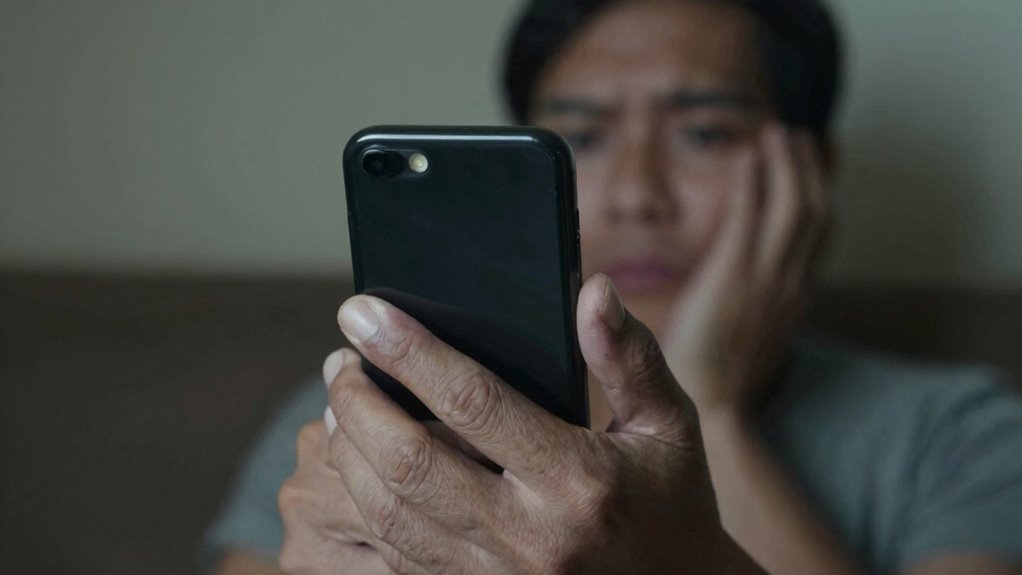
If your partner is chronically defensive, it might indicate they’re hiding guilt or fear of exposure, both common when cheating is involved. This behavior often shows up as overreacting, deflecting blame, or reacting disproportionately to simple questions. Their automatic reactions could be subconscious attempts to hide something. Recognizing these patterns can reveal underlying issues, including infidelity. Staying alert to these signs can help you understand what’s really going on beneath the surface—continue to explore what might be behind their defensive wall.
Key Takeaways
- Chronic defensiveness may mask feelings of guilt or shame associated with cheating.
- Persistent defensiveness can serve as a shield to hide suspicious behaviors or emotional infidelity.
- Overreaction or disproportionate responses often indicate underlying dishonesty or betrayal.
- Defensive patterns can prevent honest discussions about trust issues or infidelity.
- Continuous defensiveness suggests an attempt to divert attention from uncovering cheating or emotional betrayal.

When someone becomes overly defensive in conversations, it can be more than just a personality trait—it might be a red flag for deeper issues, such as infidelity. Chronic defensiveness often emerges as a protective mechanism, shielding a person from emotional triggers that threaten their sense of security or self-esteem. Instead of engaging openly, they shut down or lash out, creating communication breakdowns that hinder honest dialogue. If you notice your partner constantly deflecting blame or reacting defensively to simple questions, it’s worth paying attention to what might be behind these reactions.
This persistent defensiveness can be a sign that your partner is hiding something or feeling guilty about an affair. When someone is cheating, they often experience intense emotional triggers—guilt, shame, fear of exposure—that make them hyper-sensitive to perceived accusations. As a result, they become defensive to protect themselves from confronting uncomfortable truths. They might twist your words or attack your motives, which only deepens the communication breakdowns between you. These recurring patterns don’t just damage conversations; they erode trust and create emotional distance over time.
You might also notice that your partner’s defensiveness isn’t always proportionate to the situation. Small concerns become huge battles, and innocent questions are met with hostility. This heightened emotional state can be an attempt to divert attention away from their own suspicious behaviors or hidden feelings. The more they feel cornered, the more they react defensively, making it harder for you to get to the root of the issue. It becomes a cycle—emotional triggers trigger defensiveness, which fuels further communication breakdowns, leaving you feeling confused, frustrated, and disconnected. Recognizing that emotional triggers are often automatic responses can help you interpret these reactions more effectively.
Over time, this pattern can mask underlying problems, including infidelity. Instead of addressing concerns directly, your partner may resort to deflecting, denying, or attacking. Such behavior not only prevents honest conversations but also signals that something is amiss beneath the surface. Recognizing these signs can be crucial, especially if you’ve noticed a pattern of emotional triggers triggering defensive reactions. It’s not just about personality quirks; it’s about understanding what’s really going on beneath the defensiveness—whether it’s guilt, fear, or something more serious. Paying attention to communication patterns can provide valuable insight into their emotional state and honesty.
Additionally, understanding the power of instant torque and quick reactions in electric bikes can serve as a reminder that defensive responses are often immediate and automatic, not always reflective of conscious choices. Recognizing these reactive patterns can help you better interpret emotional cues during conversations. In the same way, automatic emotional responses often occur without deliberate thought, making it easier to misinterpret reactions if you don’t recognize their impulsive nature. This automaticity can be linked to the cosmic influences on personal traits, where certain reactions may be deeply ingrained or shaped by subconscious factors. In the end, chronic defensiveness isn’t just a communication style—it can be a subtle warning sign of dishonesty or betrayal. By paying close attention to how your partner reacts during conversations, especially when they seem overly defensive or sensitive, you might uncover clues that point to deeper issues like cheating. It’s important to approach these situations thoughtfully, recognizing that defensiveness often masks emotional vulnerabilities that need addressing.
emotional intelligence books for couples
As an affiliate, we earn on qualifying purchases.
As an affiliate, we earn on qualifying purchases.
Frequently Asked Questions
Can Defensiveness Alone Indicate Infidelity?
Defensiveness alone doesn’t prove infidelity, but it can be a sign of emotional triggers or underlying communication barriers. When someone becomes overly defensive, they might be hiding something or feeling guilty, which could relate to cheating. However, defensiveness can also stem from personal insecurities or past experiences. Pay attention to consistent patterns instead of isolated incidents, and consider open, honest conversations to understand what’s really going on.
How Can I Differentiate Defensiveness From Genuine Discomfort?
You can differentiate defensiveness from genuine discomfort by paying attention to emotional triggers and communication barriers. When someone’s defensiveness spikes unexpectedly, it often signals a deeper emotional trigger or fear of vulnerability. Genuine discomfort tends to be consistent and linked to specific topics, while defensiveness may result in avoidance or stonewalling. Notice whether they’re open to dialogue or shutting down, as this helps you identify if it’s authentic or defensive behavior.
Does Everyone’s Defensiveness Manifest the Same Way?
Everyone’s defensiveness displays differently, driven by distinct emotional triggers and communication barriers. Some may become aggressive, while others withdraw or deflect. These diverse defenses stem from personal sensitivities, past experiences, and comfort levels. Recognizing these varied manifestations helps you understand that defensiveness isn’t one-size-fits-all. Instead, it’s a unique, often subconscious, response to emotional triggers, shaping how each person reacts when feeling threatened or misunderstood.
Are There Healthy Ways to Address Defensiveness in Relationships?
Yes, you can address defensiveness healthily by practicing effective communication and emotional regulation. When you notice yourself becoming defensive, take a deep breath and pause to reflect on your feelings. Express yourself calmly and listen actively to your partner’s perspective. This approach fosters understanding, reduces conflict, and helps build trust. Consistently applying these strategies encourages growth and emotional safety in your relationship.
How Long Does Defensiveness Typically Last Before Indicating Cheating?
Defensiveness can last for varying durations, often depending on trust issues and emotional triggers. If you notice it persisting beyond a few weeks, it might signal underlying concerns like dishonesty or emotional distance, which could relate to cheating. However, everyone’s different; some people become defensive temporarily during stressful times. Pay attention to patterns rather than isolated incidents, and communicate openly to address trust issues before jumping to conclusions.

6Pcs Communication Board for Non Verbal Adults Picture Symbol Communication Cards Speech Therapy Tools for Autism Toddlers Kids Aphasia Stroke Patients Hospital Care Home Use Talking Placemats
- Package Includes: Six themed communication boards and cards
- Vibrant Design: Colorful themes for easy understanding
- Supports Communication: Helps non-verbal individuals express needs
As an affiliate, we earn on qualifying purchases.
As an affiliate, we earn on qualifying purchases.
Conclusion
If you notice your partner’s chronic defensiveness, it might be more than just stubbornness—it’s a potential warning sign of cheating. Studies show that defensive behavior often increases when someone is hiding something, with nearly 60% of cheaters becoming more defensive to cover their tracks. Trust your instincts and pay attention to these signals. Recognizing these patterns early can help you address issues before they escalate, strengthening your relationship or guiding you to safer ground.

Couples Therapy Workbook: Strategies to Connect, Restore Love and Trust, Improve Communication Intimacy and Validation: A Relationship Workbook for Couples
As an affiliate, we earn on qualifying purchases.
As an affiliate, we earn on qualifying purchases.
trust building games for couples
As an affiliate, we earn on qualifying purchases.
As an affiliate, we earn on qualifying purchases.